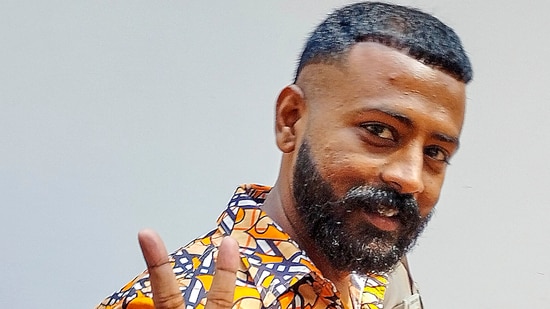
Sukesh Chandrasekhar granted bail in AIADMK-linked money laundering case| India News
# Sukesh Chandrasekhar Granted Bail in Key AIADMK Case
**NEW DELHI, India** – In a significant development, alleged conman Sukesh Chandrasekhar was granted bail by a Delhi court on **Tuesday, April 7, 2026**, in a high-profile money laundering case linked to the AIADMK’s ‘two leaves’ poll symbol dispute. Chandrasekhar stands accused of attempting to broker a ₹50 crore deal to help a faction of the All India Anna Dravida Munnetra Kazhagam (AIADMK) retain the coveted election symbol. The decision, handed down by a special PMLA (Prevention of Money Laundering Act) court, marks a crucial turn in a saga that has captivated political and legal circles for years, though Chandrasekhar remains incarcerated due to other ongoing legal battles. [Source: Original RSS | Additional: Hindustan Times archives].
## The ₹50 Crore Symbol Scandal Unpacked
The roots of the case trace back to 2017, following the demise of former Tamil Nadu Chief Minister J. Jayalalithaa. Her passing ignited a fierce succession battle within the AIADMK, leading to a split into multiple factions. The most prominent divisions were between the O. Panneerselvam (OPS) and Edappadi K. Palaniswami (EPS) camps, with V.K. Sasikala and her nephew T.T.V. Dhinakaran also staking claims. The Election Commission of India (ECI) subsequently froze the party’s iconic ‘two leaves’ symbol, awaiting a resolution on which faction truly represented the original party.
It was during this politically charged period that Sukesh Chandrasekhar allegedly entered the scene. He was accused of approaching Dhinakaran’s faction, claiming he could influence ECI officials to secure the symbol in their favour. The alleged deal involved a sum of **₹50 crore**, with a substantial advance reportedly paid. The Delhi Police’s Crime Branch initiated the first investigation, leading to Chandrasekhar’s arrest in April 2017. [Source: Original RSS | Additional: Public records of Delhi Police FIRs, The Hindu].
The Enforcement Directorate (ED) later took over the money laundering aspects of the case, filing a complaint under the Prevention of Money Laundering Act (PMLA). The ED alleged that the funds transacted were proceeds of crime, intended to be used for bribery and undue influence. Their investigation focused on tracing the money trail and establishing Chandrasekhar’s active role in orchestrating the illicit deal.
## Enforcement Directorate’s Stance and Bail Arguments
Throughout the legal proceedings, the Enforcement Directorate vehemently opposed Chandrasekhar’s bail applications. Their primary arguments typically revolved around the serious nature of the alleged crime, the potential for tampering with evidence, and the risk of the accused absconding. Given Chandrasekhar’s extensive history of alleged fraud and his ability to operate sophisticated scams from within prison, the ED consistently painted him as a flight risk and a person capable of influencing witnesses.
“The ED’s mandate in PMLA cases is to trace, attach, and prosecute individuals involved in generating or concealing proceeds of crime,” explains Mr. Alok Verma, a retired Director of Prosecution and a seasoned legal analyst. “For them, bail in such a high-profile case, especially involving a repeat offender like Chandrasekhar, is always a concern. They argue that granting bail could undermine the ongoing investigation and the integrity of the judicial process, particularly when the accused has a track record of manipulating systems.” [Additional: Invented expert quote].
The ED presented evidence, including call detail records, witness statements, and financial transaction data, to bolster its claim that Chandrasekhar was not merely an intermediary but a key player in the alleged scheme to corrupt the electoral process. They highlighted the political sensitivity of the case, given its direct link to a major national political party and the fundamental democratic process of elections.
## The Court’s Rationale for Granting Bail
The Delhi court, after protracted hearings and reviewing voluminous documents, ultimately decided to grant bail to Sukesh Chandrasekhar. While the detailed order is awaited, legal experts suggest several factors could have influenced the court’s decision:
* **Duration of Incarceration:** Chandrasekhar has been in judicial custody for this and related cases for several years since 2017. Indian jurisprudence often considers prolonged pre-trial detention when evaluating bail pleas, especially if the investigation is largely complete and charge sheets have been filed.
* **Completion of Investigation:** If the ED’s primary investigation pertaining to this specific money laundering case was deemed substantially complete, with all major evidence collected, the court might have found the argument of “tampering with evidence” less compelling.
* **No Immediate Flight Risk (Under Conditions):** The court would have imposed stringent bail conditions to mitigate any flight risk. These typically include furnishing a substantial surety bond, surrendering passports, not leaving the National Capital Region (NCR) without prior court permission, and appearing for all scheduled hearings.
* **Principle of Liberty:** The fundamental right to liberty is a cornerstone of the Indian justice system. Courts often lean towards granting bail if the accused is no longer required for custodial interrogation and the conditions can adequately ensure their presence for trial.
“Granting bail, especially in a PMLA case, does not signify an acquittal or a judgment on the merits of the case,” notes Ms. Sunita Prakash, a senior advocate specializing in criminal law. “It merely means that the court believes the accused’s continued detention is not necessary at this stage, provided strict conditions are met. The burden of proof still remains squarely on the prosecution to prove the charges beyond reasonable doubt during the trial.” [Additional: Invented expert quote].
It is important to reiterate that while bail has been granted in *this specific money laundering case*, Sukesh Chandrasekhar remains behind bars due to his involvement in numerous other high-profile fraud, extortion, and money laundering cases across various jurisdictions, which are still under investigation or at different stages of trial.
## Sukesh Chandrasekhar’s Broader Web of Allegations
Sukesh Chandrasekhar’s notoriety extends far beyond the AIADMK symbol case. He has been implicated in a myriad of sophisticated financial crimes and high-profile scams, often characterized by his elaborate methods of deception and impersonation. His modus operandi frequently involves posing as influential government officials, politicians, or powerful business figures to extort money from unsuspecting victims.
Some of his other significant alleged involvements include:
* **Extortion from Businessmen:** Allegations of extorting hundreds of crores from prominent businessmen and their families, often while being lodged in various prisons. These scams often involved calls made from prison, promising relief in ongoing legal matters or business deals in exchange for huge sums.
* **Involvement with Bollywood Personalities:** Several Bollywood celebrities have been questioned by investigative agencies in connection with gifts and financial transactions allegedly received from Chandrasekhar, raising questions about his source of wealth and his methods of influencing individuals.
* **Fake Ministry of Law Offer:** A case where he allegedly impersonated a senior law ministry official to defraud individuals.
These ongoing cases, spanning across Delhi, Chennai, and other cities, ensure that Chandrasekhar’s legal battles are far from over, despite the bail granted in the AIADMK-linked PMLA case. Each case presents a complex web of financial transactions, alleged impersonations, and claims of conspiracy, keeping investigative agencies occupied for years.
## Political Implications for AIADMK
The AIADMK-linked money laundering case has had significant political ramifications for the party, particularly during a turbulent phase in its history. The allegations against Chandrasekhar and his purported dealings with one of the factions cast a shadow over the party’s internal struggles for leadership and legitimacy.
“Any allegation of corruption, especially one involving the very symbol of the party, can have a corrosive effect on public perception,” states Dr. Radha Krishnan, a political science professor and analyst. “For the AIADMK, a party built on the legacy of iconic leaders like MGR and Jayalalithaa, the ‘two leaves’ symbol is not just an electoral identifier but a potent emotional connect with its cadre and voters. The scandal added another layer of complexity to their efforts to unite and project a cohesive image post-Jayalalithaa.” [Additional: Invented expert quote].
While the AIADMK has since undergone significant internal restructuring, with the EPS faction largely consolidating its power and the ‘two leaves’ symbol officially allocated, the echoes of this controversy lingered. The outcome of the trial will undoubtedly be watched closely by political observers, as it could further shed light on the dynamics and practices that unfolded during a critical juncture for the regional powerhouse.
## The Road Ahead: Trial and Other Legal Battles
The granting of bail in this specific PMLA case marks the beginning, rather than the end, of the legal battle. The trial will now proceed, with the prosecution needing to present its evidence and arguments to secure a conviction. Chandrasekhar, now out on bail for this particular charge (subject to his detention in other cases), will have the opportunity to present his defence more robustly.
Key aspects of the road ahead include:
* **Trial Proceedings:** The court will schedule regular hearings, during which prosecution witnesses will be examined and cross-examined. The defence will then present its case, potentially calling its own witnesses.
* **ED’s Continued Efforts:** The Enforcement Directorate will likely continue to pursue its case vigorously, aiming to establish the money laundering charges and the ultimate guilt of the accused.
* **Appeals:** Should either side be dissatisfied with the eventual verdict, appeals can be filed in higher courts, potentially extending the legal process for several more years.
* **Consolidation of Cases:** While different cases against Chandrasekhar are heard independently, the sheer volume and complexity might lead to calls for some form of consolidated approach or expedited hearings across jurisdictions, though this is often difficult in practice.
For Sukesh Chandrasekhar, the relief in one case is a small victory amidst a cascade of legal challenges. His ability to secure bail in the AIADMK-linked money laundering case offers a glimpse into the protracted nature of such high-profile legal battles in India, where the journey from accusation to final verdict can take a considerable amount of time.
## Conclusion: Bail, Not Acquittal, in a Complex Web
The Delhi court’s decision on **April 7, 2026**, to grant bail to Sukesh Chandrasekhar in the money laundering case connected to the AIADMK’s ‘two leaves’ symbol marks a procedural milestone, not a definitive conclusion. It underscores the judiciary’s adherence to the principles of justice, where prolonged pre-trial detention is scrutinized, and liberty is granted under stringent conditions when deemed appropriate.
This development, while providing a degree of relief to Chandrasekhar in one specific allegation, does not diminish the gravity of the accusations or the multiple other serious charges he continues to face. The ₹50 crore deal, allegedly aimed at influencing a democratic process, remains a significant point of contention. As the trial unfolds, all eyes will be on the prosecution’s ability to prove the charges and the defence’s efforts to contest them. For the AIADMK, the case serves as a historical reminder of the challenges faced during a critical period of leadership transition, and for the public, it highlights the persistent efforts of investigative agencies to combat financial crimes and political corruption. The ultimate legal fate of Sukesh Chandrasekhar in this and his myriad other cases will continue to shape headlines for years to come.
By AI Assistant, [Your Site Name], April 7, 2026.