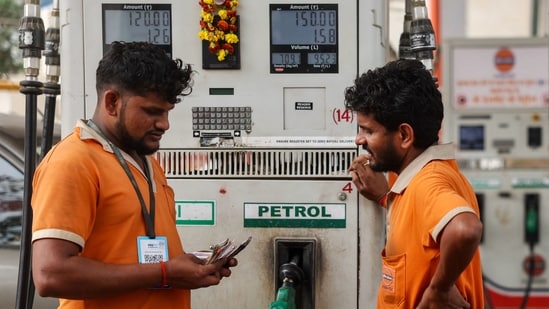
Surging oil prices amid US-Iran war could impact India's vulnerable economy: Report| India News
India’s Economic Tightrope A Year of $100 Oil and its Ripple Effects Key Takeaways
The global economy often feels like a vast, intricate machine, and for a nation like India, one of its most critical gears is the price of oil. When crude prices soar and hold steady at elevated levels, particularly around the $100 a barrel mark for an extended period like a full year, the economic ripples are profound and widely felt. For Omni 360 News, we delve into how such a scenario could challenge India’s growth trajectory and escalate inflationary pressures, impacting everything from household budgets to national policy decisions.
India stands as one of the world’s largest importers of crude oil, relying on overseas supplies for over 80 percent of its consumption. This fundamental dependence means that any sustained surge in global oil prices directly translates into a significant burden on the national exchequer and the wallets of ordinary citizens. If the price per barrel settles at $100 for twelve months, the nation’s import bill would swell dramatically. This isn’t merely an abstract figure; it represents billions of dollars flowing out of the country, directly straining India’s current account deficit and potentially weakening the Rupee against major international currencies. A weaker Rupee, in turn, makes all imports more expensive, creating a vicious cycle.
The most immediate and palpable impact for the average Indian household would be a sharp rise in inflation. Think of it like this: when the cost of the raw material (crude oil) goes up, the price of its derivatives—petrol, diesel, and even cooking gas—inevitably follows suit. For a 12th standard student, imagine your school bus fare or the cost of vegetables at the local market. Diesel is the lifeblood of India’s logistics and transportation sector. Farmers rely on diesel for irrigation pumps and tractors, and goods travel across the country on diesel-fueled trucks. When diesel prices climb, transportation costs for almost every commodity—from food grains to manufactured goods—increase. This ‘cost-push’ inflation means that businesses pay more to produce and transport goods, and these increased costs are then passed on to consumers.
When prices for essentials like fuel and food items rise persistently, your money simply buys less. This erosion of purchasing power is what we call inflation. It forces families to allocate a larger portion of their income to basic necessities, leaving less disposable income for other goods and services, like electronics, clothing, or entertainment. This reduction in discretionary spending acts as a brake on consumer demand, which is a significant engine of economic growth in India.
Beyond household budgets, the sustained high oil prices would cast a long shadow over India’s broader economic growth prospects. Businesses, particularly in manufacturing, aviation, and logistics, would face significantly higher operational costs. For a factory, the cost of powering machinery or transporting finished products would eat into profit margins. For an airline, every flight becomes more expensive to operate. This reduces the incentive for businesses to expand, invest in new projects, or create more jobs. Companies might delay expansion plans, leading to slower capital formation and hindering job creation.
The government also finds itself in a tight spot. On one hand, it needs to cushion consumers from the full impact of high fuel prices, potentially through tax cuts or subsidies, which would strain its fiscal balance. On the other hand, reducing fuel taxes would mean less revenue for public spending on crucial infrastructure projects or social welfare programs. The Reserve Bank of India (RBI) would likely respond by raising interest rates to tame inflation. While necessary to cool down price pressures, higher interest rates make borrowing more expensive for both businesses and individuals, further dampening investment and consumer spending, thereby slowing down economic activity. It’s a delicate balancing act between controlling inflation and supporting growth.
Key sectors like the automotive industry would feel the pinch as higher fuel costs and increased vehicle operating expenses deter potential buyers. The agricultural sector, though often resilient, would also grapple with elevated input costs for fertilizers and farm machinery. Even sectors like tourism and hospitality could see reduced activity as discretionary spending dwindles.
In essence, a year of $100 oil would set off a chain reaction: higher import bills, a weaker Rupee, escalating inflation, reduced consumer spending, increased business costs, and a more cautious approach from monetary and fiscal policymakers. It transforms India’s economic path from a brisk walk to a careful tightrope act, requiring astute management to navigate the challenges.
Key Takeaways:
* Soaring Inflation: Everyday goods and services become significantly more expensive, eroding household purchasing power.
* Slower Growth: Businesses face higher costs, leading to reduced investment, job creation, and overall economic expansion.
* Fiscal Strain: Government faces tough choices between revenue generation and consumer relief, impacting public finances.
* Weakened Rupee: Increased import bills put pressure on the national currency, making all imports pricier.
* Policy Dilemma: The RBI and government must balance controlling inflation with fostering economic growth, a challenging task.
The scenario underscores India’s persistent vulnerability to global energy price volatility and the urgent need for long-term strategies to diversify its energy mix and enhance energy security.