‘Targeting of commercial shipping unacceptable’: India's message amid Strait of Hormuz blockade, Iran-US war| India News
India’s Maritime Call for Open Routes and Seafarer Safety in Hormuz
India has recently articulated a clear and strong stance on the critical issue of maritime navigation, particularly concerning the Strait of Hormuz. The nation has underscored the fundamental importance of unimpeded freedom of navigation for all vessels and emphasized the paramount need for the safety of seafarers across these vital sea lanes. This proactive expression of concern arises amidst escalating tensions that have led to the blockade or disruption of routes along the Strait of Hormuz, a choke point with immense global significance.
Understanding the Strait of Hormuz
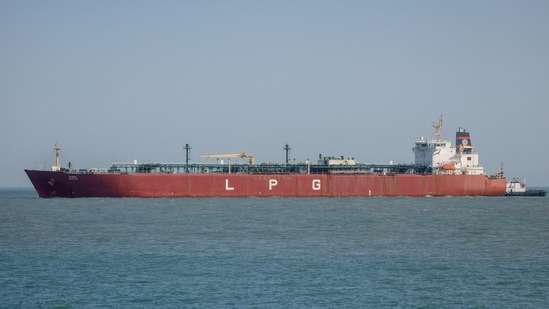
To truly grasp the weight of India’s statement, one must understand the Strait of Hormuz itself. Imagine a very narrow, yet incredibly busy, highway that connects a vast ocean to a critical part of the world. This “highway” is the Strait of Hormuz. It’s a narrow waterway, only about 21 nautical miles (around 39 kilometers) wide at its narrowest point, situated between Oman and Iran. Through this passage, roughly one-fifth of the world’s total petroleum consumption, including a substantial portion of India’s crude oil imports, flows daily. Think of it as the jugular vein of global energy supply.
For a 12th-standard student, envision all the oil tankers carrying fuel for cars, planes, and power plants from countries like Saudi Arabia, Iran, Iraq, Kuwait, UAE, and Qatar. All these tankers *must* pass through this relatively small strait to reach their destinations across Asia, Europe, and the Americas. If this passage is blocked, or even just becomes dangerous, it’s like a major traffic jam on the world’s energy highway, leading to delays, increased costs, and potentially shortages.
India’s Direct Stake in Uninterrupted Passage
India’s concern is not merely an abstract diplomatic gesture; it stems from deeply rooted national interests. As one of the world’s fastest-growing major economies, India is heavily reliant on imported energy, with a significant percentage of its crude oil needs met by countries bordering the Persian Gulf. Any disruption in the Strait directly impacts India’s energy security, potentially driving up fuel prices for ordinary citizens and businesses, and slowing down economic growth. Local economic journals and industry reports frequently highlight the direct correlation between global oil prices and India’s import bill.
Furthermore, India has a vast diaspora working in the Gulf region, many of whom contribute to the maritime industry. The safety and well-being of these Indian seafarers are a primary humanitarian and national concern. Regional news outlets often carry stories of Indian sailors caught in geopolitical crossfire, underscoring the human element behind these grand geopolitical discussions. When routes are blocked or vessels targeted, these brave individuals face direct threats to their lives and livelihoods.
The Principle of Freedom of Navigation
The phrase “freedom of navigation” might sound complex, but it’s a simple yet powerful concept. It essentially means that ships of all nations have the right to travel through international waters without interference. This principle is a cornerstone of international law and is crucial for global trade and peace. If any nation can unilaterally decide to block or control international shipping lanes, it would throw global commerce into chaos and lead to endless conflicts.
India, a nation with a long maritime history and growing blue economy aspirations, is a strong proponent of this principle. Reports from various think tanks in Delhi often emphasize how open sea lanes are not just about trade, but also about maintaining a stable international order where all countries, big or small, can conduct their legitimate business without coercion. For Omni 360 News, this principle is central to understanding global connectivity.
Prioritizing Seafarer Safety
Beyond the movement of goods, there’s the human factor. Seafarers are the unsung heroes of global trade, spending months away from home in often challenging conditions. India is one of the largest suppliers of skilled seafarers to the global maritime industry. When a strait becomes a zone of conflict or arbitrary blockades, these individuals are put at immense risk. Their vessels could be detained, their lives threatened, or their journeys indefinitely prolonged. India’s emphatic call for seafarer safety reflects a deep commitment to its citizens working abroad and highlights the human cost of geopolitical tensions. Local maritime unions have consistently advocated for stronger international protections for their members operating in volatile regions.
India’s Diplomatic Path
India’s approach to this challenge has been consistent: a call for de-escalation, adherence to international law, and diplomatic resolution. Instead of taking sides in regional disputes, India focuses on the universal principles that uphold global trade and peace. This involves engaging with all relevant parties, urging restraint, and advocating for dialogue to resolve underlying issues that contribute to instability. As local analysts frequently observe, India’s diplomatic posture is aimed at safeguarding its own interests while contributing to regional and global stability, a balance that requires nuanced engagement.
Economic Ramifications and Global Impact
The potential for prolonged disruptions in the Strait of Hormuz carries severe economic ramifications far beyond India. Global oil prices would inevitably surge, impacting consumers worldwide. Supply chains for various goods would face delays and increased costs, leading to inflation. The insurance premiums for shipping in the region would skyrocket, making trade more expensive. From an Omni 360 News perspective, these are not isolated incidents but interconnected challenges that ripple through the global economy, affecting everything from the price of petrol at the pump to the cost of goods on supermarket shelves.
Key Takeaways
* Strategic Waterway: The Strait of Hormuz is vital for global energy and trade.
* India’s Reliance: India heavily depends on this strait for energy imports and ensures the safety of its numerous seafarers.
* Freedom of Navigation: A universal principle allowing all ships to travel international waters unhindered, crucial for global commerce.
* Seafarer Safety: India prioritizes the protection of its citizens working on maritime vessels, often caught in regional tensions.
* Diplomacy Over Conflict: India advocates for peaceful dialogue, de-escalation, and adherence to international law to resolve issues in the region.
* Economic Ripple Effect: Blockades risk global oil prices, supply chain disruptions, and increased trade costs for everyone.
India’s resolute stand on freedom of navigation and the safety of seafarers in the Strait of Hormuz is a clear signal of its commitment to a rules-based international order. It underscores the belief that complex geopolitical issues should be resolved through dialogue and mutual respect for international law, ensuring that the vital arteries of global commerce remain open and safe for all. The stability of this critical maritime gateway is not just a regional concern but a shared responsibility that impacts the economic well-being and security of nations across the globe.