
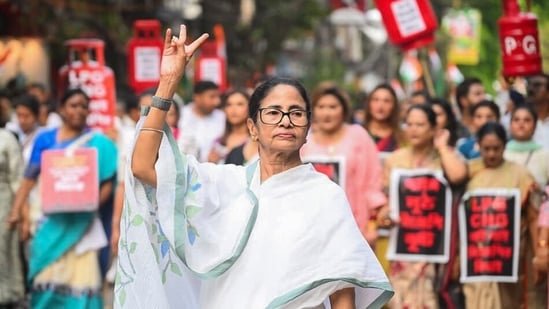
‘TMC will win over 226 seats’: Mamata Banerjee's prediction for West Bengal elections 2026| India News
Mamata Banerjee Suvendu Adhikari Bhabanipur Rematch Looms for 2026 Bengal Polls
The political landscape of West Bengal is already abuzz with projections for the 2026 Assembly elections, even as the previous electoral battles remain fresh in public memory. A particularly compelling scenario now capturing attention involves the reported intention of Trinamool Congress (TMC) chief Mamata Banerjee to contest from her traditional Bhabanipur seat, potentially facing a direct challenge from Bharatiya Janata Party (BJP) heavyweight Suvendu Adhikari. Such a high-stakes confrontation would undoubtedly reshape the narrative, drawing national focus to this critical constituency and setting the stage for one of the most keenly watched electoral duels in recent Indian political history.
Bhabanipur: A Constituency of Significance
Bhabanipur, located in the heart of South Kolkata, is more than just a legislative assembly constituency; it is often seen as a political bastion for Mamata Banerjee. Historically, it has been her chosen seat, representing her connect with urban Bengal and her political base. While she famously shifted to Nandigram in the 2021 Assembly polls, leading to a narrow defeat against Suvendu Adhikari, she subsequently returned to Bhabanipur for a by-election, securing a resounding victory. This constituency, therefore, carries immense symbolic weight, signifying the TMC supremo’s resilience and her direct link to the state’s capital. Local shopkeepers and residents often speak of the development initiatives spearheaded by the Chief Minister and the palpable sense of familiarity they share with their long-standing representative. This deep-rooted connection forms a crucial layer in understanding the dynamics of any election here.
Mamata Banerjee’s Enduring Appeal
Mamata Banerjee, often referred to as ‘Didi’ (elder sister), possesses a unique political persona that has resonated with a significant portion of West Bengal’s electorate for decades. Her political journey, marked by sustained grassroots activism and a fierce opposition to the erstwhile Left Front regime, has cemented her image as a tireless fighter for the common people. Contesting from Bhabanipur in 2026, especially against Suvendu Adhikari, would be a strategic move to reassert her dominance and perhaps settle old scores from the Nandigram contest. Her campaigns typically emphasize social welfare schemes, cultural pride, and resistance against what the TMC portrays as external interference in Bengal’s affairs. For a 12th standard student, understanding Didi means recognizing her as a leader who built her party from scratch, fought tough political battles, and uses her personal connection with voters to win elections. Her presence alone often galvanizes TMC cadres and supporters, making any constituency she contests a focal point of the state election.
The Suvendu Adhikari Challenge: A Formidable Foe
Suvendu Adhikari emerged as a significant force in West Bengal politics through his leadership in the Nandigram movement, which played a pivotal role in the TMC’s rise to power. His dramatic switch from TMC to BJP just before the 2021 elections and his subsequent victory over Mamata Banerjee in Nandigram elevated his stature as a formidable challenger. Adhikari’s political style is often characterized by aggressive campaigning, sharp criticism of the ruling party, and an attempt to consolidate anti-TMC votes. For the BJP, fielding Adhikari against Banerjee in Bhabanipur would be a bold gambit, signaling their intent to directly confront the TMC at its perceived stronghold. This move would not only energize BJP workers but also project Adhikari as the principal opposition face capable of taking on the Chief Minister directly. His appeal often lies with sections of the electorate seeking a change from the incumbent government and those aligning with the BJP’s nationalistic narrative.
A Battle Beyond Constituencies: Implications for State Politics
The potential Bhabanipur showdown between Mamata Banerjee and Suvendu Adhikari extends far beyond the boundaries of one constituency. It would be a symbolic battle for political supremacy in West Bengal. For the TMC, a victory would reaffirm Didi’s unchallenged leadership and demonstrate the party’s strength against a high-profile defector. For the BJP, even a strong showing, let alone a victory, would represent a significant psychological boost, disrupting the TMC’s perceived invincibility in its urban heartland. Local news analyses often point to how such a contest would magnetize media attention and voter engagement, turning Bhabanipur into a microcosm of the larger state election. Key issues like governance, development, law and order, and cultural identity are likely to be debated intensely by both sides, influencing public opinion across the state. This clash would also act as a crucial litmus test for the BJP’s organizational strength and its ability to consolidate support against a deeply entrenched regional force.
Local Dynamics and Voter Sentiment
While the national implications are significant, local sentiment in Bhabanipur will undoubtedly play a decisive role. Residents will weigh the local development record against broader political narratives. Factors such as access to services, local infrastructure, and community harmony often guide their voting decisions. For instance, discussions among local traders might revolve around economic policies, while everyday citizens might consider the accessibility of their representative. Local media outlets would likely capture diverse viewpoints, from unwavering loyalty to critical appraisal of both candidates. This proposed contest adds an electrifying layer to West Bengal’s political narrative, promising an election cycle full of intense scrutiny and robust debate, delivering comprehensive insights for Omni 360 News.
Key Takeaways:
* Mamata Banerjee’s potential contest from Bhabanipur reinforces her strategic choice of a traditional stronghold.
* Suvendu Adhikari’s likely challenge represents the BJP’s direct confrontation strategy against the TMC chief.
* The Bhabanipur constituency carries immense symbolic weight for both parties and the overall state politics.
* This high-profile duel would focus national attention on West Bengal and intensify the political discourse.
* Local issues, development records, and candidate accessibility will be crucial factors for Bhabanipur voters.
As 2026 approaches, the mere speculation of this head-to-head battle ensures that West Bengal’s political stage remains captivating, highlighting the enduring rivalry and the high stakes involved in shaping the state’s future.