
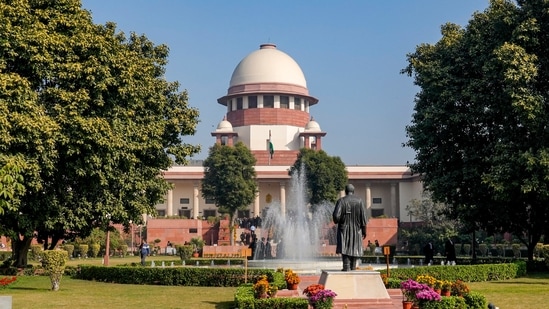
‘To be or not to be…’: What Supreme Court said in Harish Rana euthanasia case
Supreme Court Affirms Dignity in End-of-Life Choices Harish Rana Case Marks Legal Milestone
In a decision that resonates deeply across the nation, India’s Supreme Court has granted permission for passive euthanasia in the case of Harish Rana, a man who has remained in a persistent vegetative state for over thirteen years. This landmark ruling by the apex court not only brings a measure of peace to a family grappling with prolonged suffering but also reinforces crucial legal precedents concerning the right to dignity in death, profoundly impacting end-of-life care discussions throughout the country.
Harish Rana’s story began over a decade ago when a tragic accident left him with catastrophic brain injuries, plunging him into a state of profound unconsciousness from which he never recovered. For years, his family, alongside medical professionals, sustained his life through artificial means, a period marked by immeasurable emotional and financial strain. His legal battle to cease artificial life support brought the complex ethical and legal questions surrounding euthanasia to the forefront of national discourse, drawing attention from various local communities and healthcare practitioners observing the evolving dialogue. This recent judicial pronouncement, keenly observed by Omni 360 News, is poised to reshape how such delicate matters are approached.
Understanding Passive Euthanasia and Its Legal Framework
To grasp the full weight of this decision, it is essential to understand what passive euthanasia entails. For a student in the 12th standard, imagine a situation where someone is seriously ill and on life support machines, like a ventilator or a feeding tube, which keep them alive. Passive euthanasia means deciding to withdraw or withhold these life-sustaining treatments. It’s about allowing nature to take its course by stopping medical interventions that are artificially prolonging life. This is distinctly different from active euthanasia, where a doctor or another person directly administers a substance to intentionally end a patient’s life. India’s Supreme Court has consistently permitted passive euthanasia under strict guidelines, while active euthanasia remains illegal.
The legal journey for passive euthanasia in India began notably with the 2011 Aruna Shanbaug case. Aruna, a nurse, remained in a vegetative state for 42 years after a brutal assault. Her case led the Supreme Court to acknowledge the right to die with dignity as a component of the fundamental right to life under Article 21 of the Constitution, but only through passive means and under stringent court-monitored conditions. Subsequent rulings, particularly the 2018 judgment, further elaborated on these guidelines, introducing the concept of a “living will” or an “advance medical directive.” This allows an individual, while still of sound mind, to stipulate their wishes regarding medical treatment in the event they become incapacitated in the future.
The Harish Rana Case and Court’s Deliberations
In Harish Rana’s situation, the family’s plea highlighted the prolonged suffering and the irreversible nature of his condition. Medical boards, constituted as per court directives, meticulously examined his state, confirming the vegetative diagnosis and the absence of any reasonable hope for recovery. The Supreme Court, after careful deliberation and considering the reports from these medical experts, concluded that continuing life support for Harish Rana served no therapeutic purpose and only prolonged his agony. The judgment emphasized the importance of individual autonomy and the right to make decisions about one’s own body, even when incapacitated, provided these decisions align with established legal and medical protocols. The court stressed that such decisions are not taken lightly but through a robust process involving medical experts, family members, and judicial oversight to prevent any misuse.
Implications for End-of-Life Care and Medical Ethics
This ruling extends beyond Harish Rana’s individual circumstances, setting a vital precedent for similar cases nationwide. It reinforces the legal sanctity of living wills, encouraging individuals to document their preferences regarding medical treatment, thereby empowering them and their families to navigate complex end-of-life situations with greater clarity and dignity.
The decision is also a significant step for medical ethics in India. It prompts healthcare institutions to develop clearer protocols for assessing persistent vegetative states, engaging families in sensitive discussions about prognosis and care, and respecting patient wishes as expressed through advance directives. It underscores the compassionate aspect of medicine—not just to prolong life at all costs, but also to alleviate suffering and ensure a dignified end. Discussions on these intricate matters are now more openly taking place in local hospitals and community health centers, shifting perspectives on what constitutes “best care” in terminal or irreversible conditions.
Key Takeaways
1. Right to Dignity in Death The Supreme Court’s decision reaffirms that the right to life under Article 21 includes the right to die with dignity, specifically through passive euthanasia in irreversible conditions.
2. Legalizing Living Wills The ruling strengthens the validity and importance of advance medical directives, empowering individuals to decide their end-of-life care in advance.
3. Strict Guidelines Remain Passive euthanasia is permitted only under stringent safeguards, involving medical board assessments and judicial approval, to prevent misuse.
4. Ethical and Societal Impact This decision opens pathways for more humane end-of-life care, promoting open dialogue among families, doctors, and legal experts about medical ethics and patient autonomy.
5. Focus on Compassion It underscores that medical intervention should not prolong suffering when recovery is impossible, prioritizing the patient’s well-being and dignity.
The Supreme Court’s sensitive and principled approach in the Harish Rana case reflects a maturing legal and societal understanding of individual rights at life’s most vulnerable juncture. It offers solace to countless families facing similar heartbreaking dilemmas, providing a legally recognized path to honour a loved one’s wish for a dignified departure, a significant stride forward for human rights and medical practice in India, as documented by Omni 360 News.