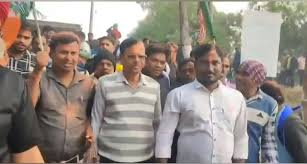
Nandigram, a politically sensitive region in West Bengal, witnessed serious unrest during cooperative elections, as bomb attacks and violent clashes disrupted the polling process on Tuesday. The violence led to panic among voters, temporary suspension of voting, and fresh political accusations between the ruling Trinamool Congress and the opposition Bharatiya Janata Party.
According to local sources, tensions began building early in the day when unidentified miscreants allegedly hurled crude bombs near polling booths. Loud explosions and clashes between rival supporters created fear among residents, many of whom were waiting in queues to cast their votes. Several people were injured, and voting had to be halted temporarily as police rushed to the spot to control the situation.
The Trinamool Congress accused the BJP of deliberately orchestrating the violence after realising that it was likely to lose the cooperative polls. Senior TMC leader and party spokesperson Kunal Ghosh said that his party possessed audio evidence that clearly suggested prior planning of violence by BJP leaders.
“This is a local incident, but it has serious political implications,” Ghosh told reporters. “The BJP sensed its impending defeat and tried to create chaos. We have an audio recording where a BJP leader is heard discussing plans to incite violence a day before the polls. The police are already aware of this situation and should act strictly and appropriately.”
Soon after, the Trinamool Congress released the audio clip to the media, claiming it featured a BJP neta discussing how violence could be triggered to disrupt the election process. The BJP, however, rejected these allegations outright and called them fabricated and misleading.
As the situation worsened, BJP functionary and former Tamluk Member of Parliament Dibyendu Adhikari arrived in Nandigram to assess the ground situation. His visit led to heated exchanges with police officials present at the spot. The confrontation further escalated tensions, and polling was once again suspended for a brief period as security forces worked to regain control.
Police officials later stated that additional forces were deployed, and strict measures were taken to prevent further incidents. After conditions stabilised, voting resumed under tight security arrangements.
Meanwhile, BJP leaders accused the Trinamool Congress of openly violating prohibitory orders and intimidating voters. BJP’s Tamluk organisational district general secretary Meghnad Pal alleged that Section 144 had been imposed in the area to prevent gatherings, but Trinamool supporters were flouting the rules without fear.
“Section 144 has been in force in the booth area since yesterday,” Pal said. “Camps are supposed to be set up at least 100 metres away, but Trinamool is blatantly mocking these rules. One of our leaders was injured after being hit on the head. Because of the violence and fear, I myself could not cast my vote.”
Local residents expressed concern over the recurring violence during elections in the area. Many voters said they felt scared and helpless as political clashes once again overshadowed the democratic process. Some elderly voters returned home without voting, while others waited anxiously for the situation to calm down.
Police sources confirmed that investigations were underway into the bomb attacks and clashes. Officials said they were verifying the authenticity of the audio clip released by the Trinamool Congress and examining CCTV footage from nearby areas to identify those responsible.
Nandigram has long been a flashpoint in West Bengal politics, and incidents of election-related violence have been reported here in the past. Political analysts believe that cooperative elections, though local in nature, have increasingly become battlegrounds for major parties seeking to establish dominance at the grassroots level.
As polling concluded under heavy security, both parties continued to trade blame, raising concerns about law and order and the safety of voters. The incident has once again highlighted the challenges faced by authorities in ensuring peaceful elections in politically volatile regions.
Further action is expected once police complete their investigation and submit reports to senior officials.