Who is Nandita Gorlosa, BJP leader who joined Congress day before Assam nomination deadline?| India News
Nandita Gorlosa’s Congress Move Reshapes Haflong Electoral Battle in Assam
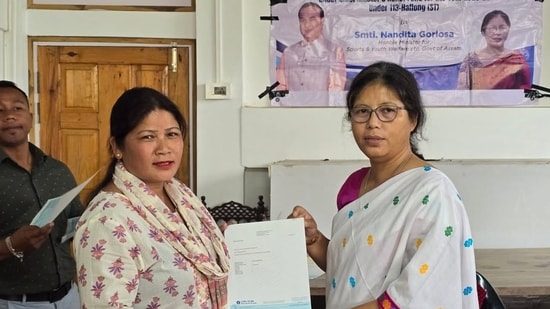
The intricate dance of political loyalties and strategic maneuvers often defines election seasons, and Assam’s electoral landscape is no stranger to such shifts. A notable instance unfolded ahead of recent state assembly elections when Nandita Gorlosa, a prominent figure from Dima Hasao, made a significant political transition. Her defection, a carefully timed move, fundamentally altered the Congress party’s candidate strategy for the crucial Haflong constituency, initiating a palpable reshuffle within its electoral plans for the region. This development underscores how individual decisions can reverberate through an entire election campaign, offering insights for readers of Omni 360 News.
Nandita Gorlosa, previously a key leader within the Bharatiya Janata Party (BJP) in Assam, particularly recognized for her role in the Mahila Morcha, the women’s wing, brought with her a considerable local presence and influence. Her political journey had seen her establish a base in the tribal-dominated district of Dima Hasao, an area of strategic importance in Assam politics. These are regions where local sentiments and community leadership often weigh heavily in electoral outcomes, making Gorlosa’s move a point of keen interest for political observers and local residents alike.
The timing of her decision to align with the Congress party was particularly impactful. Occurring in the crucial period leading up to the Assam Assembly elections, her shift sent immediate ripples through the political fabric of the state. For Congress, grappling with its own electoral strategies and seeking to consolidate support across various demographics, Gorlosa’s entry was seen as a significant win. It provided the party with a seasoned local leader capable of mobilizing voters in a constituency where local connect is paramount.
Haflong, the constituency from which Congress decided to field her, is not just any electoral division. It holds special significance as one of the autonomous district constituencies in Assam, representing the aspirations and unique socio-political dynamics of the Dima Hasao community. Historically, electoral contests here have been vibrant, often witnessing close fights between national parties and various regional factions. For Congress, securing a strong candidate in Haflong was crucial for projecting its commitment to tribal welfare and regional development.
Gorlosa’s induction into the Congress fold directly led to a re-evaluation of the party’s existing candidate roster for Haflong. Before her arrival, various local Congress leaders would have been vying for the party ticket, each with their own claims and support bases. Her defection, however, brought a new dynamic. Recognising her established local appeal and previous political experience, the Congress high command opted to place its trust in Gorlosa, offering her the party’s nomination. This decision, while strengthening Congress’s immediate prospects in Haflong, inevitably meant a strategic adjustment, potentially disappointing other aspirants but prioritizing what the party perceived as its strongest electoral hand.
The implications of this move extended beyond just candidate selection. It reflected a broader pattern of political realignments that often precede major elections in Assam. Local leaders, sensing shifting tides or seeking better platforms for their political ambitions, frequently switch allegiances. These defections can energize one party while creating challenges for another, compelling parties to constantly reassess and adapt their strategies. For the BJP, Gorlosa’s departure meant losing a key figure in Dima Hasao, necessitating a recalculation of their own outreach and mobilization efforts in the area.
On the ground in Haflong, the news of Gorlosa’s candidature sparked a mix of reactions. For her supporters, it was a validation of her leadership and an opportunity to rally behind a known face. For some long-standing Congress workers, while accepting the party’s decision, it might have represented a need to integrate a newcomer into the established party structure. Ultimately, the decision underscored the pragmatic nature of electoral politics, where winning potential often dictates candidate choices.
This reshuffle in the Congress’s candidate list, triggered by Nandita Gorlosa’s defection, highlights how crucial local leadership and timely political decisions are in shaping election outcomes in diverse states like Assam. It illustrates the fluid nature of political loyalties and the constant strategic adjustments parties make to maximize their chances at the ballot box.
Key Takeaways:
* Nandita Gorlosa, a prominent BJP leader, joined the Congress party ahead of the Assam Assembly elections.
* Her defection prompted Congress to field her as its candidate from the strategically important Haflong constituency.
* This move significantly impacted Congress’s candidate selection, necessitating a reshuffle of its initial electoral plans for the region.
* The decision reflected the party’s strategic aim to leverage Gorlosa’s local influence in Dima Hasao.
* Such political realignments are common during election cycles and illustrate the dynamic nature of regional politics in Assam.