
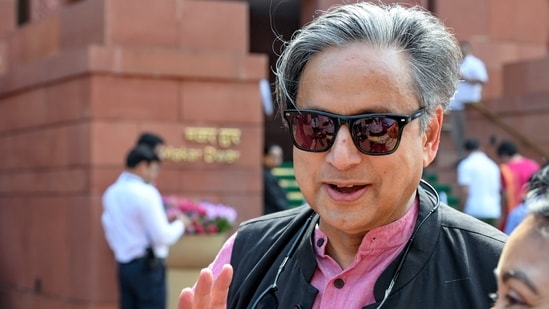
'Iranians must show some respect': Shashi Tharoor after attack on India-bound Thai ship| India News
India’s Maritime Security Alert Shashi Tharoor Addresses Iran Ship Attack Threatening Kandla Bound Vessels Omni 360 News Key Takeaways
The tranquil waters of international shipping lanes often conceal undercurrents of geopolitical tension. Recently, these tensions surfaced dramatically, drawing the attention of global trade observers and political figures alike. A recent incident involving the seizure of a merchant vessel by Iranian forces near the Strait of Hormuz has sparked considerable concern in India, particularly as the ship was reportedly destined for Gujarat’s vital Kandla port. In the wake of this development, seasoned parliamentarian Shashi Tharoor voiced serious apprehensions, highlighting the far-reaching implications for India’s trade, energy security, and the safety of its seafarers. This detailed report, brought to you by Omni 360 News, examines the incident, Tharoor’s critical comments, and the broader challenges facing India’s maritime interests.
The Incident Unfolded: A Merchant Vessel Under Seizure
On April 13, 2024, the world witnessed another flashpoint in the volatile Middle East when Iran’s Islamic Revolutionary Guard Corps (IRGC) seized the container ship MSC Aries in international waters near the Strait of Hormuz. While initially reported as a Thai-flagged vessel in some early accounts, the ship was actually Portuguese-flagged, operated by the Mediterranean Shipping Company (MSC), and reportedly linked to an Israeli-owned company. This detail is crucial, as Iran stated the seizure was in response to Israel’s actions in the region.
What makes this incident particularly relevant to India is the ship’s reported destination. The MSC Aries was on its way to India, with Kandla port in Gujarat identified as its intended arrival point. Kandla, officially known as the Deendayal Port, is one of India’s largest and busiest ports, playing a pivotal role in the country’s import-export economy. It serves as a gateway for vital commodities like crude oil, chemicals, fertilizers, and agricultural products, connecting vast industrial and agricultural hinterlands of northern India to global markets. The crew onboard the MSC Aries included 17 Indian nationals, immediately raising concerns for their safety and well-being. This direct link to Indian trade and citizens underscored the gravity of the situation for New Delhi.
Shashi Tharoor’s Urgent Call for Action
Responding swiftly to the escalating situation, Dr. Shashi Tharoor, a prominent Member of Parliament and a respected voice on foreign policy, publicly articulated his deep concern. His comments were not merely a political statement but a poignant reflection on India’s vulnerabilities in a complex global environment. Tharoor expressed profound worry over the safety of the Indian crew members and the potential disruption to India’s crucial maritime trade routes.
Tharoor emphasized that such acts of aggression in international waters directly threaten the principles of free navigation and global commerce. He called upon the Indian government to engage in robust diplomatic efforts, not only to secure the immediate release and safe return of the Indian seafarers but also to send a clear message about India’s commitment to protecting its commercial shipping interests. His remarks underscored the need for India to assert its presence and protect its economic lifelines, especially given its heavy reliance on sea routes for trade and energy imports. For Tharoor, the incident was a stark reminder of the unpredictable nature of regional conflicts and their potential spillover effects on innocent third parties like India.
India’s Maritime Lifelines and Vulnerabilities
To understand the full weight of Tharoor’s comments, one must appreciate India’s strategic dependence on maritime trade. The Indian Ocean Region (IOR) is India’s immediate geopolitical neighbourhood, and the country’s economic prosperity is inextricably linked to the stability and security of its waters. Over 90% of India’s trade by volume and 70% by value moves through sea routes. The Strait of Hormuz, where the MSC Aries was seized, is a particularly critical choke point, a narrow waterway connecting the Persian Gulf to the open ocean. A significant portion of the world’s oil supply, much of it destined for countries like India, passes through this strait.
Any disruption in this vital artery, whether due to piracy, conflict, or arbitrary seizures, has immediate and severe consequences for India’s energy security and overall economy. For a 12th-standard student, imagine your daily life depending on a constant flow of goods—fuel for vehicles, raw materials for factories that make your clothes or electronics, food products. If the main road bringing these goods suddenly becomes dangerous or blocked, everything slows down or stops. That’s the Strait of Hormuz for India’s economy.
Furthermore, India has one of the largest contingents of seafarers globally. These individuals, working on ships across the world, contribute significantly to the Indian economy through remittances and represent India’s global maritime presence. Their safety is paramount, and incidents like the seizure of the MSC Aries trigger immense anxiety among their families and the nation.
Regional Tensions and Global Implications
The seizure of the MSC Aries cannot be viewed in isolation. It occurred amidst heightened tensions between Iran and Israel, following a suspected Israeli strike on an Iranian consulate in Syria and subsequent retaliatory actions. The Strait of Hormuz has historically been a flashpoint for such conflicts, often becoming a theatre for actions aimed at exerting pressure or retaliation.
These regional hostilities have a ripple effect, impacting global shipping, insurance costs, and ultimately, consumer prices. For India, a net importer of energy and a growing economy, increased instability translates into higher costs of doing business and potential supply chain disruptions. The incident underscores the urgent need for de-escalation in the Middle East, as continued turmoil directly jeopardizes the economic interests of distant nations, including India.
A Path Forward for India
Tharoor’s comments serve as a crucial reminder for India to reinforce its diplomatic muscle and strategic resolve. India has historically maintained good relations with both Iran and other Middle Eastern nations, a diplomatic tightrope walk that becomes even more challenging during periods of heightened conflict.
Going forward, India’s strategy will likely involve several key elements:
- Vigorous Diplomacy: Sustained engagement with Iran and other relevant stakeholders for the release of Indian seafarers and to ensure the safety of maritime passage.
- Enhanced Maritime Security: Strengthening its naval presence and surveillance capabilities in the Indian Ocean and collaborating with international partners to ensure safe transit.
- Diversification and Resilience: Exploring options for diversifying energy sources and trade routes, where feasible, to build greater resilience against external shocks, though this is a long-term and complex endeavour.
- Protecting Citizens Abroad: Continuously advocating for the rights and safety of Indian citizens working in high-risk regions.
Key Takeaways Omni 360 News:
- The Iranian seizure of the MSC Aries, a vessel reportedly bound for India’s Kandla port, has exposed India’s vulnerabilities in global maritime trade.
- Shashi Tharoor’s intervention highlighted critical concerns for the safety of Indian seafarers and the broader impact on India’s energy and trade security.
- The Strait of Hormuz remains a vital but volatile choke point for global commerce, significantly impacting India’s economy.
- India faces the challenge of balancing diplomatic relations with regional powers while ensuring the protection of its national interests and citizens.
- The incident underscores the urgent need for India to prioritize robust maritime diplomacy and security measures in the Indian Ocean Region.
The incident concerning the MSC Aries is more than just a headline; it is a vivid illustration of how regional conflicts can ripple across continents, touching upon the lives of ordinary citizens and impacting the economic stability of nations far removed from the immediate conflict zone. As India navigates these complex geopolitical waters, the need for clear strategy, strong diplomacy, and unwavering commitment to its maritime interests remains paramount.





