
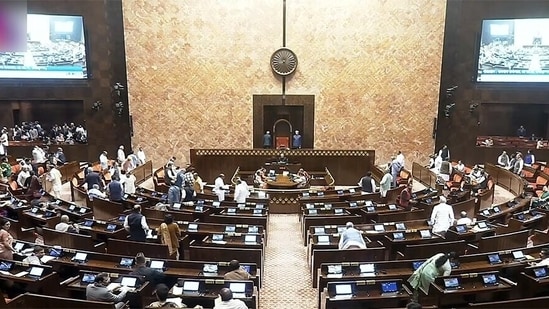
Rajya Sabha elections 2026 LIVE: Voting begins in Haryana for 2 seats| India News
High Stakes Rajya Sabha Polls Unfold Across Haryana Bihar and Odisha
As the electoral clock ticks, the focus of India’s political landscape turns to the Rajya Sabha, the upper house of Parliament, where crucial elections are underway. Today marks a significant day, with voting concluding in Bihar and Odisha, and now actively proceeding in Haryana for two contested seats. The meticulous process of ballot counting is slated to commence after 5 PM, promising a swift revelation of the outcomes that will shape legislative dynamics. This staggered voting across states underscores the intricate nature of these indirect elections, where every vote cast by elected Members of Legislative Assembly (MLAs) holds immense weight.
Understanding the Rajya Sabha Election Process
For those new to the intricacies of Indian democracy, understanding Rajya Sabha elections is key. Unlike the Lok Sabha, where citizens directly vote for their representatives, Rajya Sabha members are elected indirectly. MLAs, who are chosen by the public in state assembly elections, cast their votes. This system ensures that states have a voice in the national Parliament. The election employs a method known as Proportional Representation by means of the Single Transferable Vote (STV).
Imagine it like this: each MLA’s vote isn’t just for one candidate. Instead, they rank candidates in order of preference (1, 2, 3, and so on). To win, a candidate needs a certain number of votes, called a ‘quota.’ If a candidate gets more votes than the quota from first preferences, their ‘extra’ votes are transferred to the second preferences, and so on. If no one reaches the quota initially, the candidate with the fewest votes is eliminated, and their votes are transferred based on their second preferences. This continues until enough candidates reach the quota to fill all the available seats. This system ensures that even smaller parties or coalitions can secure representation if they strategically pool their votes, making every MLA’s choice vital.
These elections are often fraught with intense political maneuvering, as parties strive to secure or increase their numbers in the Rajya Sabha, which is critical for the smooth passage of legislation at the national level. A strong presence in the upper house can significantly influence the government’s ability to enact its agenda.
Haryana’s Contested Landscape
In Haryana, the stakes are particularly high for the two seats up for grabs. The electoral process here has been preceded by weeks of intense backroom negotiations and overt political appeals. With the legislative assembly comprising members from various political outfits and independents, each MLA’s vote is subject to keen observation. The state has a history of closely fought Rajya Sabha contests, often leading to dramatic finishes. Party strategists have been working tirelessly, often sequestering their MLAs in resorts to prevent any last-minute ‘poaching’ or cross-voting, a practice where an MLA votes against their party’s official directive. Security has been tightened at the polling venue within the Haryana Legislative Assembly complex, ensuring a fair and undisturbed voting process. Independent candidates or those backed by smaller factions often play kingmakers in such scenarios, making their affiliations and choices central to the outcome. Omni 360 News has been closely tracking developments on the ground, speaking with local observers and political analysts who highlight the razor-thin margins often witnessed in Haryana’s electoral battles.
Bihar’s Concluded Polls
Earlier in the day, Bihar concluded its voting for the Rajya Sabha seats. The political configuration in Bihar’s assembly, with its well-defined alliances, often leads to more predictable outcomes compared to states with more fluid political alignments. However, even in such scenarios, the possibility of dissent or unexpected shifts remains a constant undercurrent. Political parties in Bihar have been vigilant, ensuring their MLAs adhere to party lines. The outcome in Bihar will be significant for the ruling coalition and the opposition, influencing their respective strengths in the national Parliament. Local news reports from Patna indicated a smooth polling process, with MLAs arriving steadily to cast their ballots. The focus now shifts to the counting, eagerly awaited by both major alliances in the state.
Odisha’s Electoral Resolution
Similarly, Odisha’s Rajya Sabha elections have also concluded. The state, often characterized by the dominance of a particular regional party, typically sees a more streamlined election process for its Rajya Sabha representatives. Yet, even here, internal party dynamics and potential cross-currents are always a subject of speculation. The results from Odisha will further solidify the representation of regional voices in the Rajya Sabha, reflecting the mandate of the state assembly. Preparations for vote counting are well underway in Bhubaneswar, with officials ensuring all protocols are strictly followed to maintain transparency and fairness in the process.
The Path Ahead: Counting and Implications
As the clock ticks past 5 PM, attention will squarely turn to the counting centers in all three states. The results, expected shortly thereafter, will not only announce the new members of the Rajya Sabha but will also offer insights into the current political strengths of various parties and alliances. These elections, while indirect, serve as crucial indicators of stability and unity within legislative parties and coalitions. For the ruling dispensation at the center, a favorable outcome means smoother legislative functioning, while for the opposition, increased numbers provide a stronger platform to challenge government policies and proposals.
Key Takeaways:
* Rajya Sabha elections are indirect, with MLAs voting through a Single Transferable Vote system.
* Haryana is currently voting for two seats, following the conclusion of polls in Bihar and Odisha.
* The counting of votes for all three states begins after 5 PM today.
* These elections are vital for shaping the balance of power in the national Parliament’s upper house.
* Political strategy, party discipline, and potential cross-voting are critical factors influencing outcomes.
* The results will offer a snapshot of current political alignments and party strength within state assemblies.
Omni 360 News will continue to provide real-time updates as the counting progresses and results are declared, offering in-depth analysis of what these outcomes mean for the political landscape.





