
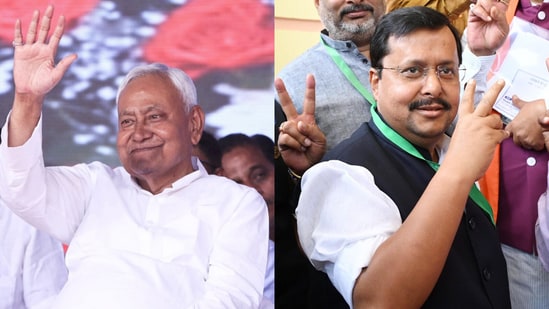
Rajya Sabha election 2026 result: Full list of winners from Bihar, Odisha and Haryana| India News
**Shifting Sands in Eastern Politics NDA Gains as Opposition Falters in Odisha and Bihar**
The political currents in eastern India recently showcased a revealing pattern, as the National Democratic Alliance (NDA) secured significant victories in both Odisha and Bihar. These wins, particularly in legislative council and Rajya Sabha elections, were often bolstered by instances of cross-voting and the absence of opposition legislators. For students of Indian democracy and keen observers of political strategy, these developments offer a compelling study in electoral dynamics and party discipline, casting a spotlight on the challenges confronting opposition unity. Omni 360 News has been closely monitoring these intricate shifts.
In the intricate ballet of legislative elections, where every vote carries immense weight, even a small deviation can alter the outcome. Unlike general elections decided by popular mandate, these contests within state assemblies or electoral colleges depend heavily on the alignment and presence of elected representatives. When opposition ranks suffer from internal dissent or strategic non-participation, it presents a clear opening for rival alliances.
Odisha’s Political Tapestry and the NDA Advantage
Odisha, a state long dominated by the Biju Janata Dal (BJD), has witnessed its own set of political maneuvers. While the BJD often maintains a cooperative stance with the NDA on national issues, state-level politics can still present unexpected turns. Recent reports from local Odia news outlets highlighted the vulnerability of opposition parties during critical legislative votes. In some instances, candidates backed by the NDA, or aligned with its broader agenda, found themselves beneficiaries of votes from legislators outside their traditional support base.
Sources tracking the state’s legislative proceedings indicated that a handful of opposition lawmakers either chose to abstain or cast their ballots against their party line. This trend, though not always numerically overwhelming, proved decisive in close contests. For example, during certain Rajya Sabha elections, where candidates require a specific quota of first-preference votes, even one or two unexpected ballots can make the difference between victory and defeat. The reasons behind such actions are varied; they can range from local grievances, personal political ambitions, or even strategic instructions not publicly disclosed by the central party leadership. Whatever the underlying motivations, the outcome invariably tilted the scales, allowing NDA-backed candidates to secure berths that might otherwise have gone to the opposition.
Bihar’s Volatile Political Landscape and Crucial Absences
Bihar’s political narrative is often characterized by its fluidity and intense competition. The state, a crucible of coalition politics, frequently sees alliances shift and internal party equations challenged. Recent developments in Bihar echoed the Odisha trend, with the NDA effectively capitalizing on disarray within the opposition. Reports from vernacular newspapers in Bihar meticulously detailed instances where the absence of opposition legislators played a critical role in crucial votes, particularly in elections for the Legislative Council (Vidhan Parishad) or Rajya Sabha.
During a notable election, multiple legislators from prominent opposition parties were conspicuously absent during voting. Their absence effectively reduced the total number of votes required for a candidate to win, making it easier for NDA-supported nominees to cross the finish line. While some absences were attributed to health issues or prior engagements, local political analysts frequently pointed towards deeper issues of party discipline and potential dissent. The slender margins in these elections meant that even a handful of absent members could significantly weaken the opposition’s collective strength. This tactical advantage allowed the NDA to consolidate its position, adding to its representation in both houses of the state legislature and the national parliament. The political ripple effect of such incidents often extends beyond the immediate electoral outcome, fueling speculation about internal rifts and the stability of opposition alliances.
Understanding the Mechanics: Cross-Voting and Absences
To understand these dynamics, it’s helpful to view these legislative contests through the lens of a chess game. Each legislator is a piece, and their vote is a move. In a system where votes are cast by elected representatives, often via secret ballot, the concept of a ‘party whip’ is crucial. A whip is essentially a directive from a political party to its members, telling them how to vote on a particular issue. However, whips are not always enforceable in specific types of elections, such as those for Rajya Sabha, where a secret ballot allows for individual discretion.
Cross-voting occurs when a legislator votes against the instructions of their own party. This can happen for various reasons: personal conviction, dissatisfaction with party leadership, regional loyalties, or even perceived incentives. When a legislator from an opposition party votes for an NDA-backed candidate, it directly subtracts a vote from the opposition’s tally and adds it (or helps) the NDA’s candidate.
Similarly, the absence of a legislator, whether intentional or otherwise, effectively reduces the voting strength of their party. In elections where a specific quota of votes is needed to win, fewer total votes mean a lower quota. If opposition members are absent, their collective strength diminishes, making it easier for the opposing alliance’s candidates to secure the necessary votes. Both cross-voting and strategic absences highlight a breakdown in party discipline or a deliberate political maneuver that can have profound implications for electoral outcomes.
Implications for Opposition Unity and Future Contests
The losses sustained by the opposition in Odisha and Bihar due to cross-voting and absenteeism are more than just numerical setbacks; they represent a significant challenge to the notion of opposition unity. In a political landscape where numerous regional and national parties are attempting to forge a united front against a formidable NDA, such internal fissures can prove highly detrimental. Every instance of cross-voting or strategic absence fuels doubts about the cohesion and reliability of the opposition bloc.
For the NDA, these incidents serve as opportune moments to showcase their strategic prowess and the perceived weakness of their opponents. By capitalizing on internal discord, the ruling alliance not only strengthens its legislative presence but also sends a clear message about its ability to navigate complex political terrain. This dynamic could embolden the NDA in future elections and influence the strategic calculations of various parties contemplating alliances.
Key Takeaways:
* Strategic Wins for NDA: The NDA leveraged internal opposition issues in Odisha and Bihar to secure victories in legislative polls.
* Impact of Cross-Voting: Defiance of party directives by a few legislators directly helped NDA-backed candidates.
* Significance of Absences: The absence of opposition lawmakers lowered vote quotas, easing the path for NDA candidates.
* Challenges to Opposition Unity: These events underscore the fragility of opposition alliances and party discipline.
* Electoral Dynamics: Legislative elections, especially those with secret ballots, expose parties to internal dissent and strategic maneuvers.
In conclusion, the electoral outcomes in Odisha and Bihar serve as a compelling reminder of the nuanced and often unpredictable nature of legislative politics. The gains made by the NDA, propelled by instances of cross-voting and the absence of opposition legislators, highlight the critical importance of party discipline, strategic presence, and internal cohesion. As the nation gears up for future electoral battles, these incidents will undoubtedly resonate, influencing party strategies and the broader political narrative across the country. Omni 360 News will continue to provide comprehensive coverage of these evolving political narratives.





