
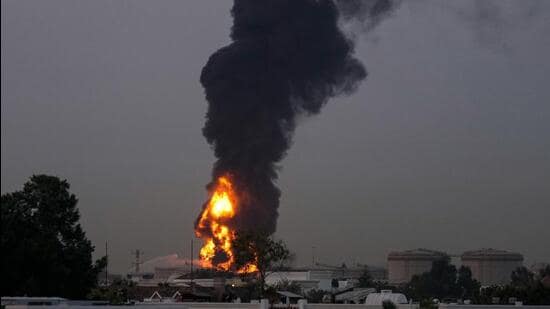
India’s Brics challenge: Balancing ties with Iran, Saudi, UAE amid drone strikes| India News
India’s Steady Hand in BRICS Diplomacy Shaping West Asia Consensus
In the intricate tapestry of global diplomacy, India has emerged as a crucial player, actively engaging with its fellow BRICS member states to forge a united stance on the volatile situation in West Asia. This ongoing dialogue, primarily conducted through the vital Sherpa channel, underscores a concerted effort to navigate geopolitical complexities and build a consensus position that could significantly influence regional stability.
The world watches as the West Asian landscape continues to shift, marked by persistent conflicts and humanitarian challenges. From the Gaza Strip to wider regional tensions, the need for international cooperation and a coherent diplomatic approach has rarely been more acute. It is within this demanding environment that India, a nation with deep historical ties to the region and a robust foreign policy, is intensifying its efforts within the expanded BRICS framework.
Understanding the Sherpa Channel’s Critical Role
For those unfamiliar with the mechanics of international diplomacy, the Sherpa channel is the backbone of preparatory work for summits involving heads of state or government. Sherpas are high-ranking officials, typically senior diplomats or special envoys, appointed by their respective leaders to conduct groundwork, negotiate agendas, and hammer out draft declarations before leaders meet. This behind-the-scenes negotiation is painstaking, requiring immense diplomatic skill to bridge diverse national interests and perspectives.
India’s Sherpa is in constant communication with counterparts from Brazil, Russia, China, South Africa, and the newly inducted members – Egypt, Ethiopia, Iran, Saudi Arabia, and the United Arab Emirates. This expanded membership, particularly the inclusion of key West Asian nations, fundamentally alters the dynamics within BRICS, making the quest for a regional consensus both more challenging and potentially more impactful. For instance, the Gulf nations and Iran are direct stakeholders in the region’s future, bringing their unique viewpoints and national priorities directly to the BRICS table.
Why West Asia Matters for BRICS and India
The West Asia region is not merely a distant land for BRICS nations; it is a critical artery for global energy supplies, a hub of international trade routes, and home to significant diasporas from several BRICS countries, including India. Stability in West Asia directly impacts global economic growth, energy security, and even the safety and well-being of millions of citizens across the BRICS grouping.
For India, the stakes are particularly high. The nation relies heavily on West Asian countries for its energy needs and hosts a massive Indian expatriate community in the Gulf, whose remittances are vital to the Indian economy. India also maintains historical and strategic partnerships with many countries in the region. Therefore, ensuring peace and stability there is not just a diplomatic aspiration but a national imperative.
India’s Approach and Strategic Engagement
India’s diplomatic approach to West Asia has consistently been one of balance, advocating for de-escalation, adherence to international humanitarian law, and a long-term resolution based on a two-state solution for the Israel-Palestine conflict. This principled stance provides a credible basis for India’s engagement within BRICS. Through the Sherpa channel, India champions these principles, seeking common ground with other BRICS members who may have differing historical allegiances or contemporary geopolitical interests.
Reports from various Indian news outlets, including detailed analyses by respected policy observers, frequently highlight India’s consistent calls for humanitarian aid access and a cessation of hostilities in affected areas. These positions are conveyed during bilateral meetings and multilateral forums, including those leading up to BRICS ministerial and summit gatherings. The goal is to articulate a BRICS position that not only reflects shared concerns but also proposes actionable steps towards enduring peace.
The Challenge of Forging Consensus
Achieving a consensus position among ten diverse nations on an issue as complex and historically charged as West Asia is a monumental task. BRICS members hold varied relationships with different actors in the region. For instance, Russia has a significant military presence and diplomatic influence in Syria, while China has expanded its economic footprint and mediated high-level diplomatic reconciliations in the Gulf. South Africa has historically maintained a strong pro-Palestinian stance, aligning it with several other developing nations.
India’s diplomatic heavy lifting involves navigating these varied perspectives to identify common principles that all members can endorse. This includes shared concerns over terrorism, radicalization, economic disruption, and the humanitarian crisis. The Sherpa channel becomes the crucible where these differences are debated, refined, and hopefully, transformed into a unified voice. It’s a testament to continuous dialogue rather than a one-time negotiation.
Implications of a Unified BRICS Stance
Should BRICS succeed in formulating a robust and unified consensus position on West Asia, its implications could be far-reaching. A collective statement from an economic grouping representing over 40% of the world’s population and a quarter of global GDP carries significant weight on the international stage. It could provide a powerful counterpoint or complement to positions held by traditional Western powers, offering a broader and more inclusive perspective on potential solutions.
Such a consensus could also pave the way for coordinated BRICS initiatives, be it in humanitarian assistance, peace-building efforts, or diplomatic outreach to regional actors. For Omni 360 News, this represents a pivotal development in global governance, showcasing how emerging economies are increasingly shaping the discourse on critical geopolitical issues. It moves BRICS beyond purely economic cooperation into a realm of serious geopolitical influence.
Key Takeaways
* India is actively engaged through the BRICS Sherpa channel to develop a consensus position on West Asia.
* The expanded BRICS membership, including key West Asian nations, makes this diplomatic effort crucial and complex.
* India’s consistent advocacy for de-escalation, humanitarian law, and a two-state solution guides its contributions.
* The Sherpa channel is vital for bridging diverse national interests and preparing unified BRICS statements.
* A unified BRICS stance could significantly impact global diplomacy and efforts towards West Asian stability.
In conclusion, India’s diplomatic outreach within BRICS on the West Asia situation reflects a mature and responsible foreign policy. It highlights the growing influence of the grouping in addressing global challenges and underscores India’s commitment to fostering international peace and stability through patient, persistent engagement. The path to consensus is arduous, but the potential rewards of a unified BRICS voice in one of the world’s most turbulent regions are immeasurable.





