
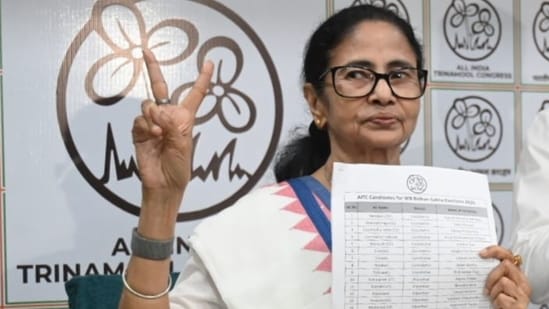
West Bengal elections 2026: TMC to contest 291 seats, releases full list of candidates| India News
Mamata Banerjee’s Bhabanipur Election Bid Key Takeaways from Kolkata’s Political Arena
Kolkata residents are closely watching the political stage as West Bengal Chief Minister Mamata Banerjee confirms her intent to contest the upcoming assembly by-election from her traditional Bhabanipur constituency. This decision, while expected by many political observers, carries significant weight and sets the tone for future political maneuvers in the state. From the bustling lanes of Kalighat to the quieter residential pockets, the by-election campaign promises to be a captivating local affair, drawing national attention.
Understanding Bhabanipur’s Significance
Bhabanipur, nestled in the heart of South Kolkata, is more than just a legislative assembly seat; it is historically intertwined with Mamata Banerjee’s political journey. For years, this constituency has been her political home ground. It represents a diverse demographic mosaic, encompassing various communities, business establishments, and residential areas. Its voters often reflect a cross-section of urban Kolkata’s populace, from long-term residents to the city’s intellectual class and the working communities that fuel its vibrant economy.
Local news archives reveal that Bhabanipur has consistently been a crucial battleground, even when the Chief Minister has easily secured victories. The constituency’s composition demands a nuanced campaign, focusing on localized issues that directly impact daily life. Streets like Harish Mukherjee Road and Sarat Bose Road, usually bustling with everyday activity, are expected to soon buzz with campaign fervor, small gatherings, and intensive door-to-door outreach. This micro-level campaigning is a hallmark of the Bhabanipur electoral landscape, distinguishing it from broader state-wide contests.
The Political Context A Return to the Familiar
The decision for Mamata Banerjee to contest from Bhabanipur follows a specific political landscape after the recent state assembly elections. While her Trinamool Congress (TMC) secured a resounding victory across West Bengal, Mamata Banerjee herself narrowly lost the Nandigram seat. According to constitutional requirements, she must be elected to the legislative assembly within six months of taking office as Chief Minister. Bhabanipur, therefore, offers a strategic and politically comfortable choice.
Historically, Bhabanipur has shown strong support for the TMC. In the last state assembly election, even with Banerjee contesting from Nandigram, the TMC candidate won this seat by a substantial margin. This suggests a deeply ingrained party loyalty and a robust grassroots network, factors that will undoubtedly play a pivotal role in the upcoming by-election. For the Chief Minister, this contest is not merely about securing a seat; it is about reaffirming her mandate, solidifying her political standing, and sending a clear message of stability to her party cadres and the electorate.
Campaigning on Local Concerns The Bhabanipur Blueprint
Local reporting often highlights that elections in Bhabanipur are won not just on grand political narratives but on addressing everyday concerns. Residents frequently voice issues ranging from improved drainage systems, local infrastructure upgrades, better waste management, and support for small businesses struggling in the post-pandemic economy. These are the topics that permeate neighborhood discussions and often dictate voter sentiment.
For the TMC and Mamata Banerjee, the campaign strategy in Bhabanipur will likely involve a concentrated focus on these hyperlocal issues. Expect to see numerous small meetings, direct interactions with community leaders, and an emphasis on the government’s efforts to address local grievances. The party’s local machinery, known for its extensive reach, will be mobilized to connect with every household, explain development initiatives, and assuage any lingering concerns. This ground-up approach is vital in a constituency where personal connections and community ties hold considerable sway. For Omni 360 News, capturing these street-level conversations provides the true pulse of the election.
The Opposition’s Challenge Uphill Battle in a Stronghold
Contesting against a seasoned political figure like Mamata Banerjee in her perceived stronghold presents a formidable challenge for opposition parties, primarily the Bharatiya Janata Party (BJP) and the Left-Congress alliance. Their strategy will likely involve highlighting perceived failures of the state government, attempting to nationalize local issues, and potentially unearthing local disgruntlements.
However, historical trends and local sentiment indicate a tough road ahead for opponents. To make inroads, they would need to present a compelling local candidate with a strong community presence and offer concrete solutions to Bhabanipur’s specific problems. Merely relying on broad anti-incumbency sentiments might not be sufficient against a leader who has consistently nurtured this constituency. The opposition’s success will depend on their ability to penetrate the TMC’s robust local network and convince voters that they offer a viable alternative for their local concerns.
Wider Implications for West Bengal Politics
While a local by-election, the Bhabanipur contest carries significant implications for the broader political landscape of West Bengal. A comfortable victory for Mamata Banerjee would not only reinforce her leadership but also inject fresh confidence into the TMC ahead of future civic body elections and other political battles. It would signal the continued dominance of the ruling party despite the fierce electoral contest of the recent past.
Conversely, any significant reduction in the winning margin, or an unexpected outcome, would provide ammunition to the opposition and spark renewed political debate across the state. It’s a test of the Chief Minister’s continued popular appeal and the strength of the TMC’s organizational structure even after a high-stakes state election. This by-election, therefore, is not just about one seat; it is about political momentum, perception, and the future direction of West Bengal’s often-turbulent political currents.
Key Takeaways
The Bhabanipur by-election is a pivotal moment for Mamata Banerjee and the Trinamool Congress.
It represents a return to a familiar and historically supportive constituency for the Chief Minister.
Campaigning will heavily emphasize local issues such as infrastructure, sanitation, and economic support for residents and small businesses.
The diverse demographics of Bhabanipur necessitate a nuanced and inclusive campaign strategy.
Opposition parties face an uphill battle against a strong local network and popular incumbent, requiring a focus on specific local grievances to gain traction.
The outcome will significantly impact the political narrative and momentum in West Bengal, reaffirming the ruling party’s strength or providing avenues for the opposition.
For residents, the election is an opportunity to voice their immediate concerns and shape their local representation.





