
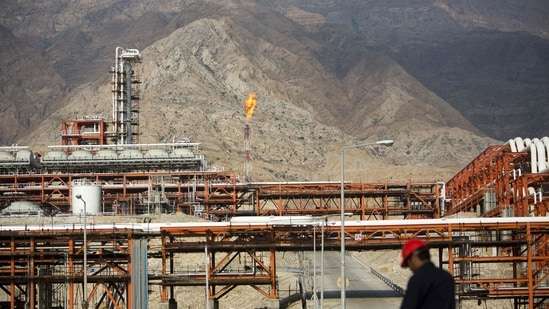
South Pars, Ras Laffan: World's largest gas reserve in crosshairs of US-Iran war, what it means for India| India News
Understanding the World’s Largest Gas Reservoir Shared by Iran and Qatar
The Persian Gulf conceals a colossal energy treasure beneath its waters, a natural gas field so vast it holds the distinction of being the world’s largest. This immense reservoir is uniquely shared by two nations: Iran and Qatar, each tapping into different sections of the same geological marvel. Known as South Pars on the Iranian side and the North Field (or North Dome) in Qatari territory, this shared resource profoundly shapes regional economics, global energy markets, and the intricate relationship between its two custodians.
Imagine an underground ocean of natural gas, stretching for thousands of square kilometers. That is essentially what the South Pars / North Field represents. For decades, both Iran and Qatar have been extracting vast quantities of this clean-burning fuel, transforming it into a critical lifeline for their national development. Qatar, leveraging its portion, has risen to become a global leader in liquefied natural gas (LNG) exports, a chilled form of gas that can be shipped worldwide, powering homes and industries across continents. Its economic prosperity is inextricably linked to the North Field’s output, driving significant infrastructure development and social programs across the small Gulf nation.
Iran, on its side, utilizes the gas from South Pars primarily for domestic consumption, fueling its power plants, industries, and residential heating, though it also has aspirations for significant exports. The sheer scale of the field means both nations possess immense reserves, guaranteeing energy security and substantial revenue streams for generations. Omni 360 News routinely tracks such global energy developments, recognizing their far-reaching implications for stability and prosperity.
The shared nature of this hydrocarbon giant presents both opportunities and complexities. While a common resource, the two nations operate their extraction and development independently, often reflecting broader geopolitical dynamics. This unique arrangement underscores the delicate balance of resource management and national interest in one of the world’s most energy-rich regions. Each side’s approach to investment, technology, and market strategy can influence the other, making the field a continuous point of regional significance.
This vast gas field serves as a fundamental component of the global energy supply, illustrating how geology can intertwine national destinies and international energy landscapes.
Key Takeaways:
* The South Pars / North Field is Earth’s largest natural gas field, straddling Iranian and Qatari maritime boundaries.
* It is known as South Pars in Iran and the North Field (or North Dome) in Qatar.
* This resource is a vital economic pillar for both countries, enabling Qatar’s global LNG dominance and fueling Iran’s domestic needs.
* Its management reflects a complex interplay of energy security, national sovereignty, and regional dynamics.





