
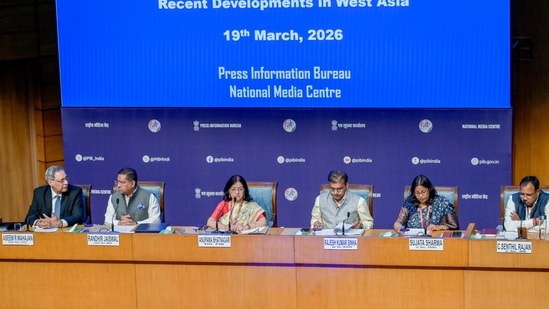
‘Six Indians killed in West Asia war,’ says MEA| India News
Rising Toll for Indians in West Asia Amidst Heightened Regional Tensions
The grim reality of escalating tensions across West Asia has brought profound sorrow to several Indian families, as the death toll for Indian nationals caught in the precarious situation has now tragically reached six. The latest casualty, a somber addition to this growing count, was reported in Saudi Arabia, underscoring the widespread impact of the regional instability. Omni 360 News is closely monitoring these developments, seeking to provide a clear and human-focused perspective on a crisis that continues to claim innocent lives.
Details surrounding the most recent death, reported from Saudi Arabia, remain somewhat limited, as is often the case with such incidents in volatile regions. Initial reports, pieced together from discussions with community leaders and consular sources, suggest the individual was an Indian expatriate working in the Kingdom, whose life was cut short under circumstances yet to be fully disclosed. While specific details often take time to emerge, particularly when local authorities are involved, the incident sends a chilling reminder of the heightened risks faced by millions of foreign workers in the region. This latest fatality brings the cumulative number of Indian nationals who have lost their lives amidst the current wave of West Asian unrest to six, a stark figure that demands urgent attention.
To understand why this is happening, it helps to know that West Asia, a region encompassing countries like Israel, Palestine, Saudi Arabia, UAE, and others, has been experiencing a significant rise in conflicts and diplomatic tensions. Think of it like a neighborhood where several disputes are flaring up at once, sometimes involving different groups or countries. These tensions, often rooted in long-standing historical, political, and religious differences, have recently intensified, creating a more dangerous environment. For instance, while some conflicts are direct clashes between nations or factions, others manifest as increased security risks, missile attacks, or even indirect impacts on daily life and travel. This overall instability means that places which were once considered relatively safe for work and residence can quickly become perilous, affecting not just local populations but also the vast number of foreign workers who contribute significantly to the region’s economies.
The Indian diaspora in West Asia is immense, numbering in the millions. These individuals, from various walks of life and regions across India, travel to countries like Saudi Arabia, UAE, Qatar, Kuwait, and others, seeking better economic opportunities. They work in construction, healthcare, hospitality, IT, and many other sectors, sending remittances back home that significantly support their families and contribute to India’s economy. When regional stability falters, these workers, who are often far from home and their support networks, become incredibly vulnerable. Their daily commutes might become dangerous, their workplaces could be at risk, or they might simply be in the wrong place at the wrong time amidst escalating hostilities. The promise of economic advancement is often intertwined with unforeseen dangers, making their plight particularly poignant.
In response to these escalating risks and the tragic loss of life, the Indian government, through its embassies and Ministry of External Affairs, has been actively engaged. They issue travel advisories, urging citizens to exercise extreme caution and, in some cases, to consider deferring non-essential travel or even returning home from particularly volatile areas. Consular services are being strengthened to assist Indian nationals with emergencies, medical aid, and repatriation efforts for those who wish to leave. Furthermore, the government works diligently to coordinate with local authorities in host countries to gather information about incidents, ensure the well-being of its citizens, and facilitate the solemn process of bringing the deceased back to their grieving families in India. These efforts are often complex, navigating diplomatic channels and challenging ground realities.
Local news reports from various parts of India, particularly from states like Kerala, Uttar Pradesh, and Bihar, where a significant number of West Asian expatriates originate, paint a vivid picture of the human impact. These reports often highlight the despair and anxiety within families awaiting news from their loved ones. They feature interviews with wives, parents, and children who speak of the immense financial sacrifice made by their relatives working abroad and the constant fear for their safety. Such local coverage often personalizes the broader geopolitical crisis, showing how a single incident thousands of miles away can shatter a family’s dreams and financial stability. It underscores the profound interdependence between these communities and the West Asian region, making the well-being of Indian workers a matter of national concern.
As Omni 360 News continues its reporting, the focus remains on delivering accurate and empathetic coverage of this challenging situation. The increasing death toll for Indian nationals in West Asia serves as a sobering reminder of the far-reaching human cost of regional conflicts. It highlights the urgent need for diplomatic solutions and enhanced safety measures for all expatriate communities caught in the crossfire. The safety and well-being of citizens abroad will undoubtedly remain a paramount concern for India as the situation in West Asia evolves.
Key Takeaways:
* The death toll for Indian nationals in West Asia has reached six, with the latest reported in Saudi Arabia.
* Regional tensions are escalating, creating increased dangers for expatriate workers.
* Millions of Indians work in West Asia, contributing significantly to both regional economies and their families back home.
* The Indian government is issuing advisories and providing consular support for its citizens.
* Local news in India reveals the profound human impact and anxiety faced by families of expatriates.
* Omni 360 News continues to provide factual reporting on these critical developments.





