
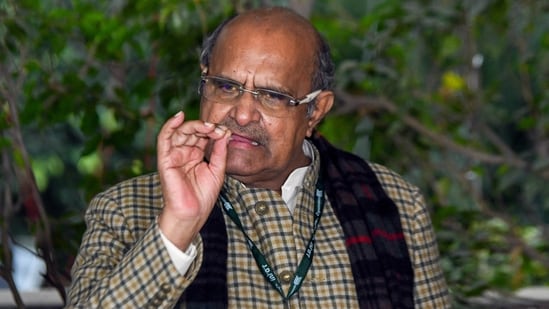
KC Tyagi joins Jayant Choudhary's RLD days after quitting JD(U)| India News
KC Tyagi Departs JD(U) A Veteran’s Unexplained Exit Shakes Bihar Politics
The political landscape of Bihar saw a significant development on March 17 as KC Tyagi, a seasoned politician and one of the founding pillars of the Janata Dal (United) party, announced his resignation. The departure of a leader of Tyagi’s stature, particularly without a public explanation for his reasons, has ignited discussions among political observers and party insiders across the region, as reported by various local news outlets. His exit marks a notable moment for the JD(U), a party he helped build alongside Chief Minister Nitish Kumar.
A Political Journey Rooted in Principles
For decades, KC Tyagi has been an undeniable force in Indian politics, known for his articulate presence and firm grasp of policy matters. His association with the Janata Dal family stretches back to its foundational days, long before the JD(U) formally came into existence. Tyagi was not merely a member; he was a key architect, a trusted confidant, and a prominent national spokesperson for the party. His voice often articulated the JD(U)’s stance on critical national issues, making him a recognizable face beyond Bihar’s borders. He served as a Member of Parliament in the Rajya Sabha and held significant organizational roles as the party’s General Secretary and Chief Spokesperson. His intellectual contributions and ideological alignment with socialist principles have consistently defined his political persona. His long-standing loyalty to Nitish Kumar and the party’s core ideology made his resignation all the more surprising.
The importance of Tyagi’s role cannot be overstated. In the intricate web of coalition politics and ideological shifts that have characterized the JD(U)’s journey, leaders like Tyagi provided a sense of continuity and historical context. He was often seen as a bridge between the party’s socialist roots and its contemporary political alliances. Local political pundits, often quoted by regional dailies like ‘Prabhat Khabar’ and ‘Hindustan’ in Bihar, have consistently highlighted Tyagi’s ability to navigate complex political narratives and present the JD(U)’s position with clarity and conviction on national platforms. His departure leaves a significant void, not just in terms of leadership but also in the party’s intellectual and communication apparatus.
The Silence Behind the Exit
What makes Tyagi’s resignation particularly intriguing is the conspicuous absence of a stated reason. In the often-turbulent world of Indian politics, resignations are usually accompanied by fiery statements, accusations, or at the very least, a polite note citing “personal reasons” or “health grounds.” Tyagi, however, chose a path of dignified silence, simply confirming his decision to step away. This reticence has fueled a flurry of speculation across the political spectrum and in newsrooms monitoring Bihar’s dynamic politics.
Local reports from sources close to the JD(U) leadership suggest a myriad of possibilities, none officially confirmed. Some speculate about a potential disillusionment with the party’s recent strategic shifts, particularly the repeated realignments with the National Democratic Alliance (NDA). While Tyagi has always been a loyalist, his ideological moorings might have led to discomfort with certain political compromises or policy directions. Others hint at internal organizational dynamics, where senior leaders might feel increasingly sidelined in the day-to-day functioning or decision-making processes. There is also the possibility of a desire for a different role, perhaps a less active one, given his long and demanding career, or even an exploration of new political avenues. The unstated reasons, therefore, remain a subject of intense conjecture, making this an evolving story that Omni 360 News continues to monitor closely.
Impact on JD(U) and Bihar Politics
The resignation of a leader like KC Tyagi carries weight, especially for a regional party like JD(U) which often relies on its experienced cadres to maintain stability and influence. His exit is seen as a loss of an articulate voice, particularly on national television debates and in parliamentary discussions, where he effectively represented the party’s interests. For a party that has recently undergone significant internal adjustments and external alliance shifts, the departure of a founding member could signal underlying tensions or a change in guard.
In Bihar, where political loyalties are often deeply personal, Tyagi’s exit could resonate among segments of the electorate and party workers who admired his consistent ideological stance. While the JD(U) leadership, including Chief Minister Nitish Kumar, has acknowledged his resignation, their public statements have largely been brief, wishing him well in his future endeavors. This subdued response only adds to the mystery surrounding the true motives. The state’s political landscape is perpetually in flux, and such high-profile resignations often precede broader realignments or internal restructuring within parties. The upcoming electoral cycles will undoubtedly test the JD(U)’s ability to navigate these changes without its veteran voices.
Key Takeaways for the Political Observer:
The departure of KC Tyagi is more than just a personnel change; it represents a significant shift for the JD(U). Here are the key takeaways:
* Loss of a Veteran Voice: The JD(U) loses a respected, articulate, and experienced leader who provided continuity and a national face for the party.
* Unanswered Questions: The lack of an explicit reason for his resignation leaves room for speculation about internal party dynamics, ideological differences, or personal considerations.
* Impact on Party Cohesion: While the immediate impact might not be dramatic, such high-profile exits can sometimes signal underlying discomfort among other senior leaders or grassroots workers.
* Future Implications: Tyagi’s next move, or indeed his continued silence, will be closely watched. His experience and network could potentially influence future political narratives, even from outside a formal party structure.
As the dust settles, the political establishment will be observing closely to see how the JD(U) addresses this vacuum and whether Tyagi’s exit prompts any further internal realignments within the party. For now, the unexplained departure of a founding member remains a key point of discussion in the ever-evolving narrative of Bihar politics.





