
‘Ab jhola uthao aur chale jao’: Opposition mounts pressure on government, PM Modi over inflation| India News
Raut’s PM Modi Exit Call Election Focus vs Inflation An Omni 360 News Analysis
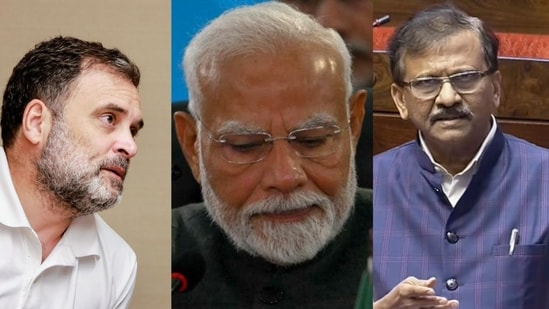
A sharp political volley has been fired by Shiv Sena (Uddhav Balasaheb Thackeray) leader Sanjay Raut, urging Prime Minister Narendra Modi to “pick his bag and leave.” Raut’s provocative remarks stem from a deeply held conviction that the Prime Minister’s attention is disproportionately focused on upcoming state elections rather than tackling the pressing issue of inflation impacting the common citizen. This assertion, reported widely across local media outlets and debated in regional political circles, underscores a growing chasm in political priorities, as observed by Omni 360 News.
The statement by Raut, a prominent voice within the opposition, came amidst ongoing economic anxieties. He articulated a sentiment shared by many opposition figures: that the ruling dispensation appears more engrossed in strategizing for electoral victories in states like Maharashtra, Jharkhand, and Haryana than in alleviating the financial burden on households. “The Prime Minister is busy with state elections. It is time for him to pick his bag and leave,” Raut stated, encapsulating the frustration over perceived governmental detachment from everyday struggles.
Understanding the Inflation Challenge
For a clearer perspective, inflation simply means that the cost of goods and services is rising. Imagine your weekly grocery bill or the amount you spend on petrol for your scooter; when these prices go up significantly and consistently, your money buys less than it used to. This phenomenon directly impacts families, eroding their savings and making basic necessities harder to afford. Local market reports consistently highlight the increasing price of staples like vegetables, cooking oil, and pulses, directly affecting the budgets of ordinary people. Fuel prices, a major driver of overall inflation, also remain a contentious point, with local transport operators and daily commuters feeling the pinch directly.
Raut’s critique draws attention to this economic reality. His argument is that while global factors undeniably play a role in inflation, domestic policies and governmental focus are crucial in mitigating its impact. When the public perceives that their leaders are not prioritizing these economic hardships, it creates a sense of disillusionment. For a 12th standard student, think about how rising snack prices at the canteen or increased bus fares might affect your daily pocket money – that’s inflation at play, magnified across an entire economy.
The Allure of State Elections
On the other side of Raut’s argument lies the intense focus on state elections. In India’s vibrant democracy, state polls are crucial. They determine who governs the local populace, influences national politics, and are often seen as a litmus test for the mood of the nation ahead of general elections. Political parties, including the ruling BJP, invest enormous resources and energy into these campaigns, deploying top leaders for rallies and formulating strategies tailored to regional sentiments.
Raut’s assertion suggests that this electoral preoccupation, while politically understandable, is diverting vital governmental attention from pressing administrative duties. The implied criticism is that while leaders are crisscrossing states for campaigns, the machinery of governance that should be addressing inflation is left somewhat unattended. This dynamic fuels the opposition’s narrative that the government’s priorities are skewed towards power retention rather than public welfare. For students, imagine a school leader spending all their time campaigning for a new student council instead of solving immediate classroom issues like broken desks or unhygienic washrooms. The impact is similar: a perception of misplaced focus.
Broader Political Context and Implications
The remarks from the Shiv Sena (UBT) leader are not isolated; they reflect the deep-seated political rivalry between the Sena faction led by Uddhav Thackeray and the BJP. Once allies, their relationship has turned intensely adversarial, especially after the split in the Shiv Sena. Such strong statements serve multiple purposes: they galvanize the opposition base, put pressure on the government to respond, and frame the political discourse around issues favorable to the opposition.
This debate also highlights the inherent tension in any democracy between immediate governance responsibilities and the cyclical demands of electoral politics. While campaigning is essential for democratic participation, the challenge lies in maintaining a balance where governance does not suffer. As Omni 360 News delves deeper, it becomes clear that Raut’s comments are more than just political rhetoric; they are a direct challenge to the government’s perceived efficacy in managing the nation’s economy while navigating a packed electoral calendar.
Key Takeaways
1. Priorities Under Scrutiny Raut’s statement squarely questions the government’s allocation of attention, highlighting a perceived imbalance between electoral pursuits and economic management.
2. Inflation as a Political Weapon The rising cost of living is a potent issue that the opposition is keen to leverage, reflecting genuine public hardship and aiming to diminish the government’s public approval.
3. Intensifying Political Rivalry The remarks underscore the heightened adversarial nature of Indian politics, particularly between the Shiv Sena (UBT) and the BJP, as crucial state elections approach.
4. Public Disconnect The debate illustrates a potential disconnect between political narratives and the ground realities faced by ordinary citizens struggling with economic pressures.
As various state elections loom, it is expected that such sharp criticisms will intensify, turning economic statistics and governmental priorities into central planks of political campaigns. The challenge for any administration is to demonstrate effective governance while simultaneously engaging in the democratic process of seeking mandates. Omni 360 News will continue to provide comprehensive updates on these critical intersections of politics and public welfare.





