
India's FY26-27 IAF plan: Rafale, transport aircraft deals lined up| India News
India’s Pursuit of Domestic Rafale Jet Production Under MRFA
India’s strategic defense landscape is undergoing a profound transformation, with a resolute emphasis on building capabilities at home. At the forefront of this national endeavor is the ongoing discussion surrounding the Multi-Role Fighter Aircraft (MRFA) model, a framework poised to enable the domestic manufacturing of advanced Rafale jets. This significant initiative promises not only to fortify India’s defense prowess but also to provide a substantial impetus to its indigenous industrial base. For citizens closely following national development, understanding the intricacies of the MRFA model offers vital insights into the nation’s future strategic autonomy. Omni 360 News brings a detailed exploration of this pivotal development.
Understanding the MRFA Model and Rafale Jets
At its core, the MRFA model represents India’s sophisticated approach to acquiring high-end fighter aircraft, but with a critical difference: instead of simply importing fully constructed jets, the primary focus is on producing them within India. To put it simply, imagine India wanting to build a cutting-edge, high-performance car within its own borders. While the design and initial technology might come from abroad, the goal is to increasingly manufacture it using local components, labor, and technical know-how.
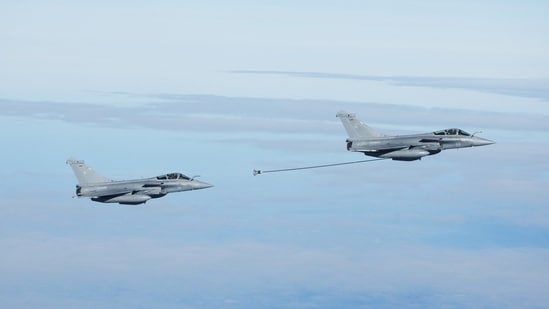
The Rafale jet, crafted by the esteemed French aerospace giant Dassault Aviation, is a potent twin-engine, multi-role fighter recognized globally for its exceptional versatility. It excels in a broad spectrum of missions, from achieving air superiority and executing precision ground attacks to conducting crucial reconnaissance and even contributing to nuclear deterrence. India has already inducted a fleet of these advanced aircraft, which have consistently demonstrated their capabilities in various exercises and critical border deployments. The MRFA model, however, seeks to deepen this existing relationship, targeting a more profound level of collaboration and, crucially, localized production.
Under this proposed framework, Dassault Aviation is expected to forge a partnership with an Indian “local partner.” This collaboration forms the bedrock of the “Make in India” defense initiative for advanced platforms. The Indian partner could potentially be a public sector entity such as Hindustan Aeronautics Limited (HAL), which possesses extensive experience in aircraft manufacturing and maintenance, or a private Indian defense firm eager to venture into high-technology aviation production. The overarching objective is to facilitate the transfer of significant manufacturing capabilities, critical technical know-how, and even elements of design expertise directly to India.
Why Local Production Matters for India
The drive to produce Rafale jets in India through the MRFA model is far more than a simple manufacturing aspiration; it is a multi-faceted strategic imperative with profound implications.
Firstly, it dramatically enhances India’s defense self-reliance. By manufacturing these vital assets domestically, India significantly diminishes its reliance on foreign suppliers for ongoing maintenance, the procurement of spare parts, and future upgrades. This ensures consistent operational readiness and strategic autonomy, especially crucial during periods of geopolitical uncertainty where global supply chains can become vulnerable. A nation that commands the ability to build its own weaponry possesses a stronger hand in safeguarding its national interests.
Secondly, this initiative promises substantial economic benefits. The establishment of a complex manufacturing ecosystem for advanced fighter jets will generate thousands of direct and indirect employment opportunities across diverse sectors—ranging from highly skilled engineers and technicians to logistical support personnel. This directly translates into significant job creation and skill development, cultivating a sophisticated workforce capable of handling cutting-edge aerospace technologies. Local news outlets often highlight the potential for robust regional economic growth in areas earmarked for such manufacturing hubs.
Thirdly, it represents a monumental leap in technology transfer and indigenous capability building. Collaborating with a global leader like Dassault Aviation would introduce state-of-the-art manufacturing processes, rigorous quality control standards, and advanced aviation technologies that India’s defense industrial complex can effectively absorb and adapt. This assimilation of technology is indispensable for India’s long-term ambition of independently designing and producing its own next-generation fighter aircraft. It shifts the paradigm beyond mere assembly to genuine manufacturing prowess.
Fourthly, this strategic move strengthens India’s overall industrial base, creating a beneficial ripple effect. Smaller, ancillary industries responsible for supplying components, raw materials, or specialized services would thrive, contributing to a more robust and diversified defense manufacturing ecosystem. Local vendors, frequently featured in regional business news, stand to gain significant contracts and unparalleled opportunities for growth.
Navigating the Path Forward Challenges and Considerations
While the anticipated benefits are clear, successfully implementing the MRFA model demands intricate negotiations and confronts considerable challenges.
One significant hurdle is the extent of technology transfer. Dassault Aviation, like any leading global defense manufacturer, will naturally exercise caution regarding the sharing of proprietary, high-value intellectual property. India’s negotiators must ensure that the agreement encompasses substantial technology transfer that extends beyond mere assembly, thereby enabling authentic domestic production capabilities.
Another critical factor is cost and economics. Manufacturing such sophisticated aircraft in India will necessitate considerable investment in infrastructure, specialized training programs, and cutting-edge equipment. The ultimate unit cost of a “Made in India” Rafale must remain competitive, meticulously balancing the long-term strategic advantages with the immediate financial outlay. Negotiations often include offsetting clauses, where the foreign vendor pledges to reinvest a portion of the deal’s value back into India’s defense sector, aiming to foster a mutually beneficial outcome.
Selecting the appropriate local partner is also paramount. This partner must possess robust manufacturing capabilities, a highly skilled workforce, and the financial stability required to manage such a large-scale, technologically demanding project. Ensuring stringent quality control to adhere to exacting aviation standards is non-negotiable, as even minor imperfections in fighter jets can have catastrophic consequences. The selection process is expected to be rigorous and transparent to identify the optimal fit.
Furthermore, seamlessly integrating foreign design and technology with India’s existing defense infrastructure and future indigenous projects requires meticulous planning. Harmonizing disparate technical standards and operational philosophies is a common challenge inherent in complex international defense collaborations.
The Broader Vision for Omni 360 News Readers
The ongoing discussions surrounding the MRFA model for Rafale production emphatically underscore India’s ambitious vision for its defense sector. This initiative is an integral component of a broader national strategy to evolve into a global hub for defense manufacturing, shifting from being a significant importer to a substantial producer and even exporter of defense equipment.
This initiative also signals India’s unwavering intent to project strength and stability in an increasingly intricate geopolitical environment. A robust domestic defense industry serves as a powerful deterrent against potential adversaries and significantly enhances India’s strategic leverage on the global stage. It unequivocally demonstrates a steadfast commitment to safeguarding national interests through indigenous prowess and innovation.
For the discerning readers of Omni 360 News, this is not merely a technical defense acquisition; it is a compelling narrative of national aspiration, immense economic potential, and profound strategic foresight. It represents a tangible and impactful step towards a more self-reliant and technologically advanced India.
Key Takeaways:
* The MRFA model aims to facilitate the production of advanced Rafale jets within India through a partnership between Dassault Aviation and an Indian entity.
* This initiative is crucial for significantly boosting India’s defense self-reliance, reducing its reliance on foreign suppliers for critical military hardware.
* Local manufacturing is projected to generate substantial job opportunities and foster the development of specialized skills in the high-tech aerospace sector.
* A key objective is the comprehensive transfer of technology, enabling India to absorb and further develop advanced aviation capabilities.
* Challenges include negotiating extensive technology transfer agreements, meticulously managing production costs, and carefully selecting a highly capable local manufacturing partner.
* The project reflects India’s broader strategic goal of establishing itself as a prominent global defense manufacturing hub and strengthening its geopolitical standing.
This ongoing development, while inherently complex, holds immense promise for India’s strategic future, cementing its position as a serious and capable player in global defense. The road ahead demands meticulous planning and precise execution, but the compelling vision of ‘Made in India’ Rafales unmistakably points towards a new era of indigenous strength and innovation.





