
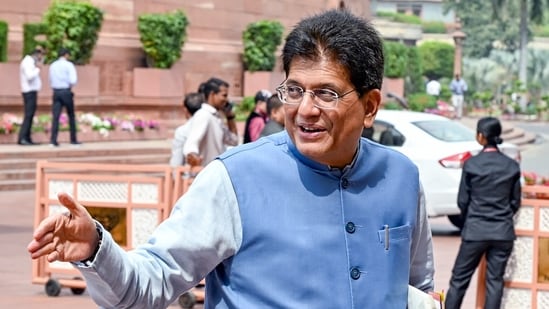
Piyush Goyal to finalise seat-sharing for Tamil Nadu elections today: BJP| India News
Katchatheevu Island Debate Fuels Intense Political Friction Between BJP and DMK
Amidst a backdrop of escalating political rhetoric, a recent re-emphasis on the historical Katchatheevu island issue has ignited a fresh and fiery exchange of words between the Bharatiya Janata Party (BJP) and Tamil Nadu’s ruling Dravida Munnetra Kazhagam (DMK). This development marks a significant turn in the ongoing political discourse within the state, as parties gear up for crucial electoral battles. Omni 360 News delves into the layers of this contentious debate, offering clarity for all to understand.
The announcement, or rather the renewed spotlight, came from the BJP camp, particularly from Prime Minister Narendra Modi and External Affairs Minister S. Jaishankar. They brought forth historical documents, reportedly accessed via Right to Information (RTI) requests, highlighting the 1974 agreement under which Katchatheevu, a small uninhabited island in the Palk Strait, was ceded to Sri Lanka by India. The BJP’s primary contention is that the then Congress government, with the alleged acquiescence of the DMK government in Tamil Nadu, made a significant strategic blunder by relinquishing control of the island without adequately considering the interests of Tamil Nadu’s fishermen and the state’s historical claims. This move is being framed as a betrayal of the state’s people and a symbol of neglect by past administrations.
To grasp the weight of this discussion, imagine a long-standing family heirloom that was once given away. Now, decades later, someone new in the family suddenly brings it up, accusing others of giving it away without proper thought. This is somewhat similar to the Katchatheevu situation. The island itself, though small, holds immense emotional and practical significance for the fishing communities in Tamil Nadu, who often face issues with Sri Lankan naval forces when fishing near its waters. For years, various political parties in Tamil Nadu have called for its retrieval or guaranteed fishing rights around it.
The BJP’s strategic timing in reigniting this debate is no accident. With general elections looming, the party aims to make inroads into Tamil Nadu, a state where it has historically struggled to gain a dominant foothold. By accusing the DMK and Congress of past transgressions, the BJP seeks to undermine the credibility of its political rivals and present itself as a protector of Tamil Nadu’s interests. The narrative pushed by the BJP suggests that had Katchatheevu remained with India, the challenges faced by Tamil Nadu fishermen would be considerably less severe. This approach tries to connect directly with the concerns of a vital voting bloc.
Predictably, the DMK has vehemently pushed back against these accusations. Tamil Nadu Chief Minister M.K. Stalin and other senior DMK leaders have accused the BJP of political opportunism and attempting to divert attention from more pressing contemporary issues. The DMK’s defense centers on several points. Firstly, they highlight that the Katchatheevu agreement was a decision made by the central government, and while the state government at the time did express concerns, the ultimate authority rested with Delhi. Secondly, DMK leaders question why the BJP, despite being in power at the Centre for a decade, never took concrete steps to retrieve Katchatheevu or secure fishing rights if the issue was so critical. They point out the hypocrisy of raising a 50-year-old issue for political mileage just before elections. Thirdly, the DMK emphasizes its consistent efforts, both in opposition and in power, to advocate for the rights of Tamil Nadu fishermen and resolve the fishing disputes with Sri Lanka through diplomatic channels. They argue that the BJP’s current stance ignores the complexities of international relations and decades of diplomatic engagement.
This back-and-forth illustrates a broader power struggle in Indian federalism. When a national party like the BJP tries to gain ground in a state like Tamil Nadu, which has a strong regional identity and powerful regional parties, these kinds of historical debates often resurface. The BJP aims to portray the DMK as complacent or complicit, while the DMK seeks to depict the BJP as an external force attempting to disrupt state harmony and ignore current realities. Local news outlets in Tamil Nadu have been awash with detailed analyses of this war of words, with many commentators noting the sharpness of the arguments from both sides. For the common person, understanding this means seeing beyond the immediate political barbs and considering the historical context and the practical implications for the fishing community.
Key Takeaways:
* The BJP has reignited the Katchatheevu island debate, blaming past Congress and DMK governments for ceding the island to Sri Lanka.
* This move is seen as a strategic effort by the BJP to gain political traction in Tamil Nadu ahead of elections.
* The DMK strongly refutes the accusations, citing BJP’s decade-long inaction on the issue and historical complexities.
* The verbal volleys highlight ongoing political tensions and federal dynamics between the national ruling party and a powerful regional party.
* The debate underscores the long-standing concerns of Tamil Nadu’s fishing communities.
In conclusion, the Katchatheevu island issue, resurrected by the BJP, has become a potent symbol in the ongoing political tug-of-war with the DMK. As the electoral season intensifies, such historical flashpoints are likely to be revisited, shaping the narrative and influencing public opinion. The depth and intensity of these verbal volleys indicate that Tamil Nadu’s political landscape remains a fiercely contested terrain, where history often plays a significant role in current political battles.





