
Iran agreed not to have nukes, claims Donald Trump
Trump’s Iran Claims Spark Middle East Peace Hopes Amid Lingering Tensions
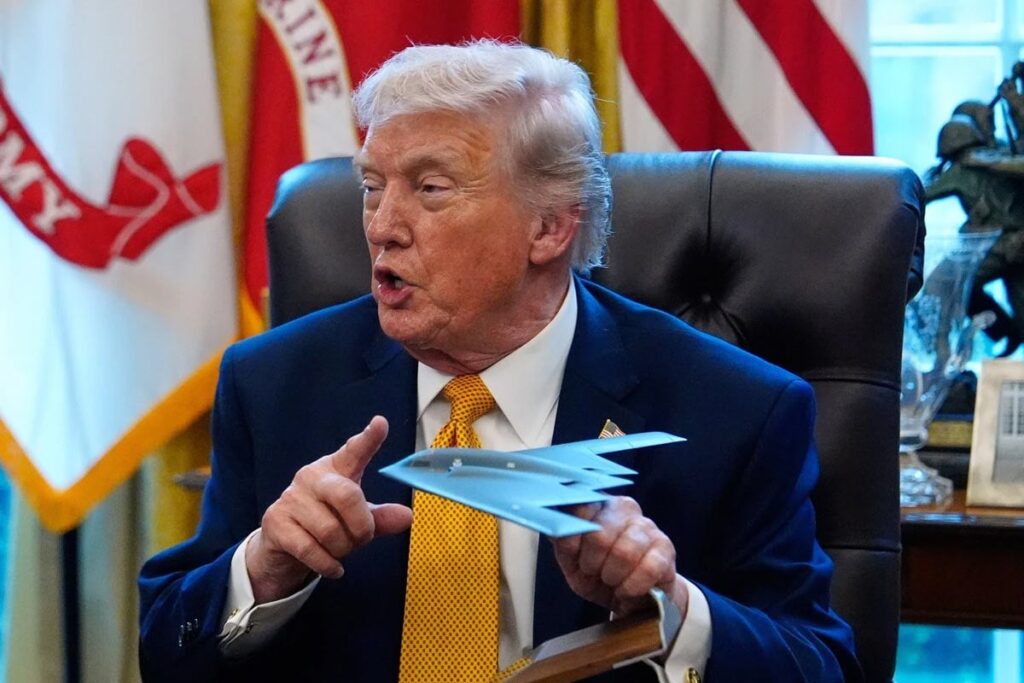
In a surprising announcement from the Oval Office, former United States President Donald Trump recently offered a glimpse of a potential shift in the highly volatile relationship between Washington and Tehran. After what many observers described as a period of intense, “bloody struggle” spanning approximately twenty-six days, the former President suggested that prospects for peace in the Middle East might be on the horizon. His statements, delivered during a press briefing, hinted at a significant development: a “valuable gift” allegedly received from Iran, coupled with claims that Tehran had agreed to America’s demands concerning its nuclear weapons program.
Trump’s remarks, concluding with his assertion that “We are talking to the right people,” painted a picture of quiet diplomatic progress behind the scenes. However, understanding the weight of such claims requires delving into the complex history of US-Iran relations, especially during the period alluded to by the former President. This report by Omni 360 News aims to unpack these statements, providing context for a nuanced understanding of the situation for our readers.
A Volatile Backdrop The Twenty-Six Day Struggle
To appreciate the gravity of Trump’s statements, one must recall the highly charged atmosphere that defined US-Iran relations in late 2019 and early 2020. The “twenty-six days of bloody struggle” likely refers to the escalating tensions that culminated in critical events during that period. It began with increased attacks on US interests in Iraq, blamed on Iran-backed militias, leading to a tit-for-tat escalation.
The situation reached a fever pitch in early January 2020, with the United States carrying out a drone strike that killed Iranian Major General Qasem Soleimani, a powerful figure in Iran’s Revolutionary Guard Corps, in Baghdad. Iran swiftly retaliated with missile attacks on Iraqi military bases housing US troops. While these attacks caused no US fatalities, they resulted in numerous traumatic brain injuries, pushing the two nations to the brink of a full-scale military confrontation. The world held its breath, fearing an all-out war in the strategically vital Middle East. This period was characterized by heightened military alerts, diplomatic franticness, and widespread concerns about regional stability. It was against this backdrop of palpable tension and near-conflict that the former President’s seemingly conciliatory remarks emerged.
The President’s Assertions A “Valuable Gift” and Nuclear Concessions
During his Oval Office address, President Trump’s claims were specific and, if true, profoundly impactful. He announced to journalists that he had received an “extremely valuable gift” from Iran. The nature and specifics of this “gift” were not immediately detailed, leaving room for much speculation. Was it a symbolic gesture, a release of detainees, a financial concession, or something else entirely? Such ambiguity is not uncommon in high-stakes diplomacy, where details are often guarded.
More significantly, the former President also stated that Tehran had reportedly accepted America’s demands regarding its nuclear weapons program. This assertion, perhaps the most critical part of his announcement, suggested a dramatic reversal in Iran’s long-standing stance and ongoing nuclear activities. For years, the United States had maintained a firm position, demanding that Iran cease its uranium enrichment activities, allow unfettered international inspections, and dismantle certain components of its nuclear infrastructure to prevent it from developing nuclear weapons. These demands were central to the multilateral nuclear agreement, known as the Joint Comprehensive Plan of Action (JCPOA), which the Trump administration had controversially withdrawn from in 2018.
Trump’s concluding remark, “We are talking to the right people,” implied that channels for direct or indirect communication were open and effective, leading to these purported breakthroughs. This statement was a stark contrast to the often hostile public rhetoric exchanged between the two nations throughout much of his presidency.
The Complex Nuclear Question Understanding the Stakes
To grasp the full weight of Trump’s nuclear claims, it is important to understand the history of Iran’s nuclear program and the international efforts to control it. For many years, concerns have mounted that Iran might be developing nuclear weapons under the guise of a civilian energy program. Iran has consistently maintained that its nuclear ambitions are purely for peaceful purposes, such as energy generation and medical isotopes.
The JCPOA, signed in 2015 by Iran, the US, and several other world powers, was designed to prevent Iran from developing nuclear weapons in exchange for relief from international sanctions. Under this deal, Iran agreed to significantly curb its nuclear activities, including limits on uranium enrichment levels and stockpile, and to allow extensive international inspections. However, when the Trump administration withdrew from the JCPOA in 2018, it reimposed crippling sanctions on Iran, initiating a “maximum pressure” campaign. In response, Iran gradually began to roll back its commitments under the deal, enriching uranium to higher purities and increasing its stockpile beyond the limits set by the JCPOA.
Therefore, Trump’s claim that Iran had accepted America’s nuclear demands was particularly striking. It would imply a willingness by Tehran to reverse its post-JCPOA stance, re-engage with stringent international controls, and potentially dismantle parts of its advanced enrichment capabilities. Such a move would represent a monumental shift in regional geopolitics and a significant diplomatic victory for the United States.
Seeking De-escalation or Genuine Breakthrough?
The former President’s announcement prompts critical questions regarding its timing and implications. Was this a genuine, quiet diplomatic breakthrough, signaling a willingness from both sides to find common ground after a period of intense animosity? Or was it a strategic declaration of de-escalation, a way to claim victory and reduce immediate tensions without necessarily achieving a comprehensive agreement?
Some analysts suggested that such an announcement, if indeed based on concrete concessions, could pave the way for renewed negotiations on a broader scale, potentially addressing not only the nuclear issue but also Iran’s ballistic missile program and its regional activities, which are constant sources of concern for the US and its allies. Others remained skeptical, highlighting the lack of immediate corroboration from Iranian officials or other international partners. The nature of diplomacy often involves delicate messaging, and leaders sometimes present developments in a manner that aligns with their political objectives.
The Road Ahead for Middle East Peace
While any indication of dialogue and potential agreement between the US and Iran is a welcome sign for regional stability, achieving lasting peace in the Middle East is an intricate undertaking. The US-Iran dynamic is but one piece of a larger, multifaceted puzzle that includes various regional conflicts, proxy wars, and the complex interests of numerous state and non-state actors. Even if the former President’s claims were fully realized, the path to enduring peace would require sustained diplomatic effort, mutual trust-building, and addressing the underlying drivers of conflict.
Omni 360 News remains committed to bringing you timely, accurate, and verified information as this complex situation develops. We understand the critical importance of scrutinizing every detail and providing our readers with comprehensive context, especially amidst a landscape often clouded by misinformation. We will continue to monitor official statements, diplomatic developments, and reactions from all parties involved to present a clear picture of the evolving Middle East landscape.
Key Takeaways
- Former US President Donald Trump claimed Iran had given a “valuable gift” and agreed to US nuclear demands after a period of intense confrontation.
- The “twenty-six days of bloody struggle” likely refers to the heightened US-Iran tensions in early 2020, following the killing of General Qasem Soleimani and Iran’s retaliatory strikes.
- Trump’s statement hinted at a potential diplomatic breakthrough, suggesting open communication channels and significant concessions from Tehran.
- The claim about Iran accepting nuclear demands would represent a major shift from its post-JCPOA (Joint Comprehensive Plan of Action) stance, where it had been increasing uranium enrichment.
- While Trump’s assertions sparked hopes for peace, the full details and independent corroboration of these claims remain crucial for understanding their true impact on Middle East stability.





