
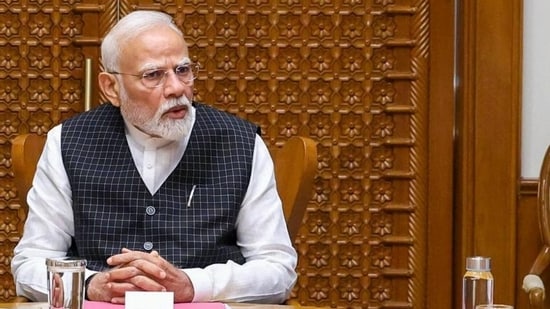
‘Curb rumours’ to ‘states have key role’: Top 5 things PM Modi said in meet with CMs amid West Asia crisis| India News
National Priorities Spotlight PM’s Focus on Economic Shield and Citizen Care
In a recent high-level deliberation with Chief Ministers, Prime Minister Narendra Modi underscored the government’s steadfast commitment to three crucial pillars: maintaining economic and trade stability, ensuring robust energy security, and relentlessly safeguarding the interests of every citizen. This directive, emanating from a comprehensive review of both global and domestic landscapes, aims to fortify India against emerging challenges and steer it towards sustained progress, a commitment echoed across the nation and reported by Omni 360 News.
The meeting, a pivotal assembly of state leaders, served as a platform to strategize a unified “Team India” approach, emphasizing collaborative governance to tackle pressing national concerns. The discussions highlighted the intricate interplay between global geopolitical shifts and their ripple effects on the Indian populace.
Anchoring Economic and Trade Stability
A cornerstone of the Prime Minister’s priorities is the unwavering focus on economic and trade stability. In an increasingly interconnected yet volatile global economy, India’s resilience is paramount. The government’s strategy involves meticulously monitoring international trade dynamics, identifying potential disruptions, and implementing proactive measures to mitigate adverse impacts. This includes fostering a robust domestic manufacturing sector, encouraging exports, and strategically managing imports to maintain a healthy trade balance.
For the ordinary citizen, economic stability translates directly into stable prices for essential goods and services, consistent job opportunities, and predictable growth prospects. The government’s resolve to act against hoarding and illicit trade practices directly addresses inflation concerns, ensuring that market forces do not unduly burden households. When businesses thrive, when trade routes are secure, and when market speculation is curbed, the benefits flow down to every individual, fostering a sense of security and progress.
Fortifying Energy Security
The global energy landscape, particularly in regions like West Asia, remains a significant concern. The Prime Minister’s emphasis on energy security is a direct response to potential geopolitical disruptions, such as the specter of a US-Iran conflict or broader instabilities in oil-producing nations. India, as a major energy consumer, is acutely vulnerable to fluctuations in global oil and gas prices.
To counter this, the government is pursuing a multi-pronged strategy. This involves diversifying energy sources, aggressively promoting renewable energy (solar, wind, hydroelectric), exploring domestic hydrocarbon reserves, and forging strategic partnerships with energy-rich nations. The goal is to reduce India’s reliance on single regions or fossil fuels, thereby cushioning the economy from external shocks. For the common person, assured energy security means stable fuel prices, uninterrupted power supply for homes and industries, and a predictable cost of living, all vital for economic planning and daily life.
Safeguarding Citizen Interests Above All
Perhaps the most crucial directive from the Prime Minister’s address is the unwavering commitment to safeguard the interests of citizens. This encompasses a broad spectrum of measures designed to protect individuals from economic exploitation and ensure their well-being. The call to act decisively against hoarding, for instance, is a direct measure to prevent artificial price hikes and ensure the availability of essential commodities. Local news sources from various states have consistently highlighted the distress caused by such practices, making the Prime Minister’s directive particularly pertinent.
Beyond price stability, safeguarding citizen interests also extends to enhancing social security nets, improving public services like healthcare and education, and ensuring access to fundamental necessities. It involves creating an environment where businesses operate ethically, where consumer rights are protected, and where vulnerable sections of society receive adequate support. This holistic approach ensures that the benefits of economic growth are equitably distributed and that no citizen is left behind, embodying the spirit of inclusive development.
A Unified Approach for a Resilient Nation
The Prime Minister’s emphasis on “Team India” reflects a deeper understanding that national challenges require a coordinated response from both central and state governments. From implementing economic policies to enforcing measures against hoarding or ensuring last-mile energy access, the synergy between different levels of governance is vital. This collaborative framework is essential for transforming national priorities into tangible benefits for citizens at the grassroots level.
Key Takeaways:
* Economic Stability Focus: Government prioritizes robust trade management and anti-hoarding measures to ensure price stability and growth.
* Energy Security imperative: Diversifying sources and reducing reliance on volatile regions are key to safeguarding India’s energy needs amidst global tensions.
* Citizen Welfare Central: Protecting individuals from economic exploitation, ensuring essential goods availability, and strengthening social security remain paramount.
* “Team India” Collaboration: Unified efforts by central and state governments are crucial for effective policy implementation and national resilience.
In essence, the Prime Minister’s directives outline a clear roadmap for a resilient India—one that can navigate complex global dynamics while consistently prioritizing the well-being and prosperity of its people. This overarching vision, reported in detail by Omni 360 News, reinforces the government’s commitment to a stable, secure, and citizen-centric future.





