
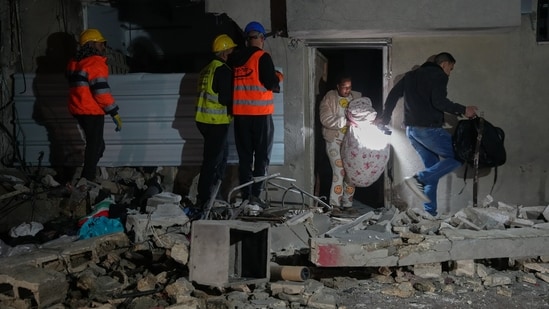
Israel says it faced first incoming missile from Yemen as war in Middle East intensifies| India News
Houthis Shift Gears Yemen Rebels Enter Wider Mideast Conflict
The delicate balance of power in the Middle East has seen a significant recalibration. For years, the Houthi rebels in Yemen maintained an uneasy ceasefire with Saudi Arabia, a truce that largely kept them out of broader regional skirmishes. However, recent events reveal a marked change in their stance, as the group now openly engages in the intensifying conflict gripping the Middle East. This strategic pivot, observed by Omni 360 News, marks a new chapter, potentially widening the conflict’s reach and complicating existing regional dynamics.
From Ceasefire to New Frontlines
The Houthi movement, officially known as Ansar Allah, has been locked in a protracted civil war in Yemen since 2014. This conflict saw a Saudi-led coalition intervene in 2015 to support the internationally recognized government. The past years have seen various attempts at de-escalation, culminating in an informal, yet largely respected, ceasefire between the Houthis and Saudi Arabia. This arrangement, often mediated by international efforts, aimed to reduce cross-border attacks and pave the way for a more lasting peace in Yemen. The Houthis, during this period, primarily focused their military actions within Yemeni borders or in direct response to Saudi-led coalition movements.
However, the eruption of renewed hostilities between Israel and Hamas prompted a dramatic shift. Towards the end of October, reports emerged of missiles and drones launched from Houthi-controlled territory in Yemen, aimed directly at Israel. Israeli defense forces confirmed intercepting these projectiles, including a long-range ballistic missile, demonstrating the Houthis’ capabilities and their clear intent to enter the conflict. This marks the first time the Houthis have directly targeted Israel, breaking their previous pattern of limited regional engagement.
Houthi Motivations and Regional Echoes
The Houthi leadership swiftly claimed responsibility for these actions. Their military spokesperson, Yahya Saree, declared the attacks were in solidarity with the Palestinian people and aimed at what they termed “the Israeli entity.” This public declaration aligns with the Houthis’ long-standing ideological stance as part of the “Axis of Resistance,” a loose coalition of Iran-backed groups across the Middle East that oppose Israel and the United States. For the Houthis, this move is a powerful statement, asserting their regional relevance and appealing to their support base by demonstrating action against a perceived common adversary.
This intervention has immediate and far-reaching implications. While the direct ceasefire with Saudi Arabia has not been formally abrogated, the Houthis’ aggressive posture in the Red Sea and towards Israel introduces a new layer of instability. Saudi Arabia, keen on regional de-escalation to pursue its ambitious economic transformation plans, finds itself in a precarious position. The Houthi actions, though not directly against Saudi territory, could complicate broader regional security efforts.
The strategic location of Yemen, bordering key international shipping lanes in the Red Sea, also raises concerns. Any sustained Houthi involvement could potentially disrupt maritime trade and energy flows, impacting global economies. International observers are closely watching to see if these missile launches are isolated incidents or part of a more sustained campaign.
Understanding the Larger Picture
For a clearer picture, imagine the Middle East as a complex chessboard. The Houthis, previously focused on their specific game within Yemen, have now made a move that affects players across the entire board. Their long-range missile and drone capabilities, honed during years of conflict, allow them to project power beyond their immediate borders. This decision highlights a willingness to escalate and become a more active participant in broader regional conflicts, driven by ideological alignment and a desire for increased influence.
This development also underscores the intricate web of alliances and rivalries in the Middle East. The Houthis’ actions resonate with the broader “Axis of Resistance” narrative, suggesting a coordinated, or at least ideologically aligned, response to events in Gaza. This regional solidarity among various groups, often supported by Iran, presents a significant challenge to efforts aimed at containing the conflict.
Key Takeaways
- A Shift in Houthi Strategy: The Houthis, previously focused on their internal conflict and an uneasy truce with Saudi Arabia, have now directly entered the wider Middle East conflict by targeting Israel.
- Solidarity with Palestinians: Their stated motivation is support for the Palestinian people, aligning with their ideological position as part of the “Axis of Resistance.”
- Escalation Risk: This action increases the potential for the conflict to spread geographically, particularly impacting the Red Sea region and potentially undermining existing peace efforts.
- Regional Implications: It complicates Saudi Arabia’s efforts for regional de-escalation and highlights the interconnectedness of various Middle Eastern conflicts and actors.
- Demonstrated Capability: The successful launch of long-range missiles and drones showcases the Houthis’ military capabilities and their reach.
As the conflict continues to evolve, the Houthis’ proactive engagement adds a new, unpredictable dimension. Their actions serve as a stark reminder that even seemingly contained regional disputes can rapidly spill over, drawing in new actors and reshaping the security landscape of the entire Middle East. The world watches to see how this crucial shift will impact the trajectory of regional stability and peace.





