
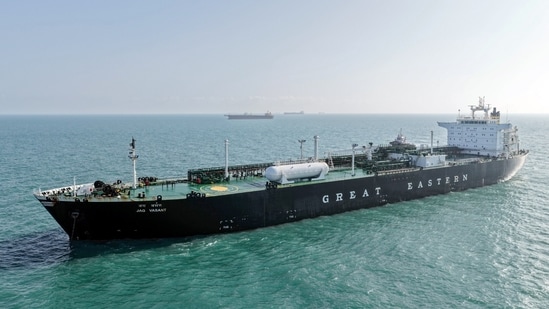
Two more India-flagged LPG tankers safely transit Strait of Hormuz amid West Asia conflict| India News
Indian Flagged LPG Tankers BW TYR and BW ELM Safely Navigate Red Sea Tensions Towards Home
As global maritime routes continue to face complex security challenges, two India-flagged LPG tankers, BW TYR and BW ELM, are steadily making their way to Indian shores, carrying vital energy supplies. Their journey through the Strait of Hormuz, a critical chokepoint, and onward, highlights the robust efforts by the Indian Navy to ensure the safety of national maritime trade amidst the simmering conflict in the West Asia region. This transit, under vigilant naval protection, underscores India’s commitment to securing its energy lifelines and protecting its commercial interests on the high seas.
The BW TYR, a large LPG carrier, is currently en route to Mumbai, with an anticipated arrival on March 31. Following closely, the BW ELM, another significant LPG tanker, is navigating towards New Mangalore, expected to reach its destination by April 1. These vessels are not merely cargo ships; they represent the uninterrupted flow of essential resources that power homes and industries across India. Their safe passage is a testament to meticulous planning and proactive security measures.
The context of their journey is crucial. The West Asia region has witnessed heightened tensions, particularly in the Red Sea and Gulf of Aden, stemming from attacks on commercial shipping by Houthi militants. These incidents have forced many international shipping companies to reroute their vessels, opting for longer, more expensive voyages around the Cape of Good Hope, thereby disrupting global supply chains and significantly increasing freight costs. For a nation like India, heavily reliant on seaborne trade for its energy needs and economy, maintaining secure passage through these waters is not just a preference, but an absolute necessity.
The Strait of Hormuz, situated between the Persian Gulf and the Gulf of Oman, is perhaps the world’s most vital oil transit chokepoint. Approximately one-fifth of the world’s total oil supply, along with substantial volumes of liquefied natural gas (LPG), passes through this narrow channel. Any disruption here has immediate and far-reaching global economic consequences. The successful and secure transit of the BW TYR and BW ELM through this sensitive waterway, and their subsequent journey, reassures the industry and the public alike about the resilience of India’s maritime operations.
India’s proactive approach to maritime security is spearheaded by the Indian Navy’s ‘Operation Sankalp.’ Launched in June 2019 following incidents involving commercial vessels in the Gulf of Oman, Operation Sankalp aims to provide security to India-flagged merchant vessels traversing the Arabian Sea, Persian Gulf, Gulf of Oman, and now, the Red Sea. Under this operation, naval warships are deployed to maintain a persistent presence, conducting surveillance and deterrence patrols. They provide immediate assistance and reassurance to merchant shipping, ensuring that India’s economic arteries remain open and secure. The protection afforded to BW TYR and BW ELM falls directly under the ambit of this vital mission.
Local reports and defense updates often highlight the continuous deployment of Indian naval assets, including frontline destroyers and frigates, to these critical maritime zones. These deployments are not just about showing force; they involve active engagement with merchant vessels, sharing real-time intelligence, and building confidence among seafarers. The presence of these naval escorts acts as a significant deterrent against potential threats, allowing commercial ships to complete their voyages safely and efficiently. This integrated approach, supported by continuous monitoring and swift response capabilities, is key to navigating the current geopolitical landscape.
For a 12th standard student, understanding the importance of these voyages means looking beyond just the ships. Imagine your home running out of cooking gas or the local power plant facing a fuel shortage. LPG tankers like BW TYR and BW ELM carry the fuel that helps run homes, kitchens, and many industries. When these ships travel safely, it means our country’s energy supply is stable, prices don’t suddenly jump, and daily life can continue smoothly. The Strait of Hormuz is like a very busy, narrow highway for energy. If that highway becomes unsafe, everything slows down, and prices go up, affecting everyone. The Indian Navy’s job is like having highway patrol officers making sure traffic flows safely.
The safe arrival of these tankers will signify not just the delivery of crucial cargo but also the triumph of persistent maritime vigilance. It reinforces the message that despite regional turmoil, India remains steadfast in safeguarding its national interests and global trade. The ability of vessels like BW TYR and BW ELM to complete their voyages without incident is a testament to the dedication of the Indian Navy and the cooperation of various maritime stakeholders. This unwavering commitment to maritime security is a cornerstone of India’s strategic foreign policy, ensuring that the nation’s economic progress continues unimpeded. Omni 360 News continues to monitor these critical global supply chain developments.
Key Takeaways:
- Safe Transit Confirmed: Two India-flagged LPG tankers, BW TYR and BW ELM, are successfully navigating high-risk maritime zones.
- Vital Energy Supplies: BW TYR is expected in Mumbai by March 31, and BW ELM in New Mangalore by April 1, bringing essential LPG.
- Regional Tensions: Their journey takes place amidst heightened security concerns in West Asia, particularly the Red Sea and Strait of Hormuz, due to Houthi attacks on shipping.
- Indian Navy’s Role: Operation Sankalp is actively providing security and protection to Indian merchant vessels, ensuring free and safe navigation.
- Economic Significance: The uninterrupted flow of these tankers is crucial for India’s energy security and to prevent disruptions in the national economy.
- Global Impact: India’s commitment to securing its maritime routes contributes to stability in global trade and energy supply chains.





