
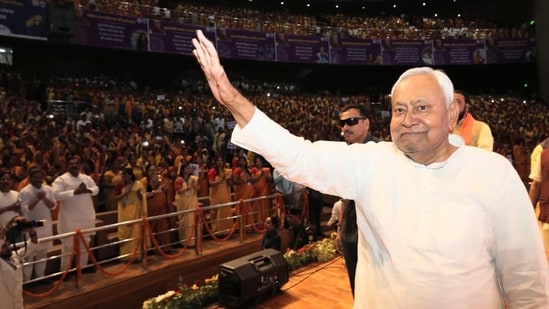
Nitish Kumar resigns from Bihar legislative council, all eyes on who will be next CM| India News
Nitish Kumar Departs Bihar Legislative Council for Rajya Sabha Role
Patna, Bihar – A notable shift in Bihar’s political landscape unfolded recently as senior political figure Nitish Kumar officially resigned from his position in the Bihar Legislative Council. This step, confirmed by sources across various local news outlets, including reports tracked by Omni 360 News, signifies his compliance with fundamental constitutional provisions following his recent election to the Rajya Sabha, India’s upper house of Parliament.
For decades, Nitish Kumar has been a central figure in Bihar’s governance. His resignation from the state’s upper house marks a pivot from state-level legislative duties to a significant role on the national stage in New Delhi. This move is not merely a change of office but a adherence to the core democratic principles embedded in the Indian Constitution.
Understanding the Constitutional Mandate
To grasp the full weight of this development, it helps to understand the dual legislative structure in India. Just like a student can’t be enrolled in two different schools at the exact same time, a lawmaker in India cannot hold membership in both a state legislature (like the Bihar Legislative Council) and the national Parliament (like the Rajya Sabha) concurrently. This is explicitly laid out in the Constitution of India, specifically under Article 101(1) and Article 190(1). These articles prohibit a person from being a member of both Houses of Parliament or of a House of Parliament and a House of a State Legislature simultaneously. Should a person be elected to both, they must vacate one seat within a stipulated period, or one of the seats becomes vacant automatically.
Nitish Kumar’s election to the Rajya Sabha presented this exact scenario. Having served as a member of the Bihar Legislative Council, his elevation to the Rajya Sabha necessitated his relinquishing of the state-level legislative position. This ensures the integrity of legislative representation and prevents any conflict of interest or over-representation. His prompt resignation underscores a commitment to upholding these foundational rules.
A New Chapter on the National Stage
Nitish Kumar’s journey to the Rajya Sabha opens a new chapter in his extensive political career. His decades of experience as Bihar’s Chief Minister, guiding the state through various developmental phases, now lend themselves to the national discourse. As a Member of Parliament in the Rajya Sabha, he will contribute to national policy-making, debates, and legislative processes that impact the entire country.
His presence in the Rajya Sabha is expected to bring a seasoned perspective on issues ranging from federalism to social justice, drawing from his deep understanding of state-level governance and the challenges faced by states like Bihar. This transition represents a shift in his immediate focus from the granular details of state administration to broader national strategies and policies.
Implications for Bihar Politics
The immediate consequence of his resignation is the creation of a vacant seat in the Bihar Legislative Council. The process to fill this vacancy will involve either an election or nomination, depending on the nature of the seat he held, which will be determined by the Election Commission of India. This will naturally lead to some political manoeuvring within the state to secure or allocate the newly available position.
While Nitish Kumar’s move to the national sphere is significant, the day-to-day administration of Bihar continues under its current leadership. His deep influence on Bihar politics remains, though his direct legislative role within the state assembly is now concluded. The state’s political landscape is dynamic, and Omni 360 News will continue to monitor how this change influences alliances and future electoral strategies.
His departure from the state legislature marks an end to a particular phase of his direct involvement in state-level legislative affairs. However, his political weight and experience will undoubtedly continue to shape the political narrative in Bihar, albeit from a national vantage point.
Key Takeaways:
* Nitish Kumar has resigned from the Bihar Legislative Council to comply with constitutional requirements.
* This action follows his recent election to the Rajya Sabha, India’s national upper house of Parliament.
* The Indian Constitution prevents individuals from holding legislative seats in both state and national bodies simultaneously.
* His move signifies a shift from state-centric legislative duties to a national role in policymaking.
* The resignation creates a vacancy in the Bihar Legislative Council, which will be filled through due process.
In conclusion, Nitish Kumar’s resignation from the Bihar Legislative Council is a clear act of constitutional adherence, paving the way for his dedicated service in the Rajya Sabha. It represents a natural progression in the career of a seasoned politician, moving his legislative focus to the national arena while setting in motion new dynamics within Bihar’s state politics. This transition is a testament to the robust framework of India’s democratic institutions.





