
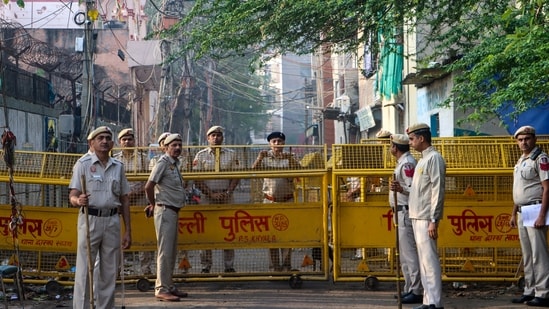
Shabir Ahmed Lone, Lashkar-e-Taiba terrorist from Jammu and Kashmir, arrested by Delhi Police| India News
Janpath Metro Poster Incident Suspect Shabir Ahmed Lone Apprehended Omni 360 News Reports
A significant breakthrough has occurred in the ongoing investigation into the appearance of pro-Pakistan and pro-terror posters at Janpath Metro Station in February. Delhi Police have successfully apprehended Shabir Ahmed Lone, an individual believed to be linked with the proscribed terror group Lashkar-e-Taiba (LeT), over a month after the provocative material surfaced across the busy transport hub. This arrest marks a crucial step in unraveling the intentions behind the incident and the network possibly involved.
The incident, which unfolded on February 21, sent ripples of concern through the national capital. Commuters and metro staff discovered several posters strategically pasted at various points within the Janpath Metro Station premises. These posters were not just random graffiti; they explicitly carried messages glorifying terror figures and advocating for secessionist agendas, specifically focusing on Jammu and Kashmir. The brazen nature of the act, targeting a key public infrastructure in the heart of Delhi, immediately triggered a high-alert security response and a wide-ranging police probe.
For ordinary citizens, such an act in a bustling metro station can feel unsettling. Imagine going about your daily commute, perhaps heading to work or college, and suddenly seeing messages that openly support terrorism and challenge national unity. It’s an attempt to spread fear and division, trying to make people question their safety and stability. The quick response from authorities aimed to reassure the public and demonstrate that such provocations would not be tolerated.
Immediately following the discovery, Delhi Police swung into action. Teams from various specialized units, including the Special Cell, were mobilized to investigate. The initial phase of the investigation focused heavily on forensic analysis of the posters themselves, looking for any clues regarding their origin, and meticulously reviewing hours of Closed-Circuit Television (CCTV) footage from the metro station and surrounding areas. This digital breadcrumb trail is often the first and most critical step in identifying suspects in such urban environments. Investigators painstakingly analyzed video frames, tracking individuals who might have been near the poster locations at the suspected times of their placement.
The efforts of the Delhi Police Special Cell, known for its expertise in counter-terrorism operations, were central to the eventual identification and apprehension of Lone. Leveraging a combination of advanced technical intelligence and human sources, often referred to as ‘humint,’ law enforcement agencies began piecing together the identity of the individual behind the act. This involved cross-referencing information, analyzing communication patterns, and coordinating with other intelligence agencies. The trail eventually led them to Shabir Ahmed Lone, a resident of Jammu and Kashmir.
Lone’s arrest confirms the suspicion that the act was not merely a random mischief, but potentially a deliberate attempt by elements with a deeper, more sinister agenda. The alleged link to Lashkar-e-Taiba, a Pakistan-based terror organization responsible for numerous attacks in India, including the 26/11 Mumbai attacks, adds a grave dimension to the incident. This connection suggests that the pasting of posters was possibly a low-cost, high-impact propaganda exercise aimed at testing security vulnerabilities, spreading fear, and inciting radical sentiments, rather than a direct physical attack.
The apprehension of Lone highlights the persistent efforts by intelligence and law enforcement agencies to track down and neutralize threats, even those that seem minor at first glance. It underscores the importance of public vigilance and the meticulous work required behind the scenes to maintain urban security. The investigation into this incident remains active, with authorities likely probing whether Lone acted alone or was part of a larger module, and if there were any facilitators or handlers involved in planning and executing the poster distribution.
Such incidents serve as a stark reminder that the battle against terrorism and its ideological proxies is continuous. Even seemingly small acts of propaganda can be indicators of deeper networks at play, trying to sow discord and radicalize individuals. The collaboration between various security wings and intelligence agencies is paramount in countering these evolving threats. Omni 360 News will continue to track developments as this crucial investigation unfolds, bringing you verified updates.
Key Takeaways:
* Timely Arrest: Shabir Ahmed Lone’s apprehension over a month after the Janpath Metro incident demonstrates persistent police work.
* Terror Link: The suspect’s alleged association with Lashkar-e-Taiba points to a potential terror propaganda motive behind the posters.
* Vigilant Investigation: Delhi Police utilized extensive CCTV footage and intelligence gathering to identify and track down the suspect.
* Ongoing Threat: The incident underlines the continuous nature of threats from radical elements seeking to exploit public spaces for propaganda.
* Public Safety Priority: The swift action by authorities reinforces commitment to maintaining security in public infrastructure.





