
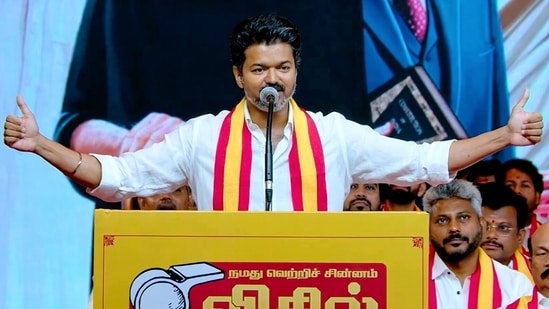
Tamil Nadu polls: TVK's Vijay files nomination from Perambur, Trichy East| India News
Tamil Nadu Gears Up for April 23 Election Day
The vibrant political landscape of Tamil Nadu is once again at the forefront, as the state prepares to elect its representatives to the legislative assembly. With a single phase of polling scheduled for April 23, all eyes will be on the 234 constituencies across the state, leading up to the vote counting on May 4. This election is set to be a significant moment, shaping the future trajectory of one of India’s most economically and culturally dynamic states.
The electoral battle in Tamil Nadu is always a keenly watched event, known for its high-stakes drama, charismatic leaders, and deeply rooted regional parties. This upcoming election is no exception, promising a vibrant contest with a mix of established political giants and new entrants vying for the public’s mandate. For followers of Omni 360 News, understanding the nuances of this election is paramount.
The Road to April 23
The Election Commission has meticulously planned the electoral process to ensure fairness and transparency. The single-phase polling across all 234 constituencies on April 23 aims to streamline operations and ensure efficient deployment of resources. This concentrated effort means that on one day, millions of voters will cast their ballots, determining the composition of the next state government. From the bustling urban centers to the serene rural hamlets, every corner of Tamil Nadu will participate in this democratic exercise. The period leading up to polling day will be characterized by intense campaigning, public rallies, and fervent debates, as candidates put forth their visions and promises to the electorate.
Key Players and Emerging Narratives
Tamil Nadu’s politics has historically been dominated by two major Dravidian parties—the Dravida Munnetra Kazhagam (DMK) and the All India Anna Dravida Munnetra Kazhagam (AIADMK). These parties, with their distinct ideologies and long histories of leadership, continue to command significant support. However, recent years have seen the emergence of new voices and alliances, adding layers of complexity and unpredictability to the electoral contests.
One notable development stirring considerable discussion is the entry of cine star Vijay into the political arena through his party, Tamilaga Vettri Kazhagam (TVK). News reports indicate that Vijay has filed nominations from key constituencies such as Perambur and Trichy East, signaling his serious intent to make a significant impact. His foray into politics, following a long tradition of actors transitioning into powerful political figures in Tamil Nadu, brings a fresh dynamic to the electoral landscape. Whether his popular appeal translates into electoral success remains a crucial question that only the votes on April 23 and the counting on May 4 will answer. The presence of such new contenders often forces established parties to re-evaluate their strategies and address issues that resonate with a broader demographic, including the youth.
Beyond the celebrity factor, traditional issues like economic development, welfare schemes, social justice, and regional autonomy remain central to the discourse. Parties are focusing on local concerns, promising improvements in infrastructure, education, healthcare, and employment opportunities. The state’s unique cultural identity and linguistic pride also play a significant role in shaping public opinion and electoral choices.
Understanding the Electoral Process for All
For a 12th standard student, understanding these elections is like learning about how your school’s student council president is chosen, but on a much larger scale. Imagine everyone in your state gets to pick who they want to lead. On April 23, designated polling booths will open, and registered voters will go there. They will show their ID, get a mark on their finger, and then press a button on an Electronic Voting Machine (EVM) next to the name and symbol of the candidate they want to vote for. This is a secret vote. After everyone has voted, the EVMs are sealed and stored securely. Then, on May 4, these machines will be opened, and the votes will be counted. The candidate who gets the most votes in each of the 234 constituencies wins. The party that wins the majority of these 234 seats forms the government. It’s a fundamental way for people to choose their leaders and have a say in how their state is run.
The Significance of the Mandate
The outcome of the Tamil Nadu elections holds considerable weight, not just for the state but also for its implications on national politics. Tamil Nadu is a significant economic contributor to India, and its political stability and policy directions can influence broader national trends. A new government will face the challenges of fostering economic growth, ensuring social welfare, managing environmental concerns, and maintaining the state’s unique cultural identity amidst evolving socio-political landscapes.
The counting on May 4 will be the culmination of weeks of campaigning and public engagement. It will reveal the collective voice of the Tamil Nadu electorate and set the stage for the state’s governance in the coming years. Omni 360 News will be providing comprehensive coverage, offering insights and analyses as the results unfold.
Key Takeaways
* Tamil Nadu will vote in a single phase on April 23 across 234 constituencies.
* Vote counting is scheduled for May 4, determining the next state government.
* The election features a dynamic mix of established regional parties and new entrants, including cine star Vijay’s Tamilaga Vettri Kazhagam (TVK).
* Key issues revolve around economic development, welfare, social justice, and regional identity.
* The election’s outcome will shape Tamil Nadu’s future and hold significance for national politics.
As the election fever grips Tamil Nadu, citizens are encouraged to participate actively, ensuring their voices are heard in this crucial democratic process. The decisions made at the ballot box on April 23 will resonate far beyond the counting day, defining the direction of the state for years to come.





