
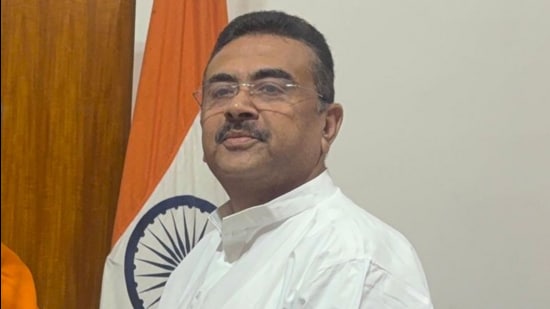
Mostly filed since quitting TMC, BJP’s Suvendu Adhikari faces 25 criminal cases| India News
Suvendu Adhikari’s Intense Political Journey And Legal Challenges Key Takeaways
West Bengal’s political landscape frequently presents a captivating drama, and few figures embody its intensity quite like Suvendu Adhikari. A former stalwart of the Trinamool Congress (TMC), Adhikari’s dramatic switch to the Bharatiya Janata Party (BJP) before the 2021 Assembly elections reshaped the state’s political narrative. His journey has been marked by high-stakes electoral battles and, significantly, a burgeoning list of legal challenges. This report from Omni 360 News delves into Adhikari’s dual fight on both the electoral and legal fronts, offering a clear perspective for observers of Bengal politics.
Adhikari’s political career began gaining prominence within the TMC, where he was seen as a key organizer, particularly in the rural districts. His influence stemmed from a strong grassroots connection and a family legacy deeply rooted in East Midnapore. However, ideological differences and perceived sidelining within the TMC eventually led to his defection to the BJP in December 2020, a move that sent tremors through Bengal’s political establishment. This switch positioned him as the BJP’s primary challenger to the ruling TMC, particularly in the strategically vital Nandigram constituency.
The Epic Battle for Nandigram
The 2021 Assembly election in Nandigram became the focal point of the entire West Bengal contest. It wasn’t just another constituency; it was the battleground where Chief Minister Mamata Banerjee herself chose to contest against her former aide, Suvendu Adhikari. For Adhikari, Nandigram represented his home turf, a place where he had cultivated deep loyalty and respect over decades. The very mention of Nandigram evokes memories of the 2007 anti-land acquisition movement, a movement that catapulted Mamata Banerjee and the TMC to power, with Adhikari playing a crucial role.
The campaign in Nandigram was fiercely contested, marked by rallies, counter-rallies, and an intense war of words. Local news outlets in East Midnapore extensively covered the intricate dynamics, highlighting the loyalty divided between the charismatic Chief Minister and the local strongman. Adhikari’s victory in Nandigram, albeit by a narrow margin, was a significant symbolic win for the BJP, demonstrating that the TMC was not invincible even in its perceived strongholds. This win cemented Adhikari’s position as a formidable opposition leader in the state Assembly, elevating him to the role of Leader of the Opposition. It was a contest that transcended local politics, becoming a national headline and a testament to the high stakes involved in the struggle for Bengal.
Bhabanipur’s Strategic Importance
While Suvendu Adhikari’s direct electoral challenge was centered in Nandigram, his influence and strategic involvement within the BJP extended to other crucial constituencies, including Bhabanipur in Kolkata. Although Adhikari was not the BJP’s candidate for the Bhabanipur by-election, which occurred after Mamata Banerjee’s loss in Nandigram necessitated her finding another seat, his presence as a prominent BJP leader was undeniably felt. The BJP, under Adhikari’s leadership in the opposition, campaigned vigorously in Bhabanipur, fielding Priyanka Tibrewal to challenge Mamata Banerjee directly.
Bhabanipur is a significant urban constituency, often considered a TMC stronghold and a traditional base for the Chief Minister. For the BJP, making inroads here was crucial to demonstrating its growing footprint in urban Bengal and challenging the TMC’s dominance beyond rural areas. Adhikari, as the face of the opposition, played a key role in strategizing and campaigning across the state, including for the Bhabanipur by-election. His aggressive stance against the TMC, particularly against the Chief Minister, provided a narrative backdrop against which the Bhabanipur contest unfolded. Even without being a direct candidate, Adhikari’s political weight and strategic insights were critical to the BJP’s broader efforts to expand its base and challenge the ruling party in every electoral battleground across West Bengal.
A Web of Legal Challenges
Beyond the electoral arena, Suvendu Adhikari faces a significant number of legal challenges. Reports, corroborated by various news sources, indicate that at least 25 criminal cases have been filed against him. What is particularly noteworthy is that the majority of these cases were registered after his departure from the TMC and subsequent joining of the BJP. This timing has led to widespread speculation about the political motivations behind these legal proceedings, a common point of contention in West Bengal’s often fractious political environment.
The nature of these cases is diverse and serious. Charges include allegations of grievous hurt, extortion, robbery, theft, and even attempt to murder. Specific sections of the Indian Penal Code invoked against him reportedly include Section 307 (attempt to murder), Section 325 (voluntarily causing grievous hurt), Section 379 (theft), Section 384 (extortion), Section 392 (robbery), and Sections 147 (rioting) and 148 (rioting, armed with deadly weapon). There are also charges related to criminal breach of trust, cheating, mischief, criminal intimidation, and criminal conspiracy, alongside various sections of the Arms Act. These cases have been filed across multiple districts of West Bengal, painting a picture of a leader constantly under legal scrutiny.
While many of these cases are currently under police investigation, a few have progressed to the stage where charge sheets have been filed. The sheer volume and gravity of the charges present a complex legal landscape for Adhikari, demanding considerable legal attention and potentially impacting his political mobility and public image. The legal battles run parallel to his political endeavors, adding another layer of complexity to his already high-profile career.
Political Ramifications and Future Outlook
The continuous flow of legal cases against Suvendu Adhikari carries significant political ramifications. For the BJP, defending its prominent state leader against these allegations becomes a strategic necessity, often framed as political vendetta by the ruling party. This narrative allows the BJP to rally its supporters, portraying Adhikari as a target of the TMC’s political machinery. Conversely, the TMC frequently uses these cases to question Adhikari’s integrity and leadership, aiming to undermine his credibility among the electorate.
For Adhikari himself, these legal battles represent a constant drain on resources and time, diverting focus from legislative duties and party work. They also have the potential to shape public perception, with supporters often viewing them as harassment and detractors seeing them as evidence of alleged wrongdoing. The outcome of these investigations and trials will undoubtedly influence his political trajectory and the broader power dynamics within West Bengal.
As the political dust settles from past elections and new challenges emerge, Suvendu Adhikari remains a pivotal figure in West Bengal. His journey from a TMC powerhouse to a formidable BJP opposition leader, coupled with the persistent legal challenges, underscores the volatile and often personal nature of politics in the state. Omni 360 News continues to follow these unfolding political narratives closely.
Key Takeaways:
* Suvendu Adhikari’s shift from TMC to BJP significantly altered West Bengal’s political dynamics.
* He secured a high-profile victory against Mamata Banerjee in Nandigram, a crucial electoral battle.
* Adhikari played a prominent strategic role in the BJP’s efforts across West Bengal, including the Bhabanipur by-election, challenging TMC’s dominance.
* He faces at least 25 criminal cases, primarily filed after his defection, including serious charges like attempt to murder, extortion, and rioting.
* These legal challenges create a complex political environment, influencing public perception and party strategies for both the BJP and TMC.
* The interplay between electoral contests and legal battles defines much of Adhikari’s current political identity.
His political future will undoubtedly be intertwined with how these legal issues are resolved, and how effectively he navigates the complex and often treacherous currents of West Bengal politics.





