
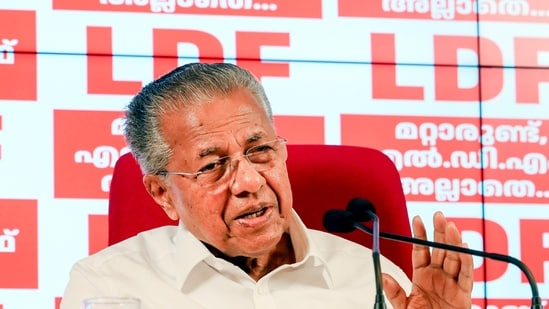
Sabarimala gold loss: How did the accused reach Rahul Gandhi's home, asks Vijayan| India News
**Sabarimala Gold Loss Case Accused Sparks Political Questions**
A recent statement by Kerala Chief Minister Pinarayi Vijayan has ignited a significant political discussion, casting a shadow over the ongoing Lok Sabha election campaign in the state. The Chief Minister referred to a photograph purportedly showing the prime accused in the infamous Sabarimala gold loss case alongside former Congress President Sonia Gandhi at her residence. This allegation, made amidst heightened electoral fervor, has brought the sensitive issue of temple administration and political accountability sharply into focus for Omni 360 News readers.
The crux of the matter revolves around Santhosh Ezhikkara, identified as the key figure in the investigation concerning missing gold from the offerings at the revered Sabarimala Ayyappan Temple. The alleged gold loss, a matter of deep concern for devotees and the state administration alike, has been under scrutiny for some time. Reports from local media outlets have detailed the initial findings of an inspection that pointed to irregularities in the weighing and accounting of gold and silver offerings received at the temple. It was during this period that Santhosh Ezhikkara emerged as a central figure, implicated in the alleged misappropriation.
Chief Minister Vijayan, speaking at an election rally, directly questioned how a person accused in such a serious case, involving sacred temple assets, could gain access to the residence of a prominent national political leader like Sonia Gandhi. He reportedly emphasized the gravity of the Sabarimala case, highlighting the public trust inherent in the temple’s operations and the sanctity of its offerings. His remarks were not merely a rhetorical flourish but an attempt to draw a direct link between the accused and the highest echelons of the opposition party, thereby implying a lack of vigilance or, worse, potential patronage.
The Photo’s Significance
While the specific date or circumstances of the photograph remain subject to debate and clarification from the Congress party, its mere existence, as alleged, holds considerable political weight. In the charged atmosphere of an election, such images can be weaponized to question the integrity and judgment of political opponents. For the general public, particularly in a state like Kerala where religious sentiments are deeply intertwined with social and political discourse, the idea of an accused in a temple-related crime being seen with a senior leader can erode trust. Local vernacular newspapers have widely reported on Vijayan’s pointed queries, underscoring the immediate impact on public perception.
The Sabarimala Ayyappan Temple, one of the most significant pilgrimage centers in India, holds immense cultural and spiritual importance. Any news related to its administration, especially concerning alleged financial irregularities or loss of offerings, resonates strongly with millions of devotees. The gold loss case itself has been a sore point, raising questions about the management and oversight mechanisms within the temple board. The Chief Minister’s decision to link this unresolved issue with a high-profile photograph aimed to amplify these existing concerns and place the onus of explanation squarely on the Congress party.
” – a typo that should be corrected for proper code function.
It should be:
(adsbygoogle || []).push({});
”
The Congress party, facing a vigorous campaign from the ruling Left Democratic Front, has been swift in its response. While specific details on their counter-arguments are still emerging from various regional news desks, initial reactions suggest that the party is likely to dismiss the allegations as politically motivated. Potential defenses could include claims that the photograph was taken during a public event where many individuals seek interactions, or that Ms. Gandhi was unaware of Santhosh Ezhikkara’s background or his alleged involvement in the Sabarimala case at the time. Such explanations are common in political skirmishes where photographic evidence is used to establish connections.
Broader Implications and Accountability
This incident, as reported by Omni 360 News, highlights a recurring theme in democratic politics: the meticulous scrutiny of associations, particularly when individuals with legal entanglements are involved. For political leaders, maintaining a clear public image and ensuring that their circles are free from questionable characters is paramount. The Sabarimala gold loss case, irrespective of the political allegations, remains a serious matter of public trust and legal accountability. The ongoing investigation and the ultimate resolution of the case are keenly awaited by devotees and citizens alike.
The Chief Minister’s remarks have undeniably introduced a new dimension to the election narrative in Kerala, forcing the opposition to address questions that go beyond traditional policy debates. It underscores how issues of governance, religious sanctity, and personal associations can become potent political tools, especially in the run-up to crucial elections.
Key Takeaways:
* Kerala CM Pinarayi Vijayan raised concerns about a photo of Sabarimala gold loss accused, Santhosh Ezhikkara, with Sonia Gandhi.
* The Sabarimala gold loss case involves alleged missing gold from temple offerings, a sensitive issue for devotees.
* Vijayan’s statement aims to question the integrity and associations of the Congress party during election campaigning.
* The incident highlights the importance of political leaders maintaining careful public associations and accountability.
* The Congress party is expected to counter the allegations as politically motivated.
As the political discourse continues to evolve, Omni 360 News will keep a close watch on further developments, ensuring a balanced and factual presentation of this unfolding story. The incident serves as a stark reminder of the constant public gaze on political figures and the imperative for transparency in all matters, especially those touching upon public trust and sacred institutions.





