
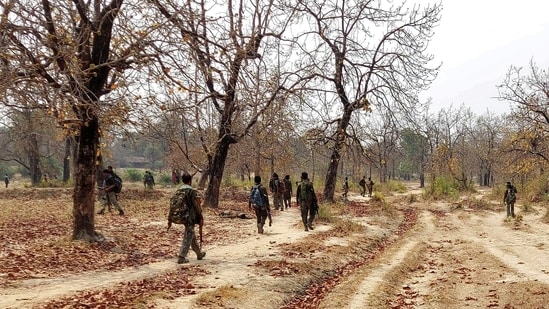
Chhattisgarh: Over 30 Maoists surrender across Bastar; major recoveries reported in four districts| India News
Bastar Sees Continued Maoist Setbacks Amid Rising Surrenders
Omni 360 News – In a significant development for the restive Bastar division of Chhattisgarh, security forces have reported a fresh wave of Maoist surrenders, further eroding the rebel movement’s strength in the region. Recent operations across several districts have seen 44 Maoist cadres lay down their arms, alongside substantial weapon recoveries. This recent success builds upon the remarkable progress noted in areas like Narayanpur, which recorded hundreds of surrenders just last year, signalling a shifting dynamic in the prolonged conflict.
The push for peace and stability in Chhattisgarh’s tribal heartland continues to gain momentum, marked by sustained pressure from security forces and the effectiveness of rehabilitation policies. These efforts are steadily persuading disillusioned Maoist members to return to the mainstream, fostering hope for a more secure future for the local communities.
Recent Successes Across Bastar
Reports from security agencies confirm that a total of 44 Maoist cadres surrendered recently across various districts within the Bastar division. These pivotal surrenders took place in Bastar, Dantewada, Sukma, and Bijapur districts, areas historically considered strongholds for the rebel groups. The decision by these individuals to renounce violence is attributed to a combination of factors: relentless anti-Maoist operations, the appeal of government rehabilitation schemes, and growing disenchantment with the Maoist ideology.
These surrenders are not merely isolated incidents but reflect a broader trend. Each individual who chooses to leave the Maoist fold represents a crack in the rebels’ organizational structure and a victory for the state’s efforts to restore normalcy. The authorities emphasize that development initiatives, coupled with firm security measures, are creating an environment where peace is becoming a more viable option than armed struggle.
Narayanpur District Leads in Disarmament
While the recent surrenders are encouraging, the true scale of the shift is best illustrated by the significant progress made in Narayanpur district. Police records indicate that an impressive 302 Maoist cadres surrendered in Narayanpur throughout the calendar year 2023. This substantial number underscores the district’s pivotal role in the ongoing counter-insurgency efforts.
Beyond the human element, these surrenders have also led to crucial material gains for security forces. In 2023 alone, 270 weapons were recovered from the surrendered cadres in Narayanpur. This includes a range of firearms, from country-made guns to more sophisticated weaponry, directly weakening the rebels’ capability to wage war. Recoveries also extend to improvised explosive devices (IEDs), detonators, and Maoist literature, which offer valuable intelligence and prevent future acts of violence. Such significant recoveries are a testament to the effectiveness of intelligence-led operations and the trust building between security forces and local populations.
Understanding the Surrender Wave
For a 12th-grade student trying to grasp the situation, imagine a group of people living in remote forest areas who believe the government isn’t helping them and that they need to fight for their rights. These are the Maoists, also called Naxals. For many years, they have been clashing with the police and government.
Now, picture the government and police changing their approach. They are not just fighting the Maoists, but also trying to convince them to give up violence and come back to normal life. This is where the surrenders come in. When a Maoist cadre surrenders, it means they have decided to stop fighting, hand over their weapons, and join society again.
Several key reasons drive these surrenders:
* Intensified Security Pressure: The police and paramilitary forces have stepped up their operations, making it harder for Maoists to hide and operate. This constant pressure wears them down.
* Government Rehabilitation Policy: Chhattisgarh has attractive schemes for surrendered Maoists. These schemes offer financial assistance, help with finding jobs, and support for education, allowing them to restart their lives with dignity.
* Disillusionment with Maoist Ideology: Many younger members, in particular, realize that the Maoist movement has not brought the change it promised. They see their leaders enjoying privileges while they face danger and hardship.
* Development Initiatives: The government is trying to bring roads, schools, healthcare, and electricity to remote villages. As these services reach previously neglected areas, locals, including Maoist sympathizers and cadres, see the benefits of peace and development over conflict.
* Family Appeals: Families of Maoists often make emotional appeals for their loved ones to surrender, playing a crucial role in their decision-making process.
The “Vikas Viswas Suraksha” Strategy
The state’s comprehensive strategy, often summarized as “Vikas Viswas Suraksha” (Development, Trust, Security), is a multi-pronged approach. “Vikas” focuses on bringing infrastructure and opportunities to tribal areas. “Viswas” aims to build trust between the administration, security forces, and the local population. “Suraksha” represents the robust security operations designed to neutralize the Maoist threat. This holistic approach is yielding tangible results, moving beyond just military confrontation to address the root causes of unrest.
Local news outlets across Chhattisgarh have consistently highlighted the positive impact of this strategy. Reports often feature stories of surrendered cadres reintegrating into society, working in agriculture, running small businesses, or even joining vocational training programs. These narratives serve as powerful examples for others still entrenched in the Maoist movement.
Looking Ahead: Challenges and Hope
While the trend of surrenders is highly encouraging, the challenge of completely eradicating Maoist influence remains. Pockets of resistance persist in dense forest areas, and the threat of IEDs and ambushes continues. However, the decreasing recruitment, coupled with increasing surrenders, suggests a weakening of the Maoist movement’s grip on the region.
The sustained efforts by security forces, coupled with active community participation and robust rehabilitation programs, are paving the way for lasting peace. Each surrender and weapon recovery is a step forward, bringing the people of Bastar closer to a future free from fear and violence. The commitment to development and security, as evidenced by these ongoing operations, remains crucial for ushering in an era of stability and prosperity in Chhattisgarh’s historically troubled regions.
Key Takeaways:
* Recent operations led to 44 Maoist surrenders across Bastar districts, including Dantewada, Sukma, and Bijapur.
* Narayanpur district recorded a significant 302 Maoist surrenders and 270 weapon recoveries in 2023.
* The increase in surrenders reflects effective security pressure, attractive rehabilitation schemes, and growing disillusionment among cadres.
* Government’s “Vikas Viswas Suraksha” strategy, focusing on development, trust-building, and security, is proving effective.
* Despite challenges, the trend indicates a weakening Maoist movement and a positive trajectory towards peace in Bastar.





