
PM Modi accuses Congress of “spreading panic and fear” during global crises| India News
Gujarat Rally Spotlights Economic Stability, Development Push, and Political Scrutiny Key Takeaways
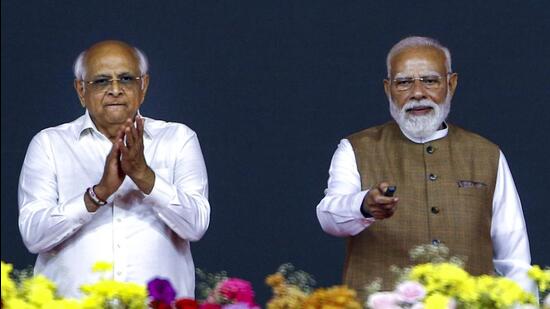
Navsari, Gujarat – In a recent address that resonated across the state, Prime Minister Narendra Modi, speaking at a rally in Navsari, Gujarat, offered a robust defense of his government’s economic stewardship, underscored significant development initiatives, and delivered sharp criticism towards the opposition Congress party. The event, held on Friday, March 15, served as a platform for the Prime Minister to outline his administration’s achievements and vision for the nation’s progress, as reported by Omni 360 News.
The Prime Minister’s speech touched upon critical national issues, including the management of economic challenges, the impact of global events, and the trajectory of India’s development. His remarks aimed to reassure citizens about the country’s economic resilience while contrasting the government’s approach with what he termed as the opposition’s tendency to spread alarm.
Accusations of Panic During Crises
A central theme of the Prime Minister’s address was his direct accusation against the Congress party, alleging that they consistently sow panic and fear during periods of national and global crisis. Drawing parallels to significant events such as the COVID-19 pandemic and the geopolitical unrest stemming from the Ukraine conflict, PM Modi suggested that the opposition’s response was often characterized by negativity rather than constructive engagement. He emphasized that while the world grappled with unprecedented challenges, his government focused on stabilizing the economy and ensuring the welfare of its citizens.
For a 12th standard student, this means that during tough times, like when the coronavirus spread or when there was a war, the Prime Minister believes that instead of helping or being positive, the Congress party tried to scare people or make things seem worse. He thinks this makes it harder for the country to deal with problems effectively.
Defending Fuel Price Management
One of the most keenly watched aspects of the Prime economy is the management of fuel prices, a topic that directly impacts the daily lives of millions. In his Navsari speech, PM Modi explicitly defended his government’s handling of petrol and diesel costs, particularly highlighting the recent reduction of ₹2 per liter across the nation. He underscored the complexities of global crude oil prices, which are influenced by international markets and geopolitical tensions, beyond the direct control of any single nation. Despite these external pressures, he asserted that the government has consistently worked to mitigate the burden on consumers.
Explaining this simply, imagine your family’s budget. When the cost of oil in the world goes up because of big events like wars, the price of petrol and diesel in India also tends to go up. The Prime Minister is saying that even with these global challenges, his government has worked hard to keep prices stable and even managed to lower them recently, saving people a little money at the pump. He believes this shows responsible economic management, ensuring that the impact of global fluctuations is cushioned for the common person.
Highlighting ₹20,000 Crore Development Projects
Beyond political discourse and economic defense, a significant portion of the Prime Minister’s address was dedicated to showcasing tangible development. The rally saw the inauguration and foundation stone laying for a multitude of projects totaling over ₹20,000 crore. These initiatives span critical sectors vital for public welfare and regional growth, including improvements in road and rail infrastructure, enhancements in energy supply, advancements in healthcare facilities, and expansion of water supply networks.
Among the notable projects highlighted were efforts to improve connectivity in Gujarat, which directly benefits trade, tourism, and daily commuting. Investments in the energy sector aim to ensure a more stable and widespread power supply, crucial for both industries and households. In healthcare, the focus was on expanding facilities and services, including the establishment of specialized centers to address aging-related health concerns and regional trauma. Improved water supply projects are designed to ensure access to clean and safe drinking water for more communities, a fundamental need.
For students, this means the government is spending a huge amount of money, ₹20,000 crore, to build new roads, improve trains, make sure everyone gets electricity and clean water, and build better hospitals. These projects are like big investments in Gujarat’s future, designed to make life better and easier for people in many different ways, from getting to places faster to having healthier lives. The idea is that a strong foundation in these areas helps the entire region grow and prosper.
Broader Economic Narrative and Vision
PM Modi’s speech also connected these specific points to a broader narrative of national progress and economic ascendance. He reiterated that India is now the fifth-largest economy globally, a testament to the government’s policies and the hard work of its citizens. This claim serves to bolster confidence in the country’s economic future and to position the current administration as a steward of growth and stability. The concept of a “Double Engine Sarkar,” referring to the harmonious functioning of both the state and central governments, was also invoked as a catalyst for accelerated development in Gujarat. This implies that having the same political party govern at both state and national levels can streamline decision-making and project implementation, leading to faster progress.
In essence, the Prime Minister was telling the audience that India is doing really well economically on the world stage, moving up the ranks of powerful economies. He believes this is because his government has a clear plan and is working hard. When he talks about “Double Engine Sarkar,” he means that when the same party is in charge in Gujarat and in Delhi (the central government), things get done faster and more smoothly, like a train with two engines going full speed ahead, bringing more benefits to the people of Gujarat.
Key Takeaways
The Navsari rally underscored several critical messages. Firstly, it highlighted the ruling party’s strategy to frame its political opponents as disruptive forces during challenging times, contrasting this with its own narrative of steady governance. Secondly, the government is keen to reassure the public about its capacity to manage economic pressures, particularly concerning essential commodities like fuel, by pointing to tangible relief measures. Lastly, and perhaps most significantly, the event served as a grand unveiling of substantial development projects, emphasizing a commitment to improving infrastructure and public services across vital sectors. These elements collectively paint a picture of an administration focused on both economic stability and robust growth, aiming to enhance the quality of life for citizens while navigating a complex global landscape.





