
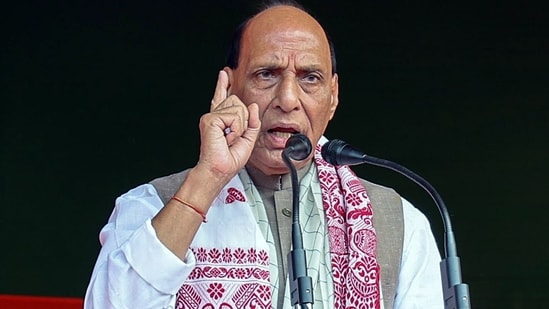
Try anything amid Iran war, face unmatched response: India's message to Pakistan, loud and clear| India News
India Firmly Cautions Neighbor on Border Stability Rajnath Singh Remarks Echo Deterrence
New Delhi – India’s unwavering stance on national security was recently underscored by Defence Minister Rajnath Singh, who issued a strong warning to a neighboring nation, implicitly Pakistan, against any “misadventure.” The minister’s remarks signal India’s readiness for decisive action, reinforcing a clear message of deterrence that resonates across the region and beyond, according to analyses by Omni 360 News.
The Defence Minister’s statement comes amidst a complex global geopolitical landscape, including ongoing regional tensions. While specific references were veiled, the context of India-Pakistan relations and past cross-border incidents makes the intended recipient of the warning apparent. Singh emphasized that India would not hesitate to take strong measures if its sovereignty or security were challenged.
A notable aspect of the minister’s address was his reference to “Operation Sindoor” military strikes, which he indicated were carried out in May last year. This particular detail has drawn attention within defense circles. While publicly available information regarding a specific military operation named “Operation Sindoor” in May 2023 remains sparse in widely circulated national and international media reports, the minister’s mention is significant. It suggests a potential codename for targeted border actions or counter-infiltration efforts that, while perhaps not broadly publicized, were deemed substantial enough to be referenced as a precedent for India’s firm response capabilities. Such operations often focus on dismantling terror infrastructure, thwarting infiltration bids, or retaliating to provocations along the Line of Control (LoC) or International Border (IB). The lack of explicit public details does not diminish the underlying message: India maintains a robust and active defense posture.
India’s defense policy has, for years, moved towards a proactive approach against cross-border terrorism and aggression. This shift, often described as a “new India” doctrine, emphasizes that any act of state-sponsored terrorism or military adventurism emanating from across the border will be met with a firm and calibrated response, chosen at a time and place of India’s choosing. This doctrine aims to raise the cost for aggressors and ensure that peace is maintained through strength and readiness. Local reports from border areas frequently highlight heightened vigilance by the Indian armed forces, with continuous efforts to counter drone incursions, drug smuggling, and attempts at infiltration by militants, demonstrating the daily reality of these security challenges. These ground-level operations, often less visible in national headlines, are crucial components of India’s overall defense strategy and could fall under broader operational umbrellas.
The Defence Minister’s cautionary words serve as a stark reminder of India’s zero-tolerance policy towards terrorism and any attempts to destabilize the region. For a 12th standard student, this means understanding that India’s government is very serious about protecting its country. If anyone tries to cause trouble or send terrorists across the border, India is ready and able to hit back strongly to keep its people safe. It’s like a strong warning: don’t even think about it, because there will be serious consequences. This isn’t just talk; it reflects years of consistent policy and military readiness.
Such warnings are not isolated incidents but are part of a continuous narrative of national security, often echoed by various senior government and military officials. They reflect the operational realities faced by security forces stationed along the challenging borders. News from regions like Jammu and Kashmir, and Punjab often detail the constant vigilance required to counter threats ranging from armed infiltrators to sophisticated drone-based weapon and drug deliveries. These local accounts underscore the complex, multi-faceted nature of border management and the continuous pressure on India’s defense apparatus. When a minister speaks of “decisive action,” it is rooted in these ongoing efforts and the nation’s capacity to respond to any provocation across the full spectrum of warfare.
Key Takeaways:
* Clear Warning: India’s Defence Minister Rajnath Singh has delivered a strong caution to a neighboring nation, signaling decisive action against any cross-border “misadventure.”
* Deterrence Focus: The remarks reinforce India’s policy of robust deterrence and its commitment to safeguarding national security and territorial integrity.
* “Operation Sindoor” Context: While specific public details on “Operation Sindoor” from May last year are limited, its mention by a senior minister indicates India’s willingness to undertake discreet but effective military actions when necessary.
* Proactive Stance: India maintains a proactive defense posture, ready to respond to terrorism and aggression at a time and place of its choosing, moving beyond purely defensive measures.
* Border Vigilance: The warning is backed by continuous on-the-ground efforts by Indian forces to counter infiltration, drone activities, and other cross-border threats, as frequently reported by regional news outlets.
* Global Stability: India’s statements are also shaped by the broader geopolitical climate, demanding constant vigilance and strategic communication.
These statements, as reported by Omni 360 News, are a testament to India’s commitment to protecting its interests and maintaining regional stability through a strong and unambiguous defense posture.





