
Sea conflict beyond oil and energy, expanding to minerals, data, says admiral| India News
The Strait of Hormuz A Choke Point Evolving Beyond Oil and Energy
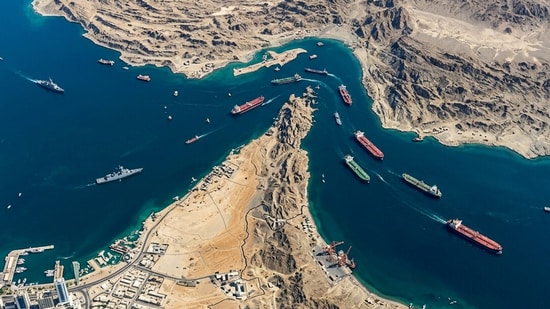
The world watches the Strait of Hormuz with heightened vigilance, a narrow waterway nestled between Iran and Oman that has long served as a critical artery for global commerce. For decades, its significance has been inextricably linked to the immense volume of oil and liquefied natural gas (LNG) traversing its waters, fueling economies across the globe. However, recent geopolitical shifts, particularly the escalating conflict in West Asia, are revealing a profound evolution in the strategic importance of this maritime corridor, extending far beyond traditional energy concerns to encompass vital minerals and the very data that underpins our modern digital world.
The Enduring Lifeline of Global Energy
At its core, the Strait of Hormuz remains an irreplaceable conduit for a significant portion of the world’s seaborne oil. Approximately one-fifth of global oil consumption, translating to millions of barrels daily, passes through this 21-mile wide channel at its narrowest point. Tankers laden with crude oil and LNG from major producers like Saudi Arabia, Iran, UAE, Kuwait, and Iraq navigate its currents en route to markets in Asia, Europe, and the Americas. The simple geography of the Strait makes it a natural choke point, meaning any disruption or closure would send immediate shockwaves through international energy markets, triggering price surges and threatening global economic stability. Regional news outlets, from the *Oman Daily Observer* to specialist maritime publications, consistently highlight the Strait’s role in their economic reports, underscoring its pivotal position in global supply chains.
The historical context of the Strait is equally rich, marked by past tensions and incidents that have periodically underscored its vulnerability. From the “Tanker War” in the 1980s to more recent confrontations involving naval patrols and commercial shipping, the Strait of Hormuz has been a barometer for regional stability.
Beyond Black Gold The Expanding Spectrum of Conflict
Recent observations from prominent figures in maritime security, such as Indian Navy Chief Admiral Hari Kumar, underscore a critical shift in how the Strait of Hormuz and surrounding waters are perceived. Speaking at various forums, Admiral Kumar emphasized that the current geopolitical churn, exacerbated by the war in West Asia, has transformed the traditional understanding of maritime conflict. While oil and energy security remain paramount, the strategic calculus now includes critical minerals and the vast, intricate network of undersea data cables.
Imagine the internet as a massive highway system. A significant portion of this digital traffic travels not through the air, but along fiber optic cables laid across the ocean floor. These undersea cables carry everything from financial transactions to social media updates, connecting continents and powering the digital economy. The areas around the Strait of Hormuz and the broader Red Sea region are traversed by numerous such vital data pathways. Attacks or sabotage on these cables, as recently witnessed in the Red Sea following regional conflicts, can disrupt communication, cripple financial services, and impact global connectivity, posing a new kind of threat that transcends physical goods. For a 12th-grade student, think of it like cutting the main power lines to an entire city, but for digital information.
Concurrently, the global race for critical minerals is adding another layer of complexity. These minerals, essential for everything from smartphones and electric vehicle batteries to advanced defense technologies, are becoming increasingly scarce on land. Deep-sea mining, the process of extracting minerals from the ocean floor, is emerging as a potential new frontier. While still in its nascent stages, the prospect of resource-rich underwater territories, particularly in strategically important maritime zones like the Indian Ocean, means that control and access to these areas could become future flashpoints. Nations are not just vying for oil tankers, but for the seabed itself, and the resources it holds.
West Asia’s Shadow and Global Implications
The ongoing conflict in West Asia has cast a long shadow over global shipping, increasing uncertainty and risk in the Red Sea and, by extension, the Strait of Hormuz. Attacks on commercial vessels, whether from drones, missiles, or acts of piracy, force shipping companies to re-evaluate routes, leading to longer transit times, increased insurance costs, and ultimately, higher prices for consumers worldwide. Countries like India, heavily dependent on maritime trade for its energy needs, imports, and exports, feel the direct impact of this instability. The need for enhanced maritime domain awareness and robust naval presence has never been more critical. Naval forces from various nations are stepping up patrols, not just to protect oil tankers, but to safeguard the entire spectrum of maritime interests, from digital infrastructure to future mineral resources.
Omni 360 News Perspective A Comprehensive View
At Omni 360 News, we understand that true journalistic insight requires looking beyond the immediate headlines to grasp the full scope of unfolding events. The Strait of Hormuz exemplifies this perfectly. It is no longer just a story about oil prices or geopolitical maneuvers; it is a complex narrative weaving together energy security, digital connectivity, resource competition, and international law. Understanding these interconnected threads is crucial for policymakers, businesses, and citizens alike. The evolving nature of threats in this region demands a comprehensive, multi-faceted approach to security and diplomacy, recognizing that a disruption in one area can quickly cascade into others.
Key Takeaways
* The Strait of Hormuz remains a vital international waterway, critical for global oil and gas flow.
* Regional conflicts in West Asia are intensifying risks to maritime trade.
* The strategic importance of the Strait is expanding beyond traditional energy to include critical deep-sea minerals and undersea data cables.
* Disruptions to undersea data infrastructure pose a significant threat to the global digital economy.
* The shift signals a new era of maritime security challenges, requiring broader strategic thinking from nations.
* Global cooperation and enhanced maritime domain awareness are essential for safeguarding these evolving interests.
In conclusion, the Strait of Hormuz stands as a powerful symbol of our interconnected world, its waters reflecting not just the flow of oil, but the intricate web of resources and data that define modern civilization. As geopolitical tensions simmer, understanding the full, expanding scope of its strategic importance is paramount for navigating the complex currents of the 21st century.





