
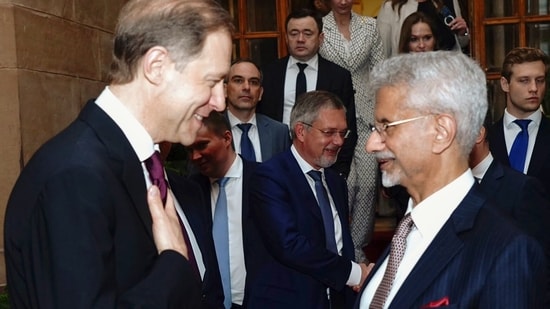
Russian deputy PM meets PM Modi and EAM Jaishankar| India News
Navigating Complex Waters: India and Russia Discuss Global Stability, West Asia Conflict
In the intricate tapestry of global diplomacy, nations constantly engage to understand, and at times, influence the prevailing currents. A recent high-level meeting in New Delhi between India’s External Affairs Minister, S. Jaishankar, and Russia’s Deputy Prime Minister, Denis Manturov, highlighted this continuous engagement. While the discussions primarily focused on strengthening bilateral ties in areas like trade, energy, and defense, a significant portion of their dialogue was dedicated to pressing regional and global developments, with the simmering conflict in West Asia taking a prominent place. This exchange underscores the shared recognition that domestic progress is inextricably linked to international stability.
For many years, India and Russia have maintained a multifaceted relationship built on historical ties and strategic convergence. This enduring partnership continues to evolve amidst a rapidly changing world order. The India-Russia Inter-Governmental Commission on Trade, Economic, Scientific, Technological and Cultural Cooperation (IRIGC-TEC) serves as a crucial platform for these dialogues, fostering collaboration across numerous sectors. Yet, as our interconnected world grapples with a multitude of challenges, these bilateral talks inevitably expand to encompass broader geopolitical concerns.
One of the most critical topics on their agenda was the escalating conflict in West Asia. This region, often referred to as the Middle East, is a crucial nerve center for global energy supplies and maritime trade routes. Instability there has ripple effects that spread far beyond its immediate borders, touching economies and security landscapes worldwide. Both India and Russia, as major global players, have vested interests in the region’s stability, albeit with differing approaches and historical engagements.
India’s Stance on West Asia
India’s approach to the West Asia conflict has been consistent. New Delhi advocates for a de-escalation of hostilities, emphasizes the urgent need for humanitarian assistance to affected populations, and continues to champion a two-state solution. This long-held position envisages a sovereign Palestinian state coexisting peacefully alongside Israel. India’s diplomacy navigates a careful path, balancing its historical support for the Palestinian cause with its growing strategic partnership with Israel. The nation’s concerns are not purely altruistic; a significant Indian diaspora resides in West Asia, and any major disruption directly impacts their safety and livelihoods. Furthermore, India’s energy security is heavily reliant on crude oil imports from the region, making stability a paramount economic interest.
Russia’s Perspective
Russia, on the other hand, also seeks to project its influence in West Asia, often positioning itself as an alternative to Western powers. Moscow has historically maintained strong ties with various Arab nations and has been critical of certain actions taken by Israel. Russia’s stance often emphasizes the need for international law and UN resolutions, frequently aligning with the Palestinian call for statehood. For Russia, involvement in West Asia is part of its broader foreign policy to assert its role as a global power and to challenge what it perceives as unilateral actions by other major nations.
The Significance of Their Discussion
When high-ranking diplomats like Jaishankar and Manturov delve into such sensitive issues, it’s not merely about reiterating public positions. It involves a deeper exchange of analyses, understanding each other’s red lines, and exploring potential avenues for diplomatic action or cooperation. While the specific details of their private conversation remain confidential, it can be inferred that they discussed the humanitarian crisis, the potential for wider regional destabilization, and the economic implications for their respective countries.
Such dialogues are vital for several reasons:
* Information Exchange: Leaders share intelligence and perspectives that might not be publicly available, enriching their understanding of complex situations.
* Coordination (or lack thereof): Even if full alignment isn’t achieved, understanding where each stands can prevent miscalculations and inform future diplomatic maneuvers.
* Regional Stability: Both nations have stakes in maintaining stability, and discussing the conflict allows them to explore how their individual actions might contribute to, or detract from, this goal.
* Global Impact: Conflicts in West Asia affect global energy prices, supply chains, and international security frameworks, issues relevant to both India’s and Russia’s economic and strategic interests.
Beyond West Asia, the two sides likely touched upon other regional hot spots and the evolving global power dynamics. India has consistently called for dialogue and diplomacy to resolve conflicts, including the one in Ukraine, advocating for a path that prioritizes humanitarian concerns and long-term peace. These broader discussions reflect a shared commitment, even with differing nuances, to a multipolar world order where multiple centers of power contribute to global governance.
For the everyday citizen, these talks might seem distant from their daily lives. However, the stability of West Asia directly impacts the price of fuel, the safety of trade routes, and even the job opportunities for millions who work abroad. When leaders like Jaishankar and Manturov engage in such profound discussions, they are, in essence, working to safeguard these very interests, aiming to foster an environment where economic growth and peace can thrive.
As Omni 360 News observes, these diplomatic engagements are not just about grand statements; they are about the painstaking work of building understanding, managing disagreements, and identifying common ground in a world that seldom stands still. The meeting between Jaishankar and Manturov serves as a crucial reminder of the ongoing effort required to navigate the complexities of international relations and contribute to a more stable global future.
Key Takeaways:
* India and Russia held extensive talks, extending beyond bilateral trade and defense to critical global issues.
* The escalating West Asia conflict was a primary focus, reflecting its widespread geopolitical and economic impact.
* India reiterated its call for de-escalation, humanitarian aid, and a two-state solution, balancing historical ties with strategic partnerships.
* Russia likely shared its perspective, aligning with its broader foreign policy objectives in the region.
* Such high-level diplomatic exchanges are crucial for information sharing, understanding differing positions, and coordinating efforts towards global stability.





