
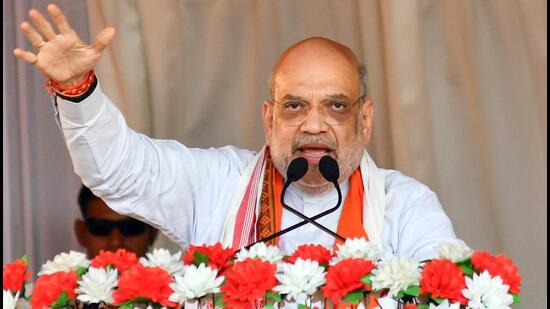
In poll-bound Assam, Shah reiterates BJP’s promise to introduce pan-India UCC| India News
Assam Elections BJP Unveils Manifesto Highlighting Uniform Civil Code Prospects Key Takeaways
As the Assam electoral battle intensifies, the Bharatiya Janata Party has unveiled its comprehensive 31-point manifesto, laying out a vision that touches upon various facets of governance and societal development. Among its significant pledges, the commitment to introduce a Uniform Civil Code (UCC) across India, which would include Assam, stands out as a particularly crucial and widely discussed point. This proposal, reiterated by top party leadership during the campaign, has ignited conversations across the state and beyond, making it a focal point of electoral discourse.
For those unfamiliar with the concept, a Uniform Civil Code proposes to replace the existing system of personal laws, which are currently governed by the religious scriptures and customs of various communities, with a single, common set of laws for all citizens. These personal matters include critical aspects of life such as marriage, divorce, inheritance, adoption, and maintenance. Presently, Hindus, Muslims, Christians, and other religious groups in India are subject to their own distinct personal laws.
The idea behind the UCC is rooted in the constitutional directive principle enshrined in Article 44, which states that the “State shall endeavour to secure for the citizens a Uniform Civil Code throughout the territory of India.” Proponents argue that a UCC would foster national unity, promote gender equality by rectifying disparities often found in various personal laws, and simplify the legal system. They believe that a modern, progressive nation should not have laws based on religious identity in personal affairs.
However, the Uniform Civil Code has also long been a contentious and polarising subject. Critics and several minority community representatives express concerns that implementing a UCC could infringe upon religious freedom and cultural diversity. They worry it might impose a majority community’s practices on minorities, thus eroding their distinct identities and traditions. This apprehension is particularly strong among Muslim organizations and some tribal communities, whose customary laws often govern their social structures and property rights. The debate frequently revolves around balancing individual rights with community customs and the broader goal of national integration.
In Assam, the pledge to implement UCC holds particular weight due to the state’s incredibly diverse demographic fabric. Assam is home to a multitude of ethnic groups, linguistic communities, and religious traditions, including a significant tribal population whose unique customary laws are often protected under specific constitutional provisions or state acts. Any move towards a UCC would necessitate careful consideration of these varied customs and existing legal frameworks. Local news sources frequently highlight the complex interplay of culture, identity, and law in Assam, underscoring the potential for extensive public debate and varied reactions should such a code be pursued. The state has already witnessed extensive discussions on identity and rights in recent years, making the UCC promise an addition to an already sensitive political landscape.
The BJP’s manifesto for Assam, as reported by various outlets, goes beyond the UCC, also promising initiatives aimed at accelerating development, enhancing social welfare, and bolstering infrastructure across the state. These include measures for flood control, job creation, education reforms, and improvements in healthcare facilities. However, the UCC promise undoubtedly garners significant attention, reflecting its foundational position in the party’s ideological framework. For the party, it represents a step towards a more unified legal system and the promotion of what it views as progressive social reforms.
The inclusion of UCC in the Assam manifesto aligns with the BJP’s national agenda, where it has long advocated for its implementation. By making this promise explicit in a state with such distinct diversity, the party signals its unwavering commitment to this principle. Electoral strategists and political commentators suggest this move could energise a section of the electorate that supports legal uniformity while simultaneously prompting robust discussions and potentially opposition from communities apprehensive about its implications. The outcome of such a policy, if implemented, would depend heavily on its specific drafting, how it addresses existing personal laws, and the extent to which it accommodates the diverse traditions of India’s myriad communities.
As Omni 360 News continues to follow election developments, the discourse surrounding the Uniform Civil Code in Assam remains a central theme. Its eventual impact on the state’s social fabric and legal landscape will be closely observed, regardless of the electoral outcome. The debate is not merely about laws but about identity, tradition, equality, and the very definition of nationhood in a pluralistic society.
Key Takeaways:
- The BJP’s 31-point manifesto for the Assam polls includes a promise to introduce a Uniform Civil Code (UCC).
- UCC aims to replace diverse religious personal laws with a single set of laws for all citizens on matters like marriage, divorce, and inheritance.
- Supporters advocate for national unity and gender equality through UCC.
- Opponents express concerns about potential impacts on religious freedom and cultural diversity, particularly for minority communities and some tribal groups in Assam.
- Assam’s rich demographic diversity adds complexity to the UCC discussion, considering existing tribal customary laws and the state’s unique cultural landscape.
- The UCC promise reflects a long-standing core agenda of the BJP, aligning with its national ideological stand.
- The issue is expected to significantly influence electoral debates and voter sentiment in the ongoing Assam polls.





