
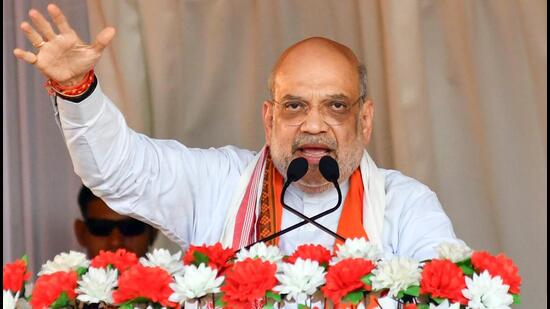
In poll-bound Assam, Shah reiterates BJP’s promise to introduce pan-India UCC| India News
Assam Elections 2024 BJP Manifesto Uniform Civil Code Promise Deep Dive
As the electoral fervor grips Assam, political parties are keenly articulating their visions for the state’s future. The Bharatiya Janata Party (BJP) recently unveiled its 31-point manifesto for the upcoming assembly polls, a document that outlines a broad range of developmental pledges alongside a particular proposal that has garnered significant attention: the implementation of a Uniform Civil Code (UCC). This commitment, reiterated by senior party leaders, places the UCC squarely at the forefront of public discourse, sparking debates and discussions across the diverse landscape of Assam. Omni 360 News delves into the details of this pivotal promise and its potential ramifications.
The BJP’s manifesto, far from being solely focused on the Uniform Civil Code, presents a comprehensive roadmap for Assam’s progress. It includes substantial commitments aimed at bolstering infrastructure, ensuring robust flood control mechanisms – a perennial concern for the region – and driving economic growth through various sectors. Significant emphasis is also placed on empowering women through welfare schemes and fostering opportunities, alongside initiatives to safeguard and promote Assam’s rich and unique cultural heritage. Education and healthcare improvements also feature prominently, painting a picture of holistic development. These points collectively seek to address the multifaceted needs and aspirations of the Assamese populace.
However, it is the promise of introducing a Uniform Civil Code that has emerged as a central talking point. For those unfamiliar with the concept, the UCC proposes a single set of laws to govern personal matters such as marriage, divorce, inheritance, adoption, and succession for all citizens, irrespective of their religious affiliation. Currently, different religious communities in India are guided by their own distinct personal laws – for example, Hindu personal law, Muslim personal law, and Christian personal law. The idea behind UCC, rooted in Article 44 of the Indian Constitution as a Directive Principle of State Policy, is to foster national unity and ensure equality before the law for all citizens in these personal domains.
The contentious nature of the UCC stems from the fact that it would supersede these existing religion-specific personal laws. Advocates argue it promotes gender equality and secularism, ensuring uniform rights for women across communities and eliminating discriminatory practices. Critics, particularly from various minority communities, express concerns that it could infringe upon religious freedom and cultural identity, potentially diluting the distinct practices and traditions that have been part of their heritage for centuries. Local news outlets across Assam, like *The Assam Tribune* and *Sentinel Assam*, have extensively covered the varying viewpoints, highlighting that while some sections of the populace see it as a step towards modernization and equality, others view it with apprehension, fearing it could erase community-specific legal frameworks.
The BJP’s reiteration of the UCC promise in Assam, while consistent with its national agenda, takes on particular significance in a state known for its rich tapestry of ethnic groups, languages, and religions. Assam’s demographic makeup means any proposal regarding personal laws touches upon deeply held beliefs and community practices. Reports from regional journalists indicate that local political analysts are closely watching how this promise resonates with different voter segments. Opposition parties have quickly criticized the move, framing it as a divisive tactic that could undermine the state’s social harmony. Community leaders, speaking to local media, have voiced both support, citing potential benefits for women’s rights, and strong reservations, emphasizing the need to protect the diversity of personal laws. These varied responses underscore the profound societal implications of such a legal shift.
Implementing a UCC, if the BJP were to secure power and proceed with its promise, would involve navigating complex legal, social, and cultural challenges. It would necessitate extensive consultations with various stakeholders, including legal experts, religious leaders, women’s rights advocates, and community representatives, to craft a law that is equitable, inclusive, and respectful of fundamental rights. The path to a Uniform Civil Code is historically known to be intricate and emotionally charged, requiring a delicate balance between the ideals of uniformity and the protection of diverse cultural and religious identities.
Key Takeaways:
* The BJP’s Assam manifesto is a 31-point document covering diverse development areas.
* The Uniform Civil Code (UCC) is a prominent, often debated promise within the manifesto.
* UCC aims for a single set of personal laws for all citizens, replacing religion-specific codes.
* The proposal draws support for promoting equality and criticism over concerns for religious freedom.
* Assam’s diverse populace means the UCC promise carries significant local political and social weight.
* Implementation would face complex legal and societal hurdles, demanding broad consensus.
As Assam heads to the polls, the BJP’s promise of a Uniform Civil Code, alongside its broader developmental agenda, presents voters with a clear choice. The coming weeks will undoubtedly see further discussions and clarifications from all political fronts, allowing the electorate to weigh the potential impacts and make an informed decision for the future of their state. The discussions around the UCC will continue to be a defining feature of this election cycle, shaping the narrative and influencing the outcome in significant ways.





