
Delhi earthquake tremors in 5 points: Magnitude, epicentre, impact| India News
Deadly Afghanistan Earthquake Sends Tremors Across India Pakistan Region
The ancient, rugged peaks of the Hindukush mountains once again became the epicenter of a natural calamity, unleashing a powerful earthquake that rippled across Afghanistan, Pakistan, and India. On the evening of March 21, 2023, a magnitude 6.5 tremor, with its depth around 187 kilometers, struck the remote Jurm district in Afghanistan’s Badakhshan province. This seismic event brought widespread panic, tragically claiming lives in its immediate vicinity and sending palpable shivers through densely populated urban centers hundreds of kilometers away.
Initial reports from various local sources indicated at least eight fatalities within Afghanistan, a number that sadly escalated as rescue efforts progressed and more remote areas were assessed. The quake’s deep focus mitigated some of the surface intensity, yet its sheer power was enough to cause significant structural damage and, more tragically, loss of life, primarily in Afghanistan and Pakistan.
Afghanistan Bears the Brunt of the Tremor
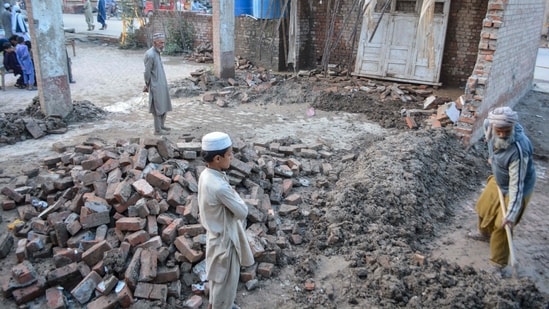
In Afghanistan, the impact was immediate and devastating. Provinces such as Badakhshan, Kunar, Takhar, and Laghman reported the most severe consequences. Houses, many constructed from traditional mud-brick, crumbled under the violent shaking. Beyond the initial count of eight lives lost, authorities and aid organizations later confirmed a total of at least 13 fatalities across various provinces, with scores more injured. The deep-seated fear etched on the faces of survivors, many of whom had already endured decades of conflict and hardship, was a stark reminder of nature’s formidable power. Families rushed out of their homes, huddling together in open spaces, fearing aftershocks and the collapse of already weakened structures. Local hospitals, often rudimentary in their facilities, were quickly overwhelmed with trauma cases, ranging from head injuries to broken limbs.
The tremor triggered landslides in mountainous areas, further isolating communities and hindering the delivery of emergency aid. Reports from local councils and community leaders painted a grim picture of villages grappling with damaged infrastructure, disrupted power supplies, and a desperate need for shelter. Omni 360 News understands the profound challenges faced by these communities, where recovery from one disaster often bleeds into the next.
Pakistan Experiences Widespread Tremors and Casualties
Across the border in Pakistan, the earthquake’s rumble was felt profoundly, particularly in the northern and western regions. Cities like Islamabad, Lahore, Peshawar, Rawalpindi, and Gilgit-Baltistan experienced prolonged and intense shaking. The National Seismic Monitoring Centre in Pakistan confirmed the magnitude and depth, leading to widespread alarm.
Tragically, Pakistan also reported fatalities due to the quake. Multiple local news outlets confirmed at least nine deaths across various provinces, primarily due to collapsing walls and roofs. In Peshawar, residents fled multi-story buildings, gathering in open parks and streets, their faces reflecting a mix of shock and anxiety. In Swat Valley, a region still rebuilding from past calamities, several houses were damaged, and injuries were reported as people scrambled to safety. Local disaster management authorities were quick to mobilize, assessing damage and providing immediate relief to affected families. The widespread fear prompted many to spend the night outdoors, wary of further seismic activity.
India Feels the Quake’s Distant Reach
While the immediate devastation was concentrated closer to the epicenter, residents across northern India, including the sprawling Delhi-National Capital Region (NCR), Punjab, Haryana, Rajasthan, Uttar Pradesh, and Jammu and Kashmir, felt the strong tremors. For several unsettling seconds, buildings swayed, chandeliers jingled, and furniture rattled, prompting people to evacuate their homes and offices. In Delhi, office-goers reported feeling the ground move distinctly, with many choosing to descend stairwells rather than risk elevators.
Fortunately, India reported no significant damage or casualties directly attributed to this particular earthquake. The tremors, while alarming, were a testament to the quake’s immense power and reach. The experience served as a stark reminder for Indian cities, especially those in seismic zones, of the importance of earthquake-resistant building codes and preparedness drills. Schools and workplaces across the northern belt reviewed their emergency evacuation procedures in the aftermath.
Understanding the Earth’s Movements
To understand why such powerful tremors affect such a wide region, one must look beneath the surface. Our Earth’s outer shell is not a single, solid piece but a jigsaw puzzle of massive plates constantly, albeit slowly, moving. The Hindukush region, where this earthquake originated, sits at a complex geological junction where the Indian plate is pushing northward into the Eurasian plate. This collision creates immense pressure, which, when released, results in seismic activity. Earthquakes originating deep within the Earth, like this one, tend to have a wider felt area compared to shallow quakes of similar magnitude, though their intensity at the surface might be less localized.
Key Takeaways from the Regional Tremors
This earthquake served as a somber reminder of the geological forces shaping our world and the critical need for preparedness. Key takeaways include:
* Human Cost: The initial eight reported fatalities in Afghanistan sadly increased to a total of at least 13 in Afghanistan and nine in Pakistan, underscoring the tragic human toll of natural disasters.
* Regional Impact: While the epicenter was deep within Afghanistan, the tremors highlighted the interconnected seismic vulnerability of the broader region, from Kabul to Islamabad and Delhi.
* Preparedness Matters: The widespread panic underscored the need for enhanced public awareness campaigns and robust disaster management protocols in all affected nations.
* Geological Context: The Hindukush mountains remain a highly active seismic zone, making recurrent earthquake events a certainty, not a possibility.
As communities continue to recover and rebuild, the echoes of the March 2023 earthquake serve as a powerful signal for regional cooperation in disaster mitigation and emergency response. Omni 360 News will continue to monitor the long-term impact on these vulnerable communities.





