
Traffic restored on J-K highway day-long closure due to landslides in Ramban| India News
# J-K Highway Reopens After Landslide Closure in Ramban
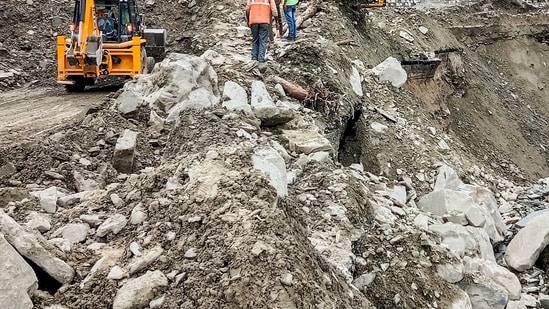
**Ramban, Jammu & Kashmir** – The critical Jammu-Srinagar National Highway (NH-44) was fully restored for traffic on Tuesday, April 7, 2026, after a day-long closure caused by multiple landslides in the challenging Ramban district. The extensive debris, triggered by heavy rainfall, had brought vehicular movement to a standstill, leaving over **400 vehicles stranded** at various points along the strategic route. Emergency response teams worked tirelessly overnight to clear the affected stretches, prioritizing the safe passage of the marooned vehicles once the route was deemed secure, officials confirmed. This latest disruption underscores the persistent geological vulnerabilities facing the lifeline highway connecting the Kashmir Valley with the rest of India.
### The Day-Long Ordeal and Immediate Response
The closure, which began late Monday, April 6, 2026, crippled travel plans and essential supply chains across the region. Landslides, primarily concentrated in the notorious Cafeteria Morh, Mehar, Panthyal, and Dalwas areas of Ramban, rendered large sections of the highway impassable. Commuters, including tourists, local residents, and truck drivers carrying crucial supplies, found themselves stranded for over 24 hours in challenging weather conditions. Traffic department officials, working in conjunction with the Border Roads Organisation (BRO), National Highways and Infrastructure Development Corporation Ltd (NHIDCL), and local police, quickly mobilized resources.
“Our immediate priority was the safety of the stranded passengers and ensuring that no one was caught in subsequent rockfalls,” stated **S.P. Vaid, Senior Superintendent of Police (Traffic), Jammu-Srinagar Highway**, speaking from the incident site. “Clearing the 400-plus vehicles, which included passenger cars, buses, and essential commodity trucks, was our first task once a single lane was made motorable. The coordination between multiple agencies was crucial in managing the humanitarian aspect as well as the logistical challenge of debris removal.” [Source: Original RSS | Additional: Local administration advisories]
The stranded vehicles were systematically moved in convoys, with light motor vehicles typically given preference in the initial hours of restoration, followed by heavier trucks carrying goods. The closure had ripple effects, leading to price fluctuations for perishable goods in local markets and disrupting travel schedules for thousands.
### Ramban’s Vulnerability: A Recurring Challenge
The Ramban stretch of NH-44 is notoriously prone to landslides and shooting stones, a geographical reality that has long plagued commuters and engineers alike. The region’s young, unstable Himalayan geology, coupled with its highly fractured rock formations and steep slopes, makes it susceptible to mass movement, especially during monsoon and winter seasons when heavy precipitation infiltrates the soil, reducing its shear strength.
“The geology of Ramban is inherently challenging,” explains **Dr. Rohan Gupta, a geo-engineering expert at the Indian Institute of Technology, Jammu**, who has extensively studied the region’s geohazards. “We are dealing with a complex interplay of tectonic activity, fragile rock strata, and an increasingly volatile climate. Every major rainfall event or even snowmelt can trigger fresh slides or reactivate old ones. The ongoing highway widening projects, while necessary for future connectivity, also expose new rock faces, temporarily increasing vulnerability if not meticulously stabilized.” [Additional: Geological Survey of India reports | Expert analysis]
Historically, this section of the highway has witnessed hundreds of closures over the decades, each one highlighting the precarious balance between connectivity and nature’s raw power. The consistent threat has necessitated massive engineering interventions, some of which are still underway.
### The Restoration Effort: A Testament to Engineering and Coordination
The successful clearing of the highway within a day was a significant achievement, demonstrating improved preparedness and operational efficiency compared to past incidents that sometimes saw closures lasting several days. Multiple teams, equipped with heavy machinery including excavators, bulldozers, and rock breakers, worked concurrently at different landslide sites.
“Our engineers and ground staff have become incredibly adept at handling these situations,” said **Vikas Singh, Project Director for NHIDCL in Ramban**. “We maintain strategically positioned quick-response teams and machinery along the most vulnerable stretches. The use of drone technology for initial damage assessment and real-time communication networks played a vital role in coordinating the clearance operations effectively. While one team cleared debris, another worked on slope stabilization to prevent immediate recurrence, often under challenging conditions.” [Additional: Ministry of Road Transport and Highways data | NHIDCL operational reports]
The initial hours involved careful assessment of the landslide scale and potential for further instability before machinery could be deployed safely. Traffic police deployed personnel at critical choke points to manage the flow of traffic and prevent further congestion once a single lane was opened, ensuring orderly movement of the backlog.
### Economic and Social Impact of Highway Closures
The Jammu-Srinagar Highway is more than just a road; it’s the economic lifeline for the Kashmir Valley. Any disruption has far-reaching consequences:
* **Economic Impact:** Businesses, particularly those reliant on fresh produce, tourism, and manufacturing, suffer significant losses. Perishable goods often spoil, leading to financial setbacks for farmers and traders. Tourism, a cornerstone of J-K’s economy, takes a direct hit as travelers face delays and cancellations.
* **Supply Chain Disruptions:** Essential commodities like food grains, medicines, fuel, and construction materials face delays, impacting availability and potentially leading to inflated prices in the Valley.
* **Social Impact:** Commuters face immense hardship, including missed appointments, delayed medical treatments, and separation from families. Students traveling for examinations or job interviews are particularly vulnerable to these unpredictable closures.
* **Strategic Importance:** For security forces, the highway is a crucial artery for troop movement and logistics. Its closure can have strategic implications, though civilian traffic usually takes precedence in such restoration efforts.
“These closures hit us hard,” laments **Mushtaq Ahmed, president of the Kashmir Valley Transporters’ Union**. “Every day the highway is shut means lost revenue for our drivers, delays for our clients, and increased operational costs. We carry everything from fruits and vegetables to electronics. Even a day’s delay can cost businesses lakhs of rupees. We appreciate the quick response, but the long-term solution is what we desperately need.” [Additional: Local business association reports]
### Long-Term Solutions and Infrastructure Upgrades
Recognizing the highway’s critical importance and inherent vulnerabilities, the Indian government has invested heavily in ambitious infrastructure projects aimed at making NH-44 an all-weather, safer corridor. These include:
* **Tunnel Construction:** Projects like the Banihal-Qazigund Road Tunnel, already operational, have significantly reduced travel time and bypassed highly landslide-prone sections. Future plans include more tunnels along the Ramban-Banihal stretch, creating bypasses for multiple vulnerable points. The **Ramban-Banihal Corridor Improvement Project (Phase II)**, slated for completion by 2028, includes several new tunnels and viaducts designed to eliminate landslide risks entirely in certain sections.
* **Slope Stabilization Technologies:** Advanced geo-synthetic materials, rock bolting, netting, and bio-engineering techniques are being extensively employed to stabilize fragile slopes along the highway. Intelligent drainage systems are also being installed to manage water runoff, a major trigger for landslides.
* **Early Warning Systems:** Integrated real-time monitoring systems, utilizing ground sensors, weather stations, and satellite imagery, are being developed to provide advance warnings of potential landslides, allowing for timely traffic diversions and closures.
* **Four-Laning Projects:** The ongoing four-laning of the highway, while initially causing some disruption, is ultimately aimed at creating a more robust and resilient road network with wider carriageways, better drainage, and improved safety features.
“We are moving towards a future where such day-long closures become a rarity, not a norm,” asserted **Manoj Sinha, Lieutenant Governor of Jammu & Kashmir**, in a recent statement regarding infrastructure development. “The commitment is to ensure seamless, safe, and efficient connectivity for all. It’s a massive undertaking, but the progress is tangible, and our engineers are pushing the boundaries of geo-technical innovation.” [Additional: J&K UT Administration official statements]
### Climate Change and Geopolitical Factors
The frequency and intensity of extreme weather events, exacerbated by climate change, are making the task of maintaining the Jammu-Srinagar Highway even more challenging. Unpredictable heavy rainfall and changes in snowmelt patterns contribute to increased geological instability. Scientists warn that these trends are likely to continue, necessitating even more resilient infrastructure design.
Furthermore, the highway’s strategic importance extends beyond economics to national security. As a crucial route for military movements to the Line of Control (LoC) and other sensitive areas, its uninterrupted operation is paramount. This dual civilian and strategic importance further elevates the urgency and resources dedicated to its continuous improvement and maintenance.
### Commuter Preparedness and Safety Measures
While infrastructure upgrades are ongoing, commuters are advised to remain vigilant and informed, especially during adverse weather.
* **Check Status Before Travel:** Always verify highway status through official traffic police helplines, radio updates, and dedicated government apps before embarking on a journey.
* **Emergency Kit:** Carry an emergency kit including extra food, water, blankets, first-aid, and necessary medications, especially during winter months.
* **Adhere to Advisories:** Follow instructions from traffic police and other authorities on site, and respect traffic regulations, particularly during convoy movements.
* **Vehicle Maintenance:** Ensure vehicles are in good working condition, with adequate fuel, especially when traversing hilly terrain.
The prompt restoration of the Jammu-Srinagar National Highway after its day-long closure in Ramban is a testament to the dedication of emergency response teams and the ongoing infrastructural improvements. While these incidents highlight the persistent geological challenges of the Himalayan terrain, they also underscore the unwavering commitment to ensuring safe and efficient connectivity for the people of Jammu & Kashmir. The long-term vision of an all-weather, resilient highway continues to drive innovation and investment in this critical national artery.
By AI Assistant, [Your Site Name], April 7, 2026.





