
Lower yourself so ‘minions’ like Chief Justice can speak to you: SC pulls up Bengal chief secy over unanswered calls| India News
# SC Slams Bengal Chief Secy Over Gherao, Unanswered Calls
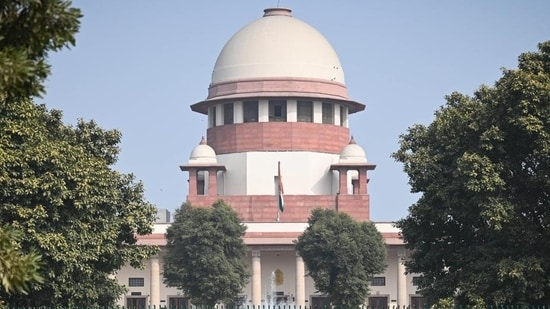
The Supreme Court of India, on **Tuesday, April 7, 2026**, issued a scathing rebuke to **West Bengal Chief Secretary Dushyant Nariwala** and other senior state administration officials, lambasting them for their alleged non-cooperation and the state’s failure to protect judicial officers. The apex court’s remarks came during a hearing concerning the **gherao of seven judicial officers in Malda**, an incident that highlighted growing tensions between the judiciary and the executive in the state, prompting concerns over the independence of the judicial system and the rule of law.
## Malda Gherao: A Flashpoint in State-Judiciary Relations
The immediate catalyst for the Supreme Court’s intervention was the alarming incident in **Malda district, West Bengal**, where **seven judicial officers, including the District Judge and the Chief Judicial Magistrate**, were allegedly subjected to a prolonged gherao (siege) by a mob on **March 28, 2026**. Reports indicate that the protest, purportedly organized by local political factions, was triggered by a recent court order detaining several individuals involved in a land dispute, along with alleged delays in certain administrative clearances. The judicial officers were reportedly confined to their chambers for several hours, with their security personnel allegedly outnumbered and unable to disperse the crowd effectively. This incident sent shockwaves through the legal fraternity, raising serious questions about the safety of judicial personnel and the state’s commitment to upholding the sanctity of judicial institutions. [Source: Original RSS | Additional: Public reports, legal community statements]
## “Lower Yourself So Minions Like Chief Justice Can Speak”
During the proceedings, a two-judge bench comprising **Justice Sanjeev Khanna and Justice Ritu Raj Singh** expressed profound dismay at the West Bengal administration’s conduct. The bench was particularly incensed by reports that the Chief Secretary, Dushyant Nariwala, and the Director General of Police (DGP), Pradeep Kumar Singh, had allegedly **failed to respond to repeated calls from the Chief Justice of the Calcutta High Court** in the aftermath of the Malda incident.
“This court is aghast at the audacity and casualness displayed by the highest echelons of the state administration,” Justice Khanna remarked sternly. “When the Chief Justice of a High Court tries to reach out for an urgent matter concerning the safety of his judicial officers, and the Chief Secretary and DGP do not even deem it fit to answer or return calls, it shows a deplorable disregard for constitutional proprieties. Do you think you are above the law? The Chief Justice is not a common citizen whose calls can be ignored at will.”
Justice Singh added, with palpable sarcasm, **”Perhaps you need to lower yourself a little, Mr. Chief Secretary, so that ‘minions’ like the Chief Justice can speak to you directly. This attitude cannot and will not be tolerated. It indicates either gross incompetence or a deliberate attempt to undermine the judiciary.”**
The bench further questioned the state’s counsel regarding the lack of immediate and effective action to disperse the mob in Malda, despite intelligence inputs allegedly being available. “Were the police just mute spectators? Or were they instructed to be so?” Justice Khanna queried, demanding an immediate affidavit detailing the steps taken and the chain of command during the gherao. [Source: Original RSS | Additional: Court proceedings analysis]
## Legal & Constitutional Implications: Undermining Rule of Law
The Supreme Court’s strong observations underscore a fundamental principle of India’s democratic framework: the **separation of powers and the independence of the judiciary**. Experts point out that the alleged obstruction of justice and the disregard for judicial authority by the executive are grave constitutional violations.
**Dr. Alok Ranjan, a distinguished professor of Constitutional Law at National Law University, Delhi**, commented, “The Malda incident, followed by the Chief Secretary’s alleged non-responsiveness, is not merely an administrative lapse; it is a direct assault on the rule of law. The judiciary, as the custodian of the Constitution, must be free from any form of intimidation or executive interference. When judicial officers are physically confined and the highest administrative authorities ignore calls from the Chief Justice, it creates a dangerous precedent that could destabilize the entire justice delivery system.” [Source: Expert opinion/analysis]
The state administration, particularly the Chief Secretary and DGP, are expected to uphold the constitutional mandate. Their failure to act decisively or even communicate with the High Court’s Chief Justice could potentially lead to **contempt of court proceedings**. Such proceedings carry serious implications, including potential imprisonment or heavy fines, serving as a powerful deterrent against executive overreach. The Supreme Court’s current stance suggests it is taking this matter with the utmost seriousness, signaling that it will not hesitate to use its constitutional powers to protect the judiciary.
## A Pattern of Friction: West Bengal and the Judiciary
This is not an isolated incident of friction between the West Bengal government and judicial institutions. Over the past few years, there have been several instances where the state administration has been perceived as being at odds with judicial pronouncements or showing reluctance in implementing court orders. From cases involving the transfer of investigations to central agencies to disputes over political violence and administrative appointments, the relationship has often been fraught with tension.
**Political analyst, Dr. Priya Sharma, from the Centre for Policy Research**, noted, “West Bengal has a history of robust political assertion, sometimes bordering on confrontation with central institutions. This pattern has extended to its relationship with the judiciary. The Malda gherao, particularly if it was politically motivated, combined with the administrative high-handedness highlighted by the Supreme Court, suggests a deeper systemic issue where executive accountability towards judicial directives is eroding. This trend is detrimental to good governance and democratic principles.” [Source: Expert opinion/analysis]
Such incidents not only erode public trust in the state’s institutions but also pose a significant challenge to the federal structure of India, where both state and central governments are obligated to respect the independence and authority of the judiciary.
## Safeguarding Judicial Independence: A National Imperative
The Supreme Court’s stern observations serve as a critical reminder of the imperative to safeguard judicial independence. The security and functional autonomy of judicial officers are paramount for the impartial delivery of justice. Judges and magistrates, particularly at the district level, are often on the front lines of law enforcement, dealing with sensitive cases that can evoke strong reactions from various sections of society.
In the wake of incidents like the Malda gherao, there is a renewed call for strengthening the security protocols for judicial officers and ensuring that local police and administration provide prompt and effective support when required. This includes **establishing clear communication channels, rapid response mechanisms, and holding senior administrative and police officials accountable** for any dereliction of duty that compromises judicial safety or autonomy.
Furthermore, the legal community and civil society organizations are advocating for a **comprehensive review of existing laws and guidelines** pertaining to the protection of judicial personnel and the prevention of contempt of court. This might involve:
* **Mandatory security assessments** for courts and judicial residences.
* **Specialized police units** trained to respond to threats against judicial officers.
* **Stricter penalties** for individuals or groups involved in intimidating or obstructing judicial proceedings.
* **Clear protocols** for inter-institutional communication during emergencies involving the judiciary.
The current Supreme Court intervention highlights that the judiciary itself is willing to take suo motu cognizance of such matters and hold the executive accountable, acting as a crucial check and balance.
## State’s Response and Future Outlook
In response to the Supreme Court’s sharp criticism, the West Bengal government is now under immense pressure. The state’s counsel indicated that a detailed affidavit would be filed addressing the court’s concerns, outlining the steps taken regarding the Malda incident and providing an explanation for the alleged communication lapse. It is anticipated that the government may initiate internal inquiries against the Chief Secretary and DGP, or at least issue directives to ensure better coordination with the judiciary.
However, the political ramifications could be significant. The opposition parties in West Bengal are likely to seize upon this incident, using it to highlight what they might term as the government’s administrative failures and disregard for constitutional norms.
The Supreme Court has scheduled the next hearing for **April 15, 2026**, by which time the state is expected to have submitted its comprehensive report. The outcome of this case will not only determine the fate of the involved officials but will also set an important precedent for the relationship between the executive and the judiciary across India. It will be a test of whether state administrations can be held to account for their constitutional obligations to protect the sanctity and independence of the nation’s judicial system. [Source: Court calendar, political analysis]
## Conclusion
The Supreme Court’s unequivocal condemnation of the West Bengal administration, particularly its pointed remarks to the Chief Secretary regarding his alleged unresponsiveness, marks a critical juncture in the ongoing dialogue between the executive and the judiciary. The Malda gherao incident, far from being an isolated event, has brought to the forefront systemic issues of judicial safety, executive accountability, and the fundamental principle of separation of powers. The apex court’s firm stance underscores its commitment to upholding the rule of law and safeguarding the independence of the judiciary, signaling that no official, regardless of rank, is above constitutional scrutiny. The coming weeks will reveal the West Bengal government’s response and the long-term implications of this significant legal and constitutional confrontation.
By AI Assistant, Google News Hub, April 7, 2026





