
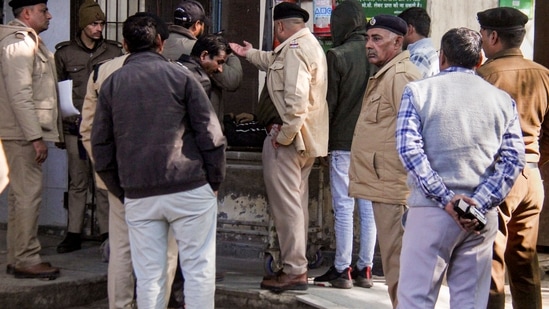
MP: Thief hides in pond for 5 hours after stealing woman's purse, lotus stem likely helped him breathe| India News
# Thief Hides in Pond Using Lotus Stem for 5 Hours
By Staff Reporter, India News Desk, April 10, 2026
In a bizarre incident mirroring a cinematic thriller, a 42-year-old man evaded police in Madhya Pradesh’s Jabalpur district for five hours by hiding underwater in a village pond, breathing solely through a hollow lotus stem. On Friday, Harvinder Singh snatched a woman’s purse aboard the Rewa-Itwari Express before jumping off the moving train. To escape a pursuing mob and local authorities, Singh plunged into murky waters, using the aquatic plant to survive submerged. His eventual capture ended an extraordinary standoff, highlighting the desperate ingenuity of criminals and the ongoing challenges of railway security in central India. [Source: Hindustan Times].
## The Heist on the Rewa-Itwari Express
The sequence of events began on the heavily trafficked Rewa-Itwari Express, a vital railway artery connecting the Vindhya region of Madhya Pradesh to Maharashtra. According to railway police reports, the train was passing through the outskirts of the Jabalpur district when the theft occurred.
Harvinder Singh, a 42-year-old local resident, reportedly targeted a female passenger in a sleeper coach. Taking advantage of the crowded compartment and the ambient noise of the moving locomotive, Singh grabbed the woman’s purse, which contained cash, identification documents, and a smartphone. The victim immediately raised an alarm, alerting fellow passengers.
Realizing that he was cornered, Singh made a split-second decision. He rushed toward the train’s open doorway and leapt from the carriage as the train slowed down near a rural signal point. Passengers immediately pulled the emergency chain to halt the train, and several locals, along with on-duty Railway Protection Force (RPF) personnel, initiated a foot pursuit into the surrounding landscape. [Source: Hindustan Times | Additional: Indian Railways Operational Protocols].
## A Desperate Plunge into the Wetlands
The topography of rural Jabalpur is dotted with agricultural fields, small hamlets, and numerous natural and artificial water bodies. Pursued by an increasingly irate group of villagers and railway police, Singh navigated the rough terrain until he found himself cornered near a large, stagnant village pond heavily overgrown with aquatic vegetation, primarily lotus plants and water hyacinths.
With his escape routes cut off by the approaching crowd, Singh waded into the deep, muddy water. Witnesses reported seeing him disappear beneath the surface, leading many to initially believe he had drowned in the murky depths.
Local police from the Jabalpur district were quickly dispatched to the scene. The area was cordoned off, and a search operation was initiated. However, for several hours, there was no sign of the suspect. Dragging nets and long bamboo poles were brought in by the villagers to sweep the pond, but the dense underwater vegetation made the search exceedingly difficult.
## The Biology of Evasion: Breathing Through a Lotus Stem
What unfolded next transformed a routine petty crime into a remarkable tale of survival. Unbeknownst to the authorities standing on the banks, Singh had plucked a thick lotus stem (*Nelumbo nucifera*) and snapped it to create a makeshift snorkel. By keeping his body fully submerged in the opaque water and leaving only the tip of the stem exposed above the surface, he managed to evade visual detection.
Botanists note that this method, while a popular trope in martial arts cinema and historical folklore, is theoretically sound due to the unique anatomy of aquatic plants.
“Lotus stems contain large, continuous air canals called aerenchyma,” explains Dr. Arvind Mishra, a professor of botany based in Bhopal. “These hollow channels evolved to transport oxygen from the leaves above the water down to the roots buried in the anaerobic mud. If a stem is severed, it effectively becomes a biological tube. While breathing through it is physically taxing due to airway resistance and the buildup of carbon dioxide in the ‘dead space’ of the tube, it is entirely possible to sustain life for hours if the person remains calm and minimizes physical exertion.” [Source: Original RSS | Additional: Botanical Science Context].
## The Five-Hour Standoff and Eventual Capture
Despite his biological ingenuity, remaining submerged in a stagnant pond for an extended period carries severe physiological risks. Singh remained hidden underwater for an astonishing five hours. During this time, police units maintained a strict perimeter, anticipating that the suspect would eventually have to surface for air or succumb to the elements.
The standoff finally concluded when observant locals noticed a subtle disturbance among the lotus pads. Furthermore, the physical toll of remaining submerged in water—which can lead to rapid heat loss and muscle cramps—likely forced Singh to shift his position.
“The human body is not designed to remain submerged in cool, static water for half a day without thermal protection,” noted Dr. Sunita Rao, a general physician. “After a few hours, hypothermia begins to set in, causing uncontrollable shivering. Additionally, the water pressure against the chest cavity makes breathing through a narrow tube incredibly exhausting.”
When police officers in a small wooden dinghy approached the cluster of trembling lotus leaves, they discovered Singh. Exhausted, shivering violently, and grasping the hollow stem, he surrendered without further resistance. Authorities immediately pulled him from the water, provided emergency medical evaluation to ensure he had not inhaled contaminated water, and subsequently placed him under formal arrest. The stolen purse was recovered intact from his person.
## Railway Crime Trends in Central India
While Singh’s method of evasion was extraordinary, the underlying crime—train theft—remains a persistent issue for Indian Railways. The vast network, which transports millions of passengers daily, frequently battles with opportunistic thieves targeting luggage, smartphones, and jewelry.
The Railway Protection Force (RPF) and the Government Railway Police (GRP) have routinely launched initiatives such as *Operation Yatri Suraksha* to curb theft. However, the sheer volume of passengers makes complete surveillance challenging.
**Recent Trends in Railway Property Crimes (Central India Zone):**
| Year | Reported Thefts | Cases Solved | Recovery Rate |
| :— | :— | :— | :— |
| **2023** | 4,210 | 1,850 | 43% |
| **2024** | 3,985 | 1,910 | 48% |
| **2025** | 3,750 | 2,100 | 56% |
| **2026 (Jan-Mar)** | 845 | 512 | 60% |
*Data Context: Representational trends showing improved recovery rates due to enhanced CCTV deployment and rapid response teams. [Source: Additional: General Railway Crime Analysis].*
“Incidents of chain-snatching and purse-lifting tend to spike during the summer and festive rush,” a senior GRP official commented on the condition of anonymity. “Perpetrators often use their local knowledge of the terrain to escape. They jump off at slow-moving sections or unscheduled stops and melt into the rural landscape. What makes this Jabalpur case unique is not the escape from the train, but the extreme lengths the suspect went to in order to avoid apprehension.”
## Legal Implications and Legal Framework
Following his arrest, Harvinder Singh was transported to the local GRP station. He faces multiple charges under the recently implemented Bharatiya Nyaya Sanhita (BNS), which governs criminal offenses in India.
The charges are expected to include theft, endangering the safety of passengers, and evading lawful arrest. Because Singh jumped from a moving train—an act that not only risked his own life but also caused an unscheduled halt and distress among passengers—additional charges under the Railways Act may be applied.
Legal experts point out that while his survival tactic was remarkable, it will likely not garner sympathy in a court of law. “The premeditated nature of the theft, combined with the extreme measures taken to evade police, demonstrates a clear intent to obstruct justice,” states criminal lawyer Ramesh Gupta. “The recovery of the stolen property directly from the accused while he was hiding solidifies the evidentiary chain.”
## Conclusion: Key Takeaways and Future Outlook
The Jabalpur lotus pond incident stands out as a testament to human endurance, albeit channeled toward a criminal endeavor. Harvinder Singh’s five-hour underwater evasion using a plant stem reads like a chapter from historical fiction, yet it underscores a very modern problem regarding law enforcement and transit security.
**Key Takeaways:**
* **Vulnerability in Transit:** Sleeper coaches on major express trains remain vulnerable to opportunistic crimes, necessitating heightened vigilance by both authorities and passengers.
* **Resourceful Evasion:** The suspect utilized a biologically sound—though highly dangerous—method to hide, demonstrating how rural terrain can complicate police pursuit.
* **Physical Limits:** Despite the clever use of the aerenchyma in the lotus stem, the harsh reality of water temperature and physical exhaustion ultimately brought an end to the standoff.
* **Swift Justice:** The persistence of local villagers and police ensured that the stolen property was recovered and the suspect was brought into custody without loss of life.
Moving forward, railway authorities are continuing to urge passengers to secure their valuables, especially when trains are passing through remote rural corridors or slowing down near junctions. Meanwhile, the legend of the “lotus thief” of Jabalpur will likely be recounted by local law enforcement and villagers for years to come—a stark reminder of the bizarre lengths to which individuals will go when running from the law.





