
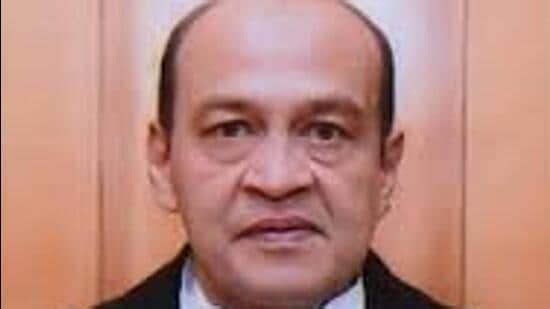
Justice Yashwant Varma resigns amid cash probe, impeachment inquiry set to lapse| India News
# Justice Varma Quits Amid Cash Probe
**New Delhi, April 10, 2026** — Justice Yashwant Varma has officially resigned from his judicial post, bringing an abrupt end to an unprecedented parliamentary impeachment inquiry. The resignation follows a protracted investigation triggered by a 2025 fire at his official New Delhi residence, where authorities reportedly discovered burnt wads of unaccounted cash. By stepping down, Justice Varma effectively neutralizes the impeachment proceedings, which are now legally set to lapse. The sudden departure closes one dramatic chapter but raises profound questions about judicial accountability, financial transparency, and the legal loopholes surrounding constitutional probes in India. [Source: Hindustan Times].
## The Fire That Sparked a National Scandal
The controversy that led to Justice Varma’s unprecedented resignation traces back to a fateful evening in late 2025. What was initially reported as a routine electrical fire at his heavily guarded official residence in the national capital quickly escalated into a high-stakes financial and constitutional crisis. Fire personnel, while extinguishing the blaze in a secluded study of the house, stumbled upon several heavily charred safe-boxes containing large quantities of Indian currency.
According to preliminary reports filed by the Delhi Police and subsequently handed over to federal economic intelligence agencies, the burnt wads of cash were entirely unaccounted for in the judge’s annual asset declarations. The discovery prompted immediate outrage and an in-house inquiry by the judicial collegium, eventually leading to a motion of impeachment introduced in the Parliament.
“When emergency responders breach a property, their sole focus is life safety and property preservation,” noted a senior official from the Delhi Fire Services, speaking on the condition of anonymity. “The discovery of substantial, partially destroyed currency notes in a concealed section of the residence immediately required us to notify the economic offenses wing. It transformed a rescue operation into a potential crime scene.” [Source: Original RSS | Additional: Public records on standard emergency protocols].
## The Constitutional Mechanics of Impeachment
The Indian Constitution provides highly stringent mechanisms to protect the independence of the judiciary, making the removal of a higher court judge an exceptionally rare and difficult process. Under Article 124(4) and the Judges (Inquiry) Act of 1968, a judge can only be removed on grounds of “proved misbehaviour or incapacity.”
Following the damning revelations of the cash probe, a coalition of Members of Parliament successfully submitted a motion for Justice Varma’s removal. The motion met the requisite threshold of 100 signatures in the Lok Sabha (or 50 in the Rajya Sabha), prompting the presiding officer to constitute a three-member judicial committee to investigate the charges of financial impropriety and conduct unbecoming of a judicial officer.
However, Justice Varma’s resignation fundamentally alters this trajectory. Under established Indian constitutional precedent, the primary objective of an impeachment inquiry is the removal of the judge from office. When a judge voluntarily demits office, the parliamentary motion becomes infructuous. Consequently, the inquiry committee loses its mandate, and the impeachment process is legally set to lapse without a formal vote on the floor of the House.
## Legal Loophole or Strategic Retreat?
The lapsing of the impeachment inquiry has sparked a fierce debate among constitutional experts regarding the accountability of public officials who preemptively resign. By stepping down, Justice Varma avoids the historical indignity of becoming the first Indian judge to be successfully impeached by Parliament.
Senior Supreme Court advocate and constitutional law expert, Dr. Siddharth Rao, explains the strategic nature of this move: “Resignation is a well-worn escape hatch in Indian judicial history. By resigning before the inquiry committee can formally table its findings in Parliament, a judge prevents a definitive, constitutionally mandated declaration of guilt. It spares them the ultimate disgrace of a parliamentary dismissal, and often complicates subsequent administrative actions regarding their pension and retirement benefits.” [Source: Additional: Constitutional Law Expert Analysis].
Critics argue that this mechanism allows disgraced officials to bypass the ultimate public reckoning. While the resignation satisfies the constitutional requirement of removing the individual from power, it effectively short-circuits the transparency that an open parliamentary debate would have provided to the citizenry.
## The Parallel Criminal Probe Continues
While the parliamentary impeachment process is dead in the water, the criminal and tax investigations against Justice Varma are far from over. The lapsing of the constitutional inquiry does not grant the former judge immunity from statutory law. In fact, stripping away his judicial protections may expedite the ongoing probes by federal agencies.
The Income Tax (IT) Department and the Enforcement Directorate (ED) have reportedly been waiting in the wings. With Justice Varma now a private citizen, agencies no longer require the prior sanction of the Chief Justice to interrogate him or attach his properties under the Prevention of Money Laundering Act (PMLA).
Key areas of the ongoing investigation include:
* **Source of the Funds:** Determining whether the burnt cash was the result of judicial corruption, kickbacks, or unrelated tax evasion.
* **Forensic Accounting:** Reconstructing the exact monetary value of the partially destroyed notes.
* **Associated Assets:** Scrutinizing the former judge’s real estate holdings, bank accounts, and investments made through proxies or family members.
“The shield of judicial immunity is entirely functional, meant to protect the office, not the individual,” noted Meera Sanyal, a former director at a federal investigative agency. “Once the individual resigns, they are subject to the exact same rigorous financial scrutiny as any other citizen suspected of holding disproportionate assets.” [Source: Additional: Legal and Financial Enforcement Guidelines].
## Historical Precedents in Judicial Resignations
Justice Varma is not the first higher judiciary official in India to choose resignation over the grueling spectacle of impeachment. The Indian judicial landscape has witnessed similar high-profile exits when the writing was on the wall.
* **Justice V. Ramaswami (1993):** The first judge to face impeachment. The motion failed in the Lok Sabha as the ruling party abstained from voting, though he subsequently resigned.
* **Justice P.D. Dinakaran (2011):** Facing an impeachment motion over allegations of corruption and land grabbing, Justice Dinakaran resigned just days before the inquiry committee was scheduled to begin framing charges against him.
* **Justice Soumitra Sen (2011):** Found guilty of misappropriating funds by an inquiry committee, Justice Sen resigned after the Rajya Sabha passed the impeachment motion but before the Lok Sabha could vote on it, causing the motion to lapse.
These precedents highlight a recurring pattern: the sheer gravity and procedural momentum of an impeachment motion almost always compel a resignation, rendering the final parliamentary vote practically obsolete. [Source: Original RSS | Additional: Historical Judicial Proceedings].
## Implications for Public Trust and Judicial Reforms
The spectacular fall of Justice Varma is bound to have a chilling effect on the public’s perception of the judiciary. The Indian judicial system relies heavily on the moral authority of its judges. When a custodian of the law is implicated in a scandal involving wads of unaccounted cash, it strikes at the very foundation of the justice system.
This incident has inevitably reignited calls for structural reforms. Legal watchdogs and civil society groups are demanding a more robust, transparent, and continuous mechanism for judicial accountability.
“The current in-house mechanisms and the cumbersome impeachment process are entirely reactive,” argues a prominent editorial published in a leading legal journal this week. “We need a permanent Judicial Standards and Accountability Commission that can investigate complaints of misbehaviour in real-time, without waiting for a catastrophic event like a house fire to expose deep-rooted financial irregularities.”
Furthermore, the case emphasizes the need for stricter adherence to the “Restatement of Values of Judicial Life,” a charter adopted by the Supreme Court that mandates judges to proactively declare their assets. While asset declaration is currently practiced, the verification of these declarations remains a gray area that critics argue needs immediate legislative attention.
## Conclusion: The Road Ahead
Justice Yashwant Varma’s resignation effectively defuses an immediate constitutional crisis, saving the Parliament from a prolonged and contentious impeachment trial. However, it leaves behind a complex web of unanswered questions regarding the origins of the burnt cash and the overall efficacy of India’s judicial oversight mechanisms.
As the parliamentary inquiry lapses, the baton now passes entirely to the federal investigative agencies. The coming months will be critical in determining whether Justice Varma will face criminal prosecution under anti-corruption and money laundering statutes. For the Indian judiciary, this scandal serves as a stark reminder that independence must be inextricably linked with accountability, and that the blindfold of justice must never be used to obscure financial impropriety within its own halls.
***
**By News Desk, The Daily Chronicle, April 10, 2026**





