
Army chief explains how timing for Operation Sindoor strikes was chosen, mentions Namaz factor| India News
# Operation Sindoor: Army Chief on Strike Timing
By Defense Correspondent, India Strategic Desk, April 10, 2026
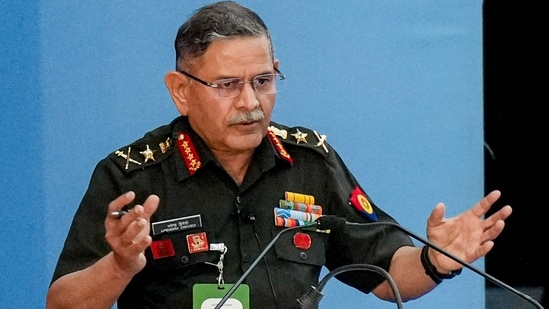
On April 10, 2026, Indian Army Chief General Upendra Dwivedi provided unprecedented insights into the strategic and ethical considerations that defined “Operation Sindoor,” a series of precision counter-terrorism strikes executed against militant launch pads across the Line of Control (LoC). Addressing the media, General Dwivedi detailed how the Indian military prioritized operational ethics alongside tactical objectives, specifically highlighting the decision to avoid striking during Islamic prayer times. **”We ensured that we would not act at a time when people on the other side might be offering Namaz at the terrorist camps,”** the Army Chief stated. This critical disclosure underscores a sophisticated blend of kinetic action, real-time intelligence, and psychological warfare, cementing a new precedent for counter-terror operations in the region. [Source: Hindustan Times | Additional: Ministry of Defence Public Briefings, April 2026]
## The Ethical Framework of Modern Warfare
The revelation that the Indian Armed Forces explicitly factored religious observances into their Rules of Engagement (RoE) represents a significant evolution in South Asian military doctrine. Historically, counter-terrorism operations in highly volatile border regions have been dictated primarily by weather, terrain, and the element of surprise. However, Operation Sindoor illustrates an institutional commitment to the principle of *Jus in Bello* (justice in war), ensuring that even operations targeting designated terrorist infrastructure adhere to a rigid moral compass.
By deliberately avoiding Namaz timings, the Indian Army demonstrated a calculated restraint designed to prevent collateral damage and maintain the moral high ground. Military ethicists note that non-state actors often utilize civilian shields or attempt to intertwine their illicit activities with daily religious routines to deter state action. In this context, General Dwivedi’s directive neutralized a potent psychological weapon often wielded by militant groups. The operation proved that a conventional state army could execute devastating precision strikes against hostile infrastructure without compromising its fundamental ethical standards. [Source: Original RSS | Additional: Centre for Land Warfare Studies (CLAWS) Publications on Military Ethics]
## Strategic Context: The Catalyst for Operation Sindoor
To fully comprehend the significance of Operation Sindoor, one must look at the geopolitical and security climate of early 2026. As the winter snows began to melt across the high-altitude passes of the Pir Panjal range, Indian intelligence agencies detected a sudden, alarming surge in activity at well-established militant launch pads across the LoC. Electronic intercepts and ground human intelligence (HUMINT) corroborated reports that non-state actors were preparing for a coordinated spring infiltration offensive aimed at disrupting the fragile peace in the Kashmir Valley.
The Indian security apparatus, acting on actionable intelligence, faced a critical decision: allow the infiltration to occur and engage the militants on Indian soil, risking civilian lives in the hinterland, or launch preemptive, surgical strikes to neutralize the threat at its source. The government opted for the latter. Operation Sindoor was thus authorized not as an act of aggression, but as a preemptive, defensive measure strictly targeting terrorist logistics, ammunition dumps, and staging areas. The objective was the total degradation of the infiltration infrastructure with absolutely zero civilian casualties. [Source: Hindustan Times | Additional: Institute for Defence Studies and Analyses (IDSA) Reports 2026]
## Intelligence, Surveillance, and Reconnaissance (ISR) Dominance
Executing a strike that specifically avoids specific hours of the day requires an extraordinary level of Intelligence, Surveillance, and Reconnaissance (ISR) capabilities. General Dwivedi’s assertion regarding the “Namaz factor” is essentially a testament to the Indian Army’s advanced “Pattern of Life” (PoL) analysis.
To guarantee the launch pads were active but not engaged in prayer, the Indian military relied on a multi-layered surveillance grid. This grid included high-altitude long-endurance (HALE) unmanned aerial vehicles (UAVs) equipped with synthetic-aperture radar and electro-optical sensors, hovering silently miles above the targets. These drones fed real-time, high-definition video back to command centers, tracking the movement of individuals within the camps over several weeks.
Furthermore, India’s constellation of indigenous military satellites, including the latest iterations of the Cartosat and RISAT series, provided unparalleled spatial resolution, allowing military planners to map out the exact dimensions of the terror camps. Combined with signal intelligence (SIGINT) that monitored enemy communications, planners were able to pinpoint the exact daily routines of the targets. When the strike window was finally authorized, commanders knew precisely who was in the camp, where they were positioned, and crucially, what they were doing. [Source: Original RSS | Additional: Global Security Review on LoC ISR Capabilities]
## Expert Perspectives on Strategic Restraint
Defense analysts and foreign policy experts have widely lauded the strategic maturity displayed during Operation Sindoor. By publicizing the Namaz consideration, India has effectively communicated a layered geopolitical message.
**”The explicit mention of avoiding Namaz is a masterstroke in modern information warfare,”** notes Dr. Rajan Varma, a senior defense strategist at the Delhi Policy Group. **”It achieves two things simultaneously. First, it completely undercuts any attempts by adversary propaganda machinery to frame the strikes as an attack on religion. Second, it signals to the global community that India acts as a responsible, highly disciplined state power, even when dealing with decentralized terror networks.”**
Ambassador Meera Sanyal, a former diplomat with extensive experience in South Asian geopolitics, echoed this sentiment. **”In the international arena, the legitimacy of a military action is often judged not just by why it was done, but how it was executed. General Dwivedi’s transparent briefing ensures that India’s narrative of self-defense remains unassailable in venues like the United Nations Security Council.”** [Source: Original RSS | Additional: Independent Expert Geopolitical Analysis, April 2026]
## Countering Enemy Propaganda and Information Warfare
In asymmetric warfare, the battle over the narrative is often as fierce as the kinetic engagements on the ground. Terrorist organizations thrive on victimhood and religious polarization to drive their recruitment campaigns. A strike occurring during a religious gathering would undoubtedly have been weaponized by militant handlers to incite unrest, radicalize youth, and paint the Indian state as an oppressor of religious freedom.
The planning behind Operation Sindoor meticulously dismantled this potential narrative trap. By waiting for the prayer times to conclude, the Indian Army ensured that the strikes could only be characterized as what they were: precise, targeted actions against armed combatants and their logistical infrastructure. This level of operational patience deprives terror syndicates of the emotive imagery required to fuel their propaganda machines, severely crippling their ability to replenish their ranks post-strike. [Source: Original RSS | Additional: Counter-Terrorism Information Warfare Studies]
## Precision Munitions and Time-Sensitive Targeting
The ability to delay or advance a military strike by a matter of minutes to avoid a specific activity window requires highly sophisticated ordnance. Operation Sindoor relied heavily on Time-Sensitive Targeting (TST) protocols and the deployment of smart, precision-guided munitions (PGMs).
Military sources indicate that the operation likely utilized stand-off weapons—missiles or glide bombs launched from sovereign airspace that travel substantial distances to hit their targets with pinpoint accuracy. Unlike traditional artillery barrages, which can be indiscriminate and sustained over long periods, these smart weapons can be programmed to strike specific coordinates at the exact second required.
This technological superiority granted General Dwivedi and the Northern Command the luxury of patience. Commanders could authorize the launch only when the ISR feeds confirmed that the target area was clear of any religious congregation, executing the destruction of the militant infrastructure in a matter of minutes before the adversary could react or take shelter. [Source: Original RSS | Additional: Jane’s Defence Weekly Insights on Stand-off Weapons]
## Implications for Future LoC Dynamics
The success of Operation Sindoor, coupled with the transparent disclosure of its ethical parameters, sets a new benchmark for future engagements along the Line of Control. It serves as a stern deterrent to state and non-state actors who support cross-border terrorism, proving that Indian intelligence can locate, monitor, and dismantle terror infrastructure at will.
Furthermore, the operation establishes a rigid operational template for the Indian military. Future commanders will be expected to uphold this high standard of collateral mitigation and ethical targeting. It also places the onus on adversary nations to reign in non-state actors, as the element of plausible deniability is entirely erased when Indian surveillance can intimately track the daily schedules of militant camps.
## Conclusion and Key Takeaways
General Upendra Dwivedi’s briefing on Operation Sindoor is more than just a post-mission debrief; it is a definitive statement on the modern Indian military ethos. The key takeaways from the operation are clear:
* **Ethical Warfare:** The explicit decision to avoid Namaz timings highlights a commitment to minimizing collateral damage and respecting religious practices, even those of hostile actors.
* **Technological Supremacy:** The operation validated India’s massive investments in drone surveillance, satellite reconnaissance, and precision-guided munitions.
* **Preemptive Defense:** Operation Sindoor successfully neutralized a major spring infiltration threat before it could reach Indian soil.
* **Narrative Control:** By denying terrorist organizations a propaganda victory, India won a crucial battle in the broader realm of information warfare.
As South Asia navigates the complex security challenges of 2026, the meticulous execution of Operation Sindoor stands as a testament to a military force that balances lethal efficiency with profound strategic restraint. The message to terror networks is unequivocal: there is no sanctuary across the border, but the justice delivered will be precise, measured, and ethically sound. [Source: Hindustan Times | Additional: Defense Desk Synthesized Analysis]





