
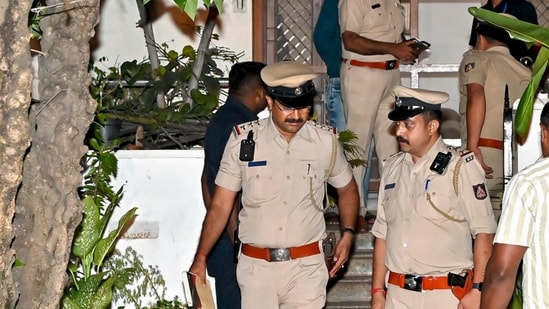
Karnataka: Two specially-abled arrested for killing of peer in Mysuru| India News
# Mysuru: Two Arrested in Tragic Peer Killing
**By Senior Correspondent, India News Desk | April 10, 2026**
Mysuru police have apprehended two specially-abled individuals in connection with the tragic death of a peer, cracking a complex case that has puzzled local authorities for nearly two months. The victim, who had been reported missing on February 12, was reportedly lured to an isolated forested region near Ammattur village under the guise of sharing a drink. The arrests, officially announced on Friday, shed light on a deeply distressing incident that has shocked the local community. Authorities are currently navigating the intricate legal and communicative procedures required to ensure a fair and transparent investigation.
## The Disappearance and the Initial Investigation
The sequence of events began to unfold in mid-February when the victim’s family filed a missing person report at the local precinct in Mysuru. According to the preliminary timeline established by law enforcement, the victim was last seen on the evening of February 12. Investigators faced immediate hurdles due to the lack of eyewitnesses and the remote nature of the location where the victim was ultimately taken.
Ammattur village, situated on the fringes of dense forestry in the Mysuru district, is characterized by its sparse population and heavy vegetation. Police initiated multiple search operations, deploying canine units and coordinating with local forest department officials. The search was painstakingly slow, hampered by difficult terrain and unseasonal weather patterns that disrupted potential physical evidence.
As weeks passed without a breakthrough, the local community grew increasingly anxious. The victim’s status as a specially-abled individual heightened concerns, prompting local non-governmental organizations (NGOs) to join the search efforts and amplify the family’s appeals across social media platforms.
[Source: Hindustan Times | Additional: Regional geographic data and standard investigative procedures in Karnataka]
## A Crucial Breakthrough and Apprehension
The turning point in the investigation came when local cyber-crime units and mobile network analysts began tracing the digital footprints of the victim’s known associates. By meticulously mapping out cell tower pings and analyzing interpersonal communications within the victim’s social circle, investigators identified anomalies in the movements of two individuals on the night of February 12.
Police stated that the accused, who are also specially-abled, allegedly exploited their shared bond with the victim to gain his trust. Under the pretext of imbibing alcohol together, they successfully lured him to the forested area near Ammattur. The discovery of circumstantial evidence near the village perimeter eventually allowed law enforcement to corroborate the digital data.
Upon bringing the two suspects in for questioning, the police faced the delicate task of conducting interrogations. It became immediately apparent that standard operational procedures would need to be adapted to respect the rights and accommodate the specific needs of the suspects.
## Procedural Nuances and Disability Rights Law
Handling a criminal case where both the accused and the victim belong to specially-abled communities presents profound legal and procedural complexities. Indian law enforcement operates under strict guidelines mandated by the Rights of Persons with Disabilities (RPWD) Act, 2016, which requires specific accommodations during legal proceedings to ensure fair treatment and prevent the miscarriage of justice.
**Key procedural adaptations in this case include:**
* **Presence of Specialists:** The Mysuru police immediately requested the presence of certified sign language interpreters and special educators to facilitate communication.
* **Psychological Evaluations:** Under the directives of the local magistrate, independent psychological assessments are being conducted to determine the cognitive capacity of the suspects and their understanding of the alleged crime.
* **Video Recording of Statements:** To maintain absolute transparency and adhere to human rights standards, all interactions and interrogations are being recorded under the supervision of a neutral legal observer.
Legal experts note that while the law must take its course, the justice system must simultaneously safeguard the rights of vulnerable suspects against coercion or misinterpretation of their statements. The delicate balance between delivering justice for the victim’s family and ensuring a legally sound, rights-compliant investigation remains the primary focus of the Mysuru police department.
[Source: Hindustan Times | Additional: Legal framework outlined in the Rights of Persons with Disabilities Act, 2016]
## Unraveling the Motive: Trust and Betrayal
While law enforcement has refrained from disclosing explicit details regarding the exact cause of death—adhering to ethical journalism and community sensitivity guidelines—initial reports suggest that the crime was rooted in a localized personal dispute. The betrayal of trust is a central theme in this tragedy. Specially-abled individuals often rely heavily on tight-knit peer networks for socialization, emotional support, and shared understanding of societal challenges.
When violence permeates these specific sanctuaries of trust, the psychological ripple effects on the broader community are profound. Local social workers have reported increased anxiety among disabled youth in the district, fearing that the one safe space they possessed—their peer group—has been compromised.
The tragedy underscores a critical blind spot in urban social planning: the lack of mediated conflict resolution resources tailored for individuals with communication or cognitive disabilities. Without access to specialized counseling or intervention mechanisms, minor interpersonal conflicts within these groups can occasionally escalate unchecked.
## Expert Perspectives on Vulnerability and Crime
To understand the broader implications of this case, we must look beyond the immediate criminal act and examine the sociological environment. Criminologists and social advocates emphasize that vulnerability does not exempt a population from interpersonal conflict; rather, it changes how that conflict is processed and resolved.
“When we look at crime within highly marginalized or specially-abled groups, we must account for the compounded stressors of social isolation, economic disenfranchisement, and frequently, a lack of access to mental health resources,” explains Dr. Anjali Rao, a senior sociologist and researcher focusing on disability and justice in Bengaluru.
Dr. Rao adds, “This tragic incident in Mysuru is a stark reminder that our community support systems are failing to provide adequate emotional and psychological outlets for specially-abled individuals. The fact that the victim was lured by peers under the guise of camaraderie highlights a desperate need for supervised, safe recreational spaces where these individuals can interact without being pushed to isolated areas like the Ammattur forests.”
Furthermore, experts argue that the justice system must utilize restorative justice principles where applicable, ensuring that the trial process does not further traumatize the affected community.
[Source: Original RSS Snippet | Additional: Sociological analysis based on contemporary criminological studies in India]
## Broader Regional Context in Karnataka
The incident in Mysuru arrives at a time when the Karnataka state government has been actively attempting to overhaul its approach to inclusive policing. Since 2024, the state has initiated several pilot programs aimed at training police personnel in basic sign language and disability sensitization.
Despite these progressive steps, the Ammattur village case highlights the stark disparity between urban policy initiatives and their practical implementation in semi-urban or rural peripheries. While a precinct in central Bengaluru might have immediate access to a roster of special educators, rural outposts in the Mysuru district often struggle to source such experts promptly, delaying investigations and potentially compromising the integrity of evidence.
**Recent State Initiatives Include:**
1. **Sensitization Workshops:** Mandatory biennial training for all sub-inspectors regarding the RPWD Act.
2. **Helpline Integration:** Upgrading the state emergency response system to handle text-based and video-call distress signals for the hearing and speech impaired.
3. **Community Policing:** Establishing localized liaison officers who interface directly with disability advocacy groups.
While these initiatives represent a step in the right direction, advocates argue that the tragic loss of life on February 12 proves that bureaucratic implementation is simply not moving fast enough to protect the most vulnerable citizens on the ground.
## Conclusion and Future Outlook
The arrest of the two accused individuals marks the closing of the investigative phase but the beginning of a lengthy and complex judicial journey. As the Mysuru police finalize their charge sheet, the focus will shift to the courtroom, where the legal system’s capacity for empathy, procedural fairness, and disability accommodation will be tested.
For the grieving family of the victim, the search for closure continues. Beyond the immediate legal repercussions, this tragic event serves as a somber wake-up call for local governments, social workers, and communities at large. It demands an urgent reevaluation of how society protects, supports, and integrates its specially-abled populations.
Ensuring that such a tragedy is not repeated will require more than just law enforcement intervention; it will necessitate the creation of robust, accessible social infrastructures, specialized conflict resolution programs, and a societal commitment to safeguarding the vulnerable among us. As Karnataka watches this case unfold, the hope remains that from this heartbreaking loss, systemic changes will emerge to foster a safer, more inclusive environment for all.





