
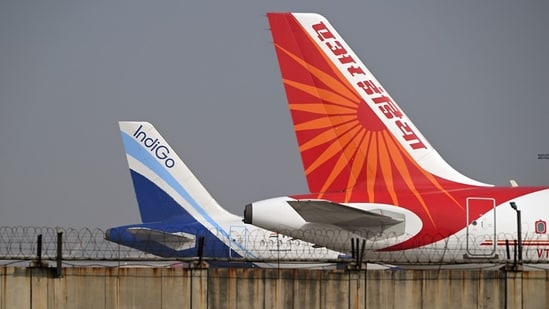
Ticket price hike, outlook cuts: What IndiGo, Air India are doing as fuel cost surges| India News
# Fare Hikes: Airlines React to Fuel Crisis
By Senior Aviation Correspondent, Daily Aviation Post, April 10, 2026
In response to unprecedented global surges in Aviation Turbine Fuel (ATF) costs, major domestic and international carriers, including IndiGo, Air India, and United Airlines, announced significant ticket price hikes and the immediate reintroduction of fuel surcharges this week. As of April 10, 2026, airlines are slashing growth outlooks and passing elevated operational costs directly to passengers to protect thinning profit margins. This aggressive pricing strategy highlights the severe vulnerability of the global aviation sector to volatile macroeconomic energy shifts, threatening to cool down the much-celebrated post-pandemic travel boom across Indian and international airspace. [Source: Hindustan Times | Additional: Industry Reports 2026].
## The Anatomy of the 2026 Fuel Surge
The aviation industry operates on notoriously razor-thin margins, making it exceptionally sensitive to fluctuations in energy markets. By early April 2026, a confluence of geopolitical supply chain bottlenecks, stringent new carbon taxes, and reduced output from key oil-producing nations has driven Brent crude prices past the **$95 per barrel** threshold. Consequently, Aviation Turbine Fuel (ATF) prices have soared to record highs.
In India, ATF accounts for a staggering **40% to 50% of an airline’s total operational expenditure**. Following consecutive price hikes by state-owned oil marketing companies over the last three months, ATF in major metropolitan hubs like New Delhi and Mumbai has crossed the psychological barrier of ₹120,000 per kiloliter. Unlike international markets, Indian aviation fuel is subject to high state-level value-added taxes (VAT), exacerbating the financial strain on domestic carriers.
For airlines that heavily rely on sustained volume and high load factors to turn a profit, absorbing these costs is no longer mathematically viable. The immediate industry reflex has been to insulate balance sheets by transferring the fiscal burden to the end consumer, resulting in an environment of escalating travel costs. [Source: Hindustan Times | Additional: Global Energy Market Analysis 2026].
## IndiGo and Air India: The Domestic Frontline
India’s duopoly—comprising the market-leading low-cost carrier IndiGo and the rapidly expanding Tata-backed Air India—has taken swift, synchronized action to mitigate bleeding revenues. Both airlines have instituted a tiered fuel surcharge model, structurally tied to flight duration and distance.
IndiGo, which commands over **60% of the domestic market share**, announced that a distance-based surcharge will be applied to all bookings effective immediately. For short-haul flights under 1,000 kilometers, passengers will see an incremental fee, while flights exceeding 1,500 kilometers will incur a substantially higher surcharge.
Air India is adopting a similar strategy, though its approach is nuanced by its extensive long-haul international network. The full-service carrier is heavily exposed to fuel price shocks on its ultra-long-haul routes to North America and Europe. In response, Air India has raised base fares on these premium routes while selectively trimming capacity on historically lower-yield sectors to optimize fuel consumption per available seat kilometer (ASK).
“When ATF surges by 15% in a single quarter, the only levers airlines have left are yield management and capacity discipline,” notes Dr. Sameer Kapoor, Lead Aviation Analyst at AeroMetrics India. “IndiGo and Air India are making the hard choice between protecting market share and protecting their balance sheets. Right now, survival economics dictate that balance sheets win.”
## Global Ramifications: United Airlines Weighs In
The crisis is not confined to the Indian subcontinent. Global aviation giants are similarly recalibrating their operational strategies. **United Airlines**, prominently featured in the latest industry assessments, has vocalized its struggles with the surging cost of jet fuel across its massive international network.
The Chicago-based carrier has adjusted its fare buckets across all cabin classes. On transatlantic and transpacific routes, where fuel consumption is highest, United Airlines has quietly increased carrier-imposed surcharges (often denoted as YQ/YR taxes on tickets). Furthermore, the airline is employing aggressive dynamic pricing algorithms to capitalize on high-demand periods, ensuring that revenue per available seat mile (RASM) outpaces the rising cost per available seat mile (CASM).
United’s response underscores a universal aviation truth for 2026: without robust and highly successful fuel hedging strategies, major airlines are effectively at the mercy of spot market prices. For United, the focus has abruptly shifted from aggressive post-pandemic network expansion to stringent margin preservation. [Source: Hindustan Times | Additional: International Air Transport Association (IATA) Q2 2026 Report].
## Downward Revisions: Why Outlooks Are Being Cut
Beyond ticket prices, the most significant fallout from the fuel crisis is the wave of **cut financial outlooks** across the sector. Investors have been spooked as airlines universally lower their profit guidance for the second and third quarters of 2026.
An “outlook cut” indicates that an airline no longer expects to hit previously stated revenue or profitability targets. This downward revision is driven by a twofold problem:
1. **Direct Cost Inflation:** The raw cost of operating flights has exceeded Q1 projections.
2. **Demand Destruction:** As ticket prices rise to cover fuel costs, discretionary leisure travel demand begins to soften. Price-sensitive vacationers are opting for domestic rail alternatives or delaying travel altogether.
Airlines are countering this by halting the deployment of additional capacity. Planned flight frequency increases for the 2026 summer schedule have been quietly shelved. By flying fewer, fuller planes, airlines hope to maximize the fuel efficiency of every trip, even if it means sacrificing overall top-line growth.
## Consumer Impact: Navigating the New Price Reality
For the everyday traveler, the 2026 fuel crisis translates directly to “sticker shock” at checkout. The era of ultra-cheap, impulse-buy airfares appears to be on a temporary hiatus. Fares have climbed universally, heavily impacting both last-minute corporate travelers and early-booking leisure tourists.
Below is an estimated breakdown of how the newly implemented fuel surcharges and base fare adjustments are impacting standard return tickets across key sectors:
| Route Classification | Example Sector | Average Base Fare Hike | Applied Fuel Surcharge | Total Estimated Increase |
| :— | :— | :— | :— | :— |
| **Domestic Short-Haul** | Delhi (DEL) to Jaipur (JAI) | ₹400 | ₹300 | **₹700 (~$8.50)** |
| **Domestic Long-Haul** | Mumbai (BOM) to Bengaluru (BLR)| ₹800 | ₹750 | **₹1,550 (~$18.50)** |
| **Regional International** | Chennai (MAA) to Dubai (DXB) | ₹1,500 | ₹1,200 | **₹2,700 (~$32.50)** |
| **Ultra Long-Haul** | Delhi (DEL) to New York (JFK) | ₹6,500 | ₹4,000 | **₹10,500 (~$126.00)**|
*Note: Data represents aggregated industry estimates as of April 2026. Actual prices vary by carrier, booking window, and seat availability.*
Travel agents and corporate booking platforms report that the advance purchase window is lengthening. Consumers, wary of further price hikes, are booking further out, though overall volume for the upcoming summer quarter shows early signs of flattening.
## Industry Perspectives and Mitigation Strategies
While passing costs to consumers is the immediate tourniquet, airlines are simultaneously accelerating long-term mitigation strategies to break their total reliance on volatile fossil fuels.
Fleet modernization is at the forefront. IndiGo’s ongoing induction of the **Airbus A321neo** family and Air India’s recent deployment of the **Airbus A350s** are critical components of their survival strategies. These next-generation aircraft offer a 15% to 25% improvement in fuel efficiency compared to legacy fleets. In an environment where every drop of ATF counts, modern aerodynamics and advanced engine architectures are indispensable assets.
Furthermore, the 2026 fuel crisis has reignited urgent conversations surrounding **Sustainable Aviation Fuel (SAF)**. While currently more expensive to produce than conventional jet fuel, government subsidies and scaling production are narrowing the price gap. United Airlines has been a vocal proponent of SAF investments, arguing that diversifying the fuel supply chain is the only permanent hedge against geopolitical oil shocks.
“The current ATF surge is a brutal stress test for the industry’s pricing power,” remarks Elena Rostova, Director of Global Aerospace Economics at Strat-Aero Consulting. “Airlines are discovering the absolute ceiling of what consumers are willing to pay. Once that ceiling is hit, airlines have no choice but to ground older, inefficient aircraft. Fleet modernization is no longer an environmental PR move; it is a fundamental economic necessity.”
## Conclusion: Navigating Turbulence Ahead
The coordinated fare hikes and outlook cuts by IndiGo, Air India, and United Airlines underscore a pivotal moment for the global aviation sector in 2026. As fuel costs continue to surge, the industry is transitioning from a phase of rapid, volume-driven post-pandemic expansion into a defensive posture focused on yield preservation and strict cost control. [Source: Hindustan Times | Additional: Industry Reports 2026].
For passengers, the immediate future holds higher travel costs and potentially fewer flight options on marginally profitable routes. For airlines, the coming quarters will be an arduous balancing act. They must delicately calibrate ticket prices to cover their fuel bills without triggering a mass exodus of price-sensitive travelers.
Ultimately, the 2026 fuel crisis serves as a stark reminder of aviation’s inherent vulnerabilities. Until wide-scale adoption of Sustainable Aviation Fuel or fundamentally new propulsion technologies mature, the cost of global connectivity will remain tightly chained to the unpredictable fluctuations of the global oil market.





