
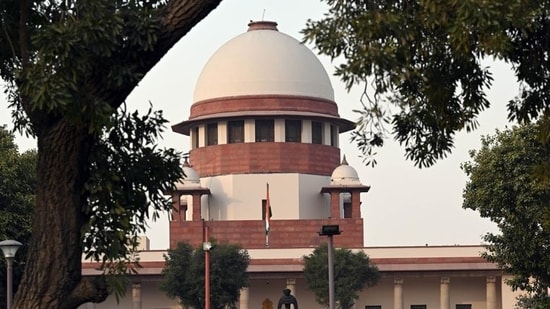
‘ ₹15,000 dete raho, khush raho’: SC refuses husband's divorce plea after living separately for 16 years| India News
# SC Denies Divorce After 16-Year Split
By Senior Legal Correspondent, India Law Digest, April 10, 2026
On Friday, April 10, 2026, the Supreme Court of India dismissed a husband’s petition for divorce despite the couple having lived separately for 16 years. In a highly debated ruling, the apex court prioritized the possibility of preserving the marital bond and the financial security of the estranged wife. The bench reportedly advised the husband, “₹15,000 dete raho, khush raho” (Keep paying ₹15,000, stay happy) and instructed him to “sit peacefully.” The judgment strikes at the heart of an ongoing legal dilemma in Indian family law: whether a decades-long separation inherently constitutes an irretrievable breakdown of marriage, or if the sanctity of the institution and the potential for reconciliation still hold absolute ground.
## The Core of the Dispute
The case brought before the Supreme Court involved a couple whose marital discord had led to a physical separation stretching over a decade and a half. The husband approached the highest court seeking the dissolution of the marriage, arguing that the 16-year separation was empirical evidence that the relationship had died a natural death and was beyond any reasonable hope of salvage.
However, the wife contested the divorce petition. In many such cases within the Indian judicial system, the refusal to grant mutual consent stems from a variety of factors, including social stigma attached to divorce, loss of social standing, or the fear of financial destitution.
During the hearing, the Supreme Court bench focused heavily on the maintenance aspect of the separation. The court noted that the husband was currently paying a monthly maintenance of **₹15,000** to the wife. In its view, severing the legal tie against the wishes of the wife, especially when she was financially dependent on this maintenance, would not serve the interests of justice. The bench’s colloquial yet firm remark—*”₹15,000 dete raho, khush raho”*—underscored its reluctance to dissolve the marriage solely based on the passage of time. [Source: Hindustan Times | Additional: Supreme Court of India Proceedings, April 2026].
## Supreme Court’s Stance on Reconciliation and Duty
Indian matrimonial law has traditionally been rooted in the concept of marriage as a sacrament rather than a mere civil contract. This foundational philosophy often guides judicial discretion. The Supreme Court’s directive to the husband to “shanti se baithe raho” (sit peacefully) reflects a deeply entrenched judicial hesitation to force a divorce on a non-consenting spouse.
The court examined whether the long separation was, in fact, sufficient to end the marriage. In this instance, the bench determined that as long as the financial obligations were being met and the wife was unwilling to sever the marital tie, the court would not forcibly step in to grant a decree of divorce. This decision highlights a protective approach, wherein the judiciary steps in to safeguard the vulnerable party—often the wife—from being left legally unmoored and potentially financially insecure.
## Irretrievable Breakdown: A Legal Grey Area
The ruling brings renewed attention to the concept of the “irretrievable breakdown of marriage.” Under the Hindu Marriage Act, 1955, and the Special Marriage Act, 1954, an irretrievable breakdown is **not recognized as a statutory ground for divorce**. Spouses must prove fault (such as cruelty, adultery, or desertion) or file for mutual consent.
However, over the years, the Supreme Court has invoked its extraordinary powers under **Article 142 of the Constitution** to dissolve marriages that are “dead for all intents and purposes,” to do complete justice between the parties. A landmark 2023 Constitution Bench ruling (*Shilpa Sailesh v. Varun Sreenivasan*) affirmed that the Supreme Court could indeed waive the mandatory waiting period and grant divorce on the grounds of irretrievable breakdown.
Crucially, the 2023 ruling emphasized that granting divorce on these grounds is **not a matter of right** but a matter of the court’s discretion. The court established specific metrics to determine a breakdown, including:
* The duration of the separation.
* The nature and gravity of the allegations exchanged.
* The number of legal proceedings initiated by both parties.
* The impact of the divorce on children and the financial security of the dependent spouse.
In this April 2026 case, despite the 16-year timeline passing the duration test, the court exercised its discretion *against* granting the divorce, prioritizing the socio-economic welfare of the wife over the husband’s plea for legal closure.
## Expert Perspectives on Marital Law
Legal scholars and family rights advocates are divided on the implications of this ruling. While some praise the court’s protective stance, others argue it traps individuals in lifeless marriages.
“This judgment highlights the paternalistic role the Indian judiciary often has to play in family disputes,” says Dr. Meera Krishnan, a senior family law advocate practicing at the Delhi High Court. “In India, marriage is intrinsically linked to a woman’s social identity and financial survival. When the Supreme Court tells the husband to keep paying ₹15,000 and stay peaceful, it is effectively saying that the financial and social stability of the wife outweighs his desire to legally exit a dead marriage.”
Conversely, advocates for legal reform argue that denying divorce after 16 years of separation contradicts modern jurisprudence. “If two people have not lived together for 16 years, the marriage is nothing but a legal fiction,” argues Rohan Banerjee, founder of the Equal Rights Foundation. “Forcing them to remain legally tethered through maintenance payments, while denying them the chance to rebuild their lives independently, creates a breeding ground for further hostility and emotional distress.” [Source: Independent Legal Analysis, April 2026].
## The Financial Equation: Alimony and Maintenance
A critical element of this ruling is the quantum of maintenance: **₹15,000 per month**. Under Section 125 of the Code of Criminal Procedure (and relevant provisions under the Hindu Marriage Act and the new Bharatiya Nagarik Suraksha Sanhita, 2023), a husband is legally obligated to maintain his wife if she is unable to maintain herself.
The Supreme Court’s focus on the steady payment of this amount indicates that the economic disparity between the spouses played a decisive role in the judgment. For many women in India, entering the workforce after years or decades of marriage is structurally and culturally difficult. The courts are acutely aware that granting a contested divorce might jeopardize the wife’s right to adequate maintenance or leave her dependent on an ex-husband who might evade alimony payments once the legal marital tie is severed.
However, inflation and the rising cost of living in 2026 make ₹15,000 a modest sum for independent survival in urban India. The ruling thus functions as a status quo preservation mechanism, ensuring the wife is not cut off from her only source of financial support while using the legal validity of the marriage as collateral.
## Social Implications for Indian Marriages
The sociological ripple effects of this judgment are significant. India continues to have one of the lowest divorce rates globally, estimated at around 1%. While this is often touted as a sign of strong family values, sociologists point out that it also masks a vast number of unrecorded, informal separations where couples live apart but remain legally married due to the labyrinthine legal process.
By refusing to formalize the end of a 16-year separation, the Supreme Court sets a precedent that longevity of separation does not automatically guarantee a legal exit. This may deter individuals from filing for divorce if they cannot secure mutual consent, potentially adding to the massive backlog of pending cases in family courts. It also sends a clear message that the judiciary views the financial duties of marriage—specifically the duty of the earning spouse to provide—as enduring, regardless of the emotional or physical state of the relationship.
## Looking Ahead: Legislative Reforms Needed?
The ongoing reliance on Article 142 for granting or denying divorce highlights a glaring gap in the legislative framework. For years, the Law Commission of India has recommended amending the Hindu Marriage Act to include “irretrievable breakdown” as a formal ground for divorce. Despite various bills introduced in Parliament over the last two decades, legislative inaction has forced the judiciary to handle these complex emotional and financial webs on a case-by-case basis.
Until the legislature steps in to codify the rules around the irretrievable breakdown of marriage—and couples this with robust, enforceable laws regarding the equitable division of marital property—judges will continue to balance the scales of justice using discretionary powers. They must weigh an individual’s right to exit a dead marriage against a vulnerable spouse’s right to dignity, social standing, and financial survival.
## Conclusion
The Supreme Court’s April 2026 decision to deny divorce after a 16-year separation serves as a poignant reminder of the complexities inherent in Indian family law. By prioritizing the wife’s financial security and the continued payment of ₹15,000 over the husband’s plea for legal separation, the court has reaffirmed that the dissolution of marriage in India remains heavily conditional on socioeconomic realities.
**Key Takeaways:**
* A long physical separation (even 16 years) does not automatically entitle a spouse to a divorce under Indian law.
* The Supreme Court prioritizes the financial security and consent of the dependent spouse over granting unilateral divorces.
* “Irretrievable breakdown of marriage” remains a discretionary tool for the courts under Article 142, not a statutory right.
* The ruling underscores the urgent need for parliamentary debate on formalizing no-fault divorce laws while protecting vulnerable spouses through strict marital property division laws.
As Indian society continues to evolve, the friction between individual liberty and traditional matrimonial obligations will only intensify, leaving the courts to navigate the delicate space in between.





