
Women’s quota being used as political tool before delimitation, says Tamil Nadu CM Stalin| India News
# Stalin Slams Quota Delay Over Delimitation
**By Special Correspondent, National Affairs Desk, April 11, 2026**
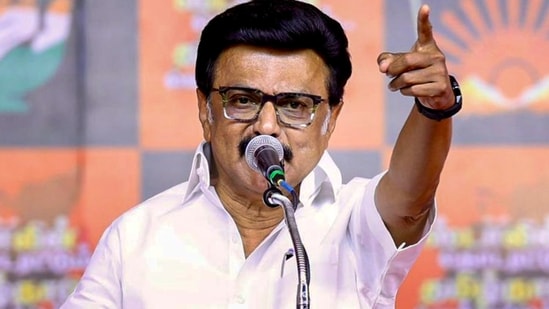
**CHENNAI** — Tamil Nadu Chief Minister M.K. Stalin launched a sharp critique on Saturday regarding the delayed implementation of the Women’s Reservation Act, accusing political rivals of weaponizing the landmark gender quota ahead of the nationwide constituency delimitation exercise. Speaking to party cadres, the Dravida Munnetra Kazhagam (DMK) president demanded the immediate rollout of the mandated 33 percent reservation for women in legislative bodies, arguing that redrawing electoral boundaries should not serve as an excuse for procrastination. This renewed clash highlights the deepening fault lines between regional apprehensions over political representation and the constitutional mechanics required to implement the 2023 legislation. [Source: Original RSS | Additional: Hindustan Times Political Coverage].
## The Intersection of Gender Quotas and Electoral Boundaries
The passage of the Nari Shakti Vandan Adhiniyam (106th Constitutional Amendment Act) in September 2023 was heralded as a historic milestone for gender parity in Indian politics. The legislation mandates reserving one-third of all seats in the Lok Sabha and state legislative assemblies for women. However, the text of the amendment explicitly tied its implementation to the publication of the next decadal census and the subsequent delimitation—the process of redrawing electoral boundaries to reflect population changes.
Chief Minister Stalin has firmly positioned himself against this sequential dependency. **”The women’s reservation must be implemented immediately without showing delimitation as a reason,”** the DMK president stated emphatically on Saturday. [Source: Original RSS].
His remarks strike at the heart of a complex administrative and political debate. For regional parties, especially in India’s southern states, linking the progressive women’s quota to delimitation is viewed not merely as an administrative delay, but as a strategic maneuver that holds gender representation hostage to an impending demographic realignment.
## Demographic Divergence: The Southern Anxiety
To understand the political friction behind Stalin’s statement, one must examine the impending 2026 delimitation deadline. Under the 42nd Amendment of 1976, and later extended by the 84th Amendment in 2001, the number of Lok Sabha seats has been frozen at 543 based on the 1971 census. This freeze was intended to encourage population control, ensuring that states successfully managing their population growth would not be penalized with reduced political representation in Parliament.
That freeze is set to lift after 2026. Southern states like Tamil Nadu, Kerala, Andhra Pradesh, and Karnataka have achieved replacement-level fertility rates and stabilized their populations. Conversely, northern states like Uttar Pradesh and Bihar have seen continued population expansion.
According to demographic projections from the National Commission on Population, if representation is reapportioned strictly based on the upcoming census data, the southern states could face a proportional decrease in their parliamentary influence, while northern states could gain dozens of seats. [Source: National Population Commission Projections 2026].
Stalin’s argument is that the central administration is using the universally supported women’s quota as a “sweetener” or a political shield for the highly controversial delimitation process. By inextricably linking the two, the DMK leader suggests that regional parties are being forced into a corner: accept a delimitation process that may dilute southern political power, or be labeled as opponents of women’s reservation.
## The Administrative Argument for Delimitation
Conversely, proponents of the current legislative timeline argue that uncoupling the women’s quota from delimitation is constitutionally and practically unfeasible. The Election Commission of India and constitutional experts have repeatedly pointed out that implementing a 33 percent quota requires a logical framework for determining *which* specific constituencies will be reserved for women, and how those seats will be rotated in subsequent elections.
“You cannot superimpose a massive structural quota onto constituencies whose boundaries and demographic compositions are decades out of date,” notes Dr. Meera Sanyal, an independent political scientist specializing in electoral reforms in New Delhi. “The delimitation exercise provides the necessary, updated geographic and demographic data to ensure that reserved seats are allocated equitably and randomized fairly without allegations of gerrymandering. To do it on the 2001 constituency boundaries would invite a barrage of constitutional challenges.” [Source: Independent Expert Analysis, April 2026].
From a governance standpoint, the Union Government maintains that adhering to the proper sequential process—Census, followed by a Delimitation Commission, followed by the quota allocation—is the only way to uphold the democratic principle of “one person, one vote” while ensuring the women’s reservation is legally airtight.
## State Politics and the Electoral Landscape
Stalin’s timing is intrinsically linked to the shifting political sands of 2026. With Tamil Nadu heading into crucial state assembly elections, the DMK is consolidating its platform by defending state rights and federal autonomy. The women’s reservation issue serves as a dual-purpose political narrative: it champions gender equality while simultaneously warning the electorate about perceived threats to state sovereignty and regional influence.
By framing the quota delay as a “political tool,” the DMK aims to galvanize its voter base, particularly women voters who have historically been a pivotal demographic in Dravidian politics. The party has a long history of implementing state-level welfare programs for women, and Stalin is attempting to contrast his state government’s immediate action with the federal government’s delayed timeline.
**Delimitation and Quotas: The Core Arguments**
| Factor | Regional/Southern Perspective (e.g., DMK) | Central/Administrative Perspective |
| :— | :— | :— |
| **Quota Implementation** | Can and should be applied to existing 543 Lok Sabha seats immediately via constitutional amendment. | Requires updated boundaries to legally and fairly rotate reserved constituencies. |
| **Population Growth** | States should not be politically punished for successfully managing population growth over the last 50 years. | Democratic representation must accurately reflect current population distribution (“one person, one vote”). |
| **Political Motivations** | Views the linkage as a tactic to force compliance with a delimitation process that hurts the South. | Views the linkage as a constitutional necessity to prevent the quota from being struck down by courts. |
## Constitutional Roadblocks and Legal Perspectives
Legal scholars emphasize that while the political rhetoric heats up, the constitutional text remains rigid. Article 82 of the Indian Constitution, read alongside the 106th Amendment, creates a legal bind.
P.V. Narayanan, a senior advocate at the Madras High Court, explains the judicial reality: “Even if Parliament wanted to decouple the two issues tomorrow, it would require a fresh constitutional amendment to override the explicit conditions set out in the Nari Shakti Vandan Adhiniyam. Furthermore, without a fresh census—which was severely delayed past its 2021 schedule—the Delimitation Commission cannot even begin its work.” [Source: Independent Legal Insight, 2026].
This legal reality leaves little room for immediate administrative action, suggesting that Stalin’s demands serve more as political pressure and ideological positioning than an expectation of an overnight policy reversal. It is a preemptive strike designed to shape the terms of reference for the eventual Delimitation Commission, ensuring that the voices of southern states are not drowned out when the map of Indian democracy is ultimately redrawn.
## Looking Ahead: The Collision Course
As 2026 progresses, the collision between the demand for immediate women’s political representation and the complex reality of demographic redistribution will only intensify. Chief Minister M.K. Stalin’s statements are an early indicator of the fierce debates expected in Parliament regarding the terms of reference for the next Delimitation Commission.
### Key Takeaways:
1. **Immediate Demands:** Tamil Nadu CM Stalin is pushing for the Women’s Reservation Act to be implemented on existing electoral boundaries, without waiting for the scheduled delimitation.
2. **Federal Tensions:** The linkage between the quota and delimitation has triggered anxiety among southern states, who fear losing proportional representation due to their successful population control measures compared to northern states.
3. **Administrative Realities:** Constitutional experts and electoral bodies maintain that implementing the 33% quota fairly requires updated census data to effectively randomize and rotate reserved constituencies.
4. **Political Framing:** The DMK is utilizing this issue to champion both gender equality and state autonomy ahead of the state assembly elections, framing the delay as a centralized political strategy rather than an administrative necessity.
The resolution to this impasse will require delicate political maneuvering. Policymakers must find a middle ground that honors the democratic necessity of equitable demographic representation, fulfills the long-overdue promise of gender parity in legislative bodies, and protects the federal fabric of the nation by ensuring that states which successfully implemented national family planning policies are not politically disenfranchised. Until a consensus is reached on how to balance these competing democratic principles, the implementation of the women’s quota will remain one of India’s most fiercely debated political battlegrounds.





