
Bengal elections 2026 LIVE: ‘Are we not Indians since we speak in Bengali?’ Mamata slams BJP at poll rally| India News
# Bengal Polls: Mamata Slams BJP Over Citizenship
By Staff Reporter, The India Desk | April 11, 2026
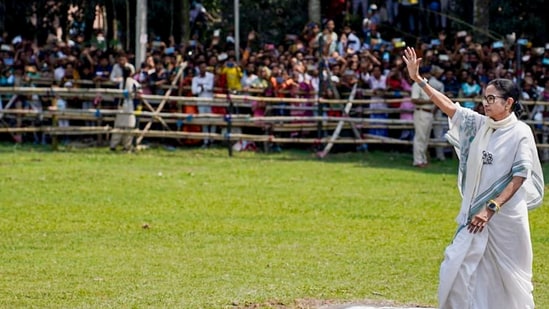
On Saturday, West Bengal Chief Minister Mamata Banerjee launched a blistering linguistic and cultural counter-offensive against the Bharatiya Janata Party (BJP) during a high-stakes election rally. As the crucial 2026 West Bengal Assembly elections heat up, the Trinamool Congress (TMC) supremo accused the central government of undermining the patriotism and constitutional rights of Bengali speakers. “Since we speak in Bengali, are we not Indians? Do we need to constantly prove citizenship?” Banerjee challenged before a massive crowd of supporters. This aggressive posture underscores the TMC’s calculated strategy to merge regional pride with the contentious national citizenship debate, setting a fiercely polarized tone for the state’s democratic battle. [Source: Hindustan Times].
## The Battle Lines Drawn: Rallying Cry for Regional Identity
The atmosphere at the weekend rally was charged with a mix of defiance and cultural celebration, a hallmark of TMC’s campaign machinery. Banerjee’s invocation of the Bengali language was not merely a rhetorical flourish; it was a targeted political weapon. For years, the TMC has successfully deployed the “Bohiragoto” (outsider) narrative against the BJP, framing the national party as lacking an intrinsic understanding of Bengal’s unique socio-cultural fabric.
By questioning whether speaking Bengali inherently casts a shadow of doubt over one’s Indian identity, Banerjee is tapping into deep-seated regional insecurities. The phrasing—”constantly prove citizenship”—is a direct indictment of the prolonged administrative anxiety surrounding the Citizenship Amendment Act (CAA) and the looming shadow of the National Register of Citizens (NRC).
“The TMC’s messaging here is incredibly precise,” explains Dr. Anirban Chatterjee, a Kolkata-based political sociologist. “Banerjee is consolidating the ethnic Bengali vote by portraying the BJP’s centralized brand of nationalism as a direct threat to linguistic minorities. It is a textbook sub-nationalist counter-mobilization.” [Source: Independent Political Analysis].
## Contextualizing the Citizenship Anxiety in 2026
To understand the weight of the Chief Minister’s words, one must look at the administrative realities of 2026. Following the notification of the CAA rules earlier in the decade, the bureaucratic mechanics of proving citizenship have become a daily talking point in border districts. While the central government has repeatedly assured that the CAA is meant to grant citizenship to persecuted minorities rather than revoke it, the complex documentation process has sparked widespread apprehension.
Many residents in West Bengal, particularly those in rural and border constituencies, have lived, worked, and voted in India for generations but lack specific ancestral paperwork. Banerjee’s government has consistently refused to facilitate the CAA’s implementation at the state level, creating a constitutional and administrative standoff between Kolkata and New Delhi.
The TMC argues that participation in the democratic process—holding a voter ID card, utilizing state welfare schemes, and paying taxes—is sufficient proof of Indianness. By explicitly tying the burden of proof to the Bengali language, the Chief Minister is signaling to minority groups and border residents that her government stands as their primary shield against potential disenfranchisement.
## Linguistic Sub-Nationalism as an Electoral Shield
The political utility of linguistic pride in West Bengal cannot be overstated. Bengal’s history is steeped in intellectual and cultural renaissances, and the emotional resonance of the Bengali language spans across the porous borders it shares with Bangladesh (historically rooted in the 1952 Language Movement).
Since the fiercely contested 2021 assembly elections, the TMC has leaned heavily into the ‘Joi Bangla’ (Victory to Bengal) slogan to counter the BJP’s ‘Jai Shri Ram’. As the 2026 elections unfold, this cultural dichotomy has only intensified. The TMC leadership frequently accuses the BJP of attempting to impose a “Hindi-Hindu-Hindustan” ideology that seeks to erase the state’s distinct heritage.
This linguistic defense mechanism also serves as a potent distraction from anti-incumbency factors. Seeking a historic fourth term, the TMC faces significant challenges, including allegations of corruption at the panchayat level, economic stagnation in certain industrial sectors, and localized factional violence. By elevating the discourse to an existential battle for Bengali identity, Banerjee attempts to transcend local grievances and unify her voter base under a singular, emotive umbrella.
## The Demographic Checkerboard: Border Districts and the Matua Factor
The real test of this rhetoric will play out in the demographic checkerboard of West Bengal’s border districts, particularly in Nadia and North 24 Parganas. These regions are home to the Matua community—a historically marginalized Namahśūdra group that migrated from East Pakistan (now Bangladesh) during and after the Partition.
The Matua vote is highly influential, possessing the numbers to sway outcomes in over 30 assembly constituencies. Their political allegiance has fluctuated; they overwhelmingly supported the TMC in 2011 and 2016, shifted significantly toward the BJP in the 2019 general elections propelled by the promise of the CAA, and have remained a heavily contested swing bloc ever since.
**Key Electoral Demographics in Focus (2026 Context):**
* **The Matua Community:** Seeking unconditional citizenship; caught between BJP’s CAA implementation and TMC’s assurances of existing state-recognized citizenship.
* **Minority Voters:** Comprising nearly 27-30% of the electorate; largely consolidated behind the TMC out of fear of the NRC and CAA frameworks.
* **Urban Middle Class:** Traditionally divided, weighing TMC’s welfare economics against BJP’s promises of industrial growth and anti-corruption measures.
“For the Matuas, the CAA is a double-edged sword,” notes political commentator Ruma Sen. “They desire the formal validation the Act promises, but the bureaucratic realities of proving their origins are daunting. Banerjee is exploiting this fear, telling them that the very act of applying for citizenship under CAA is an admission of being an illegal immigrant—a label she insists is an insult to native Bengali speakers.” [Source: Demographic Electoral Trends 2026].
## The Opposition’s Counter-Narrative
The BJP, acutely aware of the pitfalls of being labeled “anti-Bengali,” has aggressively retooled its strategy for the 2026 cycle. The party’s central leadership has made visible efforts to promote local Bengali leaders, invoke local icons like Rabindranath Tagore and Swami Vivekananda, and conduct campaigns entirely in the regional language.
Responding to Banerjee’s recent rally remarks, BJP strategists have accused the Chief Minister of blatant fear-mongering. The opposition narrative contends that the TMC is deliberately conflating the protection of persecuted minorities (the stated goal of the CAA) with a non-existent attack on the Bengali language, aiming to mask their own governance and law-and-order failures.
“The Chief Minister’s attempts to hide behind the Bengali language to protect infiltrators and mask rampant corruption will not work this time,” a senior BJP spokesperson stated in a recent press briefing. “The people of West Bengal are suffering from economic stagnation and extortion syndicates. Patriotism and language are not exclusive to the TMC.” [Source: Public Statements / BJP Campaign 2026].
Meanwhile, the Left-Congress alliance is attempting to carve out a third space, criticizing both the BJP’s communal polarization and the TMC’s alleged corruption. However, as the rhetoric between Banerjee and New Delhi escalates, the political landscape is increasingly condensing into a fierce binary contest.
## Welfare Economics Intersecting with Identity
Beyond fiery speeches, the backbone of Banerjee’s confidence lies in her government’s expansive welfare architecture. Schemes like *Lakshmir Bhandar* (direct cash transfers to women), *Swasthya Sathi* (health insurance), and *Kanyashree* (conditional cash transfers for girls’ education) have created a massive, loyal constituency, particularly among female voters.
When Banerjee asks, “Are we not Indians?”, she is implicitly reminding her constituents that it is the state government—not the center—that has delivered tangible economic security to their doorsteps. By seamlessly blending welfare economics with identity politics, the TMC creates a formidable barrier against the BJP’s nationalistic appeals. For many rural voters, their primary interaction with the “state” is through TMC’s welfare delivery mechanisms, reinforcing Banerjee’s localized brand of governance.
## Implications for the Federal Structure
The reverberations of the West Bengal election extend far beyond its borders. The 2026 electoral calendar is packed, with simultaneous or consecutive assembly elections unfolding across Tamil Nadu, Kerala, Puducherry, and Assam [Source: Hindustan Times]. The ideological clash currently dominating Bengal mirrors a broader national trend where regional parties are increasingly pushing back against the central government.
In Tamil Nadu and Kerala, the Dravida Munnetra Kazhagam (DMK) and the Left Democratic Front (LDF) respectively utilize similar frameworks of linguistic pride and federal autonomy to counter the BJP’s expansion. Mamata Banerjee’s rhetoric acts as a beacon for these regional forces, establishing a template for combating national hegemony with localized cultural mobilization. If the TMC’s strategy of weaponizing the citizenship and language debate succeeds in 2026, it will likely embolden other regional satraps to adopt an even more combative stance against New Delhi.
## Conclusion: High Stakes and Future Outlook
As West Bengal navigates the volatile waters of the 2026 Assembly elections, Mamata Banerjee’s latest broadside reveals the core architecture of the TMC’s defense: elevating regional and linguistic identity above national polarization. By challenging the necessity to “constantly prove citizenship” simply because one speaks Bengali, Banerjee is daring the BJP to fight the election on her turf—the emotional landscape of Bengali sub-nationalism.
For the BJP, the challenge lies in successfully uncoupling their developmental and anti-corruption pitch from the TMC’s narrative of cultural imposition and disenfranchisement. With the citizenship issue remaining an active flashpoint and border demographics hanging in the balance, the upcoming phases of polling will test whether linguistic pride can continue to serve as an impenetrable armor against the machinery of national politics. Ultimately, the 2026 verdict in West Bengal will not just determine the administration of the state for the next five years, but will fundamentally define the limits of identity politics in contemporary India.





