
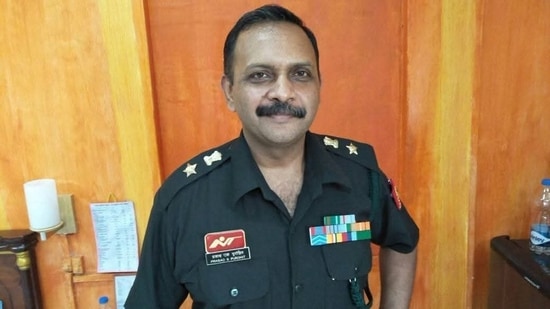
Acquitted in 2008 Malegaon blast case, Army clears Col Purohit for promotion to Brigadier rank| India News
# Col Purohit Cleared For Brigadier Role
By Senior Defense Correspondent | April 11, 2026
**New Delhi:** Following his recent judicial acquittal in the long-standing 2008 Malegaon blast case, the Indian Army has officially cleared Colonel Prasad Shrikant Purohit for promotion to the rank of Brigadier. The decisive administrative clearance comes shortly after the officer approached the Armed Forces Tribunal (AFT), arguing that the protracted eighteen-year civilian trial had unlawfully stalled his career progression. In an administrative remedy that underscores the military’s adherence to post-acquittal jurisprudence, the Army has now moved to restore his batch parity, effectively ending a nearly two-decade professional standstill for the intelligence officer. [Source: Hindustan Times | Additional: Defense Legal Records].
## A Legal Battle Spanning Eighteen Years
The trajectory of Colonel Purohit’s military career was abruptly halted in late 2008 when he was arrested in connection with the Malegaon bombing incident. As a serving officer in the Indian Army’s Military Intelligence corps, his arrest marked a highly unusual intersection of civilian anti-terror investigations and active-duty military service. For years, the case wound its way through various special courts, characterized by shifting investigative agencies, complex charge sheets, and an intensely slow judicial process.
After spending nearly nine years in judicial custody, Colonel Purohit was granted bail by the Supreme Court of India in August 2017. Following his release, he was reinstated to active service but was restricted from participating in career-advancing command postings or facing promotion boards due to the pending criminal charges. The military establishment, bound by statutory rules regarding personnel under active civilian prosecution, maintained a “status quo” on his service dossier.
However, his complete acquittal in early 2026 fundamentally altered his administrative standing. The special court’s ruling absolved him of the charges, removing the legal embargo that had frozen his progression. Despite the acquittal, the systemic delay in automatically updating his service status prompted the officer to seek legal recourse to reclaim his lost seniority, leading him to file an appeal with the Armed Forces Tribunal.
## The Role of the Armed Forces Tribunal
The Armed Forces Tribunal (AFT), established to adjudicate disputes and complaints with respect to commissions, appointments, enrollments, and conditions of service for military personnel, became the crucial battleground for Colonel Purohit’s career restoration. In his petition, the officer highlighted that the excessively long trial—lasting almost 18 years—had unjustly deprived him of his fundamental right to career progression, a delay for which he was not responsible.
Military law mandates that an officer cannot be passed over for promotion indefinitely if the delay in legal proceedings is not attributable to their own actions, especially following a definitive exoneration. Colonel Purohit’s legal counsel argued that the prolonged nature of the trial had effectively punished the officer by denying him his rightful elevation to the flag ranks.
“The tribunal recognized the foundational legal principle that an acquittal wipes the slate clean,” notes Advocate Vikram Singh, a legal expert specializing in military jurisprudence at the AFT. “When an officer is entangled in a prolonged civilian trial, their service dossier remains essentially frozen. The AFT’s intervention was necessary to direct the Army to implement the ‘Sealed Cover’ unsealing or to conduct a Special Review Board to assess his fitness for promotion based on his pre-2008 record and his post-reinstatement performance.” [Source: Independent Legal Analysis].
## Unpacking the ‘Sealed Cover’ Procedure
In Indian administrative and military law, when a government employee or an armed forces officer is facing disciplinary or criminal proceedings, their promotion board evaluations are typically placed in a “sealed cover.” This procedure ensures that the individual’s right to be considered for promotion is preserved while safeguarding the organization’s integrity pending the trial’s outcome.
If the individual is found guilty, the sealed cover is destroyed, and the promotion is denied. Conversely, if the individual is completely exonerated, the cover is opened, and the promotion is granted with retrospective effect. Given the unprecedented length of Colonel Purohit’s trial, his batchmates from his original commissioning cohort had already progressed to the ranks of Major General and beyond.
By clearing him for the rank of Brigadier, the Army is effectively granting him “notional seniority.” Notional promotion means that while he may not have physically served in the capacity of a Brigadier for the past several years, his service record will officially reflect that he held the rank concurrently with his original batchmates. This administrative maneuver restores his honor, recalibrates his pay grade, and secures his pension benefits commensurate with the higher rank.
## Restoring Seniority and Batch Parity
The clearance for promotion is not merely a symbolic gesture; it requires meticulous recalibration by the Army Headquarters (AHQ) and the Military Secretary’s (MS) branch. To elevate Colonel Purohit to Brigadier, the Army had to convene a Special Selection Board. This board evaluates the officer strictly on the Annual Confidential Reports (ACRs) earned prior to the initiation of the legal proceedings, alongside any administrative reports gathered post-2017 when he returned to active duty.
“Restoring batch parity after a gap of nearly eighteen years is administratively complex but legally imperative,” explains Major General (Retd.) R.K. Sharma, a defense policy analyst. “The Indian Army’s pyramidal promotional structure is highly competitive. For an officer to be inducted into the higher ranks after missing crucial command assignments requires the system to create supernumerary vacancies to accommodate them without disrupting the seniority of currently serving officers.”
This implies that Colonel Purohit’s promotion to Brigadier will likely utilize a specialized administrative vacancy, ensuring his rightful progression without negatively impacting the promotion prospects of his junior cohorts currently vying for the same rank.
## Broader Implications for Military Personnel
The resolution of this case shines a stark light on the vulnerabilities faced by military personnel operating in sensitive roles when subjected to drawn-out civilian judicial processes. The intelligence community, in particular, often operates in legal gray areas, and prolonged public trials can devastate careers even if the officer is eventually found innocent.
The Armed Forces Tribunal’s receptive stance toward Colonel Purohit’s plea sets a significant precedent. It sends a clear message to the military hierarchy that administrative mechanisms must proactively address the collateral damage inflicted upon an officer’s career by sluggish civilian justice systems. It reinforces the mandate that the presumption of innocence must translate into equitable career restoration upon acquittal.
Legal experts suggest that this case may prompt the Ministry of Defence (MoD) to draft more robust guidelines regarding the interim career management of officers facing civilian trials. There is a growing consensus that specialized fast-track courts should handle cases involving active-duty military personnel to prevent such extraordinary career stagnation.
## Chronology of the Legal and Administrative Journey
To understand the sheer scale of the administrative delay, it is vital to map the milestones of this unprecedented legal saga:
| Year | Key Legal and Administrative Milestone |
| :— | :— |
| **2008** | Colonel Purohit is arrested; military service and career progression are immediately suspended. |
| **2009-2016** | Legal proceedings fluctuate between various investigative agencies; bail applications are repeatedly denied. |
| **August 2017** | The Supreme Court of India grants bail after 9 years of incarceration; he is reinstated to active duty but barred from promotion. |
| **2023-2025** | The trial enters its final evidentiary and concluding phases before the special civilian court. |
| **Early 2026** | Special Court delivers a complete acquittal, absolving the officer of all charges. |
| **April 2026** | Officer approaches the Armed Forces Tribunal (AFT); Indian Army officially clears him for promotion to Brigadier. |
## The Psychological Toll and Reintegration
Beyond the legal and administrative red tape lies the profound human element of enduring a suspended professional existence. For a military officer, rank and seniority are not merely corporate titles; they dictate authority, peer relationships, and core identity.
Being bypassed by nearly a generation of officers takes an immeasurable psychological toll. However, reports indicate that upon his reinstatement in 2017, Colonel Purohit actively contributed to administrative and training roles within the military framework. His ability to maintain military discipline and seamlessly integrate back into the cantonment environment post-incarceration played a favorable role in his eventual administrative clearance by the Selection Board.
## Conclusion and Future Outlook
The Indian Army’s decision to clear Colonel Prasad Shrikant Purohit for promotion to Brigadier marks the final administrative closure to one of the most high-profile and drawn-out legal entanglements involving a serving military officer in recent history. By honoring the Armed Forces Tribunal’s principles and executing the promotion protocols post-acquittal, the defense establishment has reaffirmed its commitment to due process and fair service conditions.
Moving forward, the newly cleared Brigadier is expected to assume a senior administrative or staff role. Given the time elapsed, his tenure in the higher rank may be relatively brief before he reaches the statutory age of superannuation. However, the promotion ensures that he will retire with the dignity, financial benefits, and honors of a flag-rank officer.
More importantly, the resolution of Colonel Purohit’s case leaves behind a vital legal legacy. It establishes a definitive template for how the Indian Armed Forces must reconcile the friction between slow-moving civilian justice and the rigid, time-bound career trajectories of its personnel, ensuring that justice, once delivered, is fully actualized in the administrative realm.





