
‘Vishwaguru's huglomacy’: Cong questions PM Modi as Pakistan plays US-Iran peacemaker| India News
# Congress Slams ‘Huglomacy’ Amid Pak-US Deal
**By Staff Reporter, Diplomatic Dispatch, April 11, 2026**
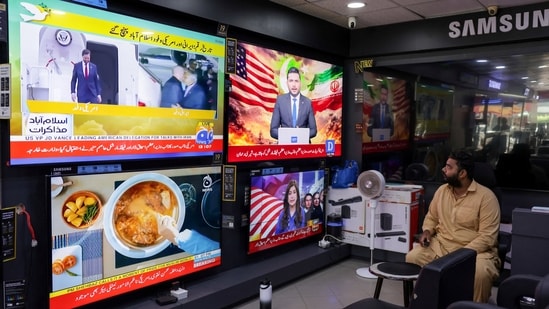
On Saturday, the Indian National Congress launched a scathing critique of Prime Minister Narendra Modi’s foreign policy, questioning the strategic benefits of his heavily personalized diplomacy. Sparked by reports that regional rival Pakistan is actively mediating peace talks between the United States and Iran in Islamabad, Congress communications chief Jairam Ramesh mocked the Prime Minister’s self-styled “Vishwaguru” (world teacher) image and “huglomacy.” The opposition argues that despite Modi’s highly publicized personal rapport with US President Donald Trump, New Delhi has been sidelined in its own backyard while Islamabad secures a major geopolitical victory.
## The ‘Vishwaguru’ Critique and Domestic Backlash
The immediate trigger for the domestic political storm was the revelation that Islamabad has been quietly hosting backchannel negotiations between the Trump administration and Tehran. Responding to this development, the Congress party was quick to corner the ruling Bharatiya Janata Party (BJP) government.
Jairam Ramesh, the Congress General Secretary in charge of communications, took to social media and press briefings to ask rhetorically if the Prime Minister’s “self-declared Vishwaguru” status had yielded any tangible strategic returns for India. [Source: Hindustan Times, April 11, 2026]. Ramesh pointedly used the term “huglomacy”—a portmanteau of ‘hug’ and ‘diplomacy’ frequently used by critics to describe Modi’s penchant for embracing world leaders during high-level summits—to suggest that optics have overshadowed substance in India’s external affairs.
The opposition’s core argument is that the much-touted personal chemistry between PM Modi and President Trump—highlighted during massive diaspora events like ‘Howdy, Modi!’ in Texas and ‘Namaste Trump’ in Gujarat during Trump’s first term—has failed to protect India’s core strategic interests in the region. If the US requires a reliable partner in South Asia to navigate complex Middle Eastern dynamics, the Congress asks, why has Washington turned to Islamabad instead of New Delhi?
## Pakistan’s Unexpected Diplomatic Coup
To understand the weight of the Congress party’s allegations, it is essential to examine the context of Pakistan’s sudden re-emergence as a key diplomatic player in 2026. After years of strained relations with Washington, exacerbated by the US withdrawal from Afghanistan in 2021, Islamabad has systematically positioned itself as an indispensable bridge in a volatile region.
The Trump administration, in its second term, has prioritized a reduction of direct American military footprint in the Middle East while simultaneously seeking to negotiate new, stricter nuclear and trade protocols with Iran. Tehran, battling severe economic sanctions and domestic pressures, has been looking for off-ramps that do not appear as capitulation to the West. Pakistan, sharing a 900-kilometer border with Iran and possessing deep, historical ties with the US security establishment, offered the perfect neutral ground for discreet mediation.
By successfully bringing American and Iranian envoys to the table in Islamabad, Pakistan has achieved a significant diplomatic coup. [Source: Diplomatic Dispatch Geopolitical Analysis]. This development not only elevates Pakistan’s international stature but also opens the door for a potential unfreezing of US military aid and financial assistance, directly impacting the strategic balance on the Indian subcontinent.
## Strategic Setback for New Delhi?
For New Delhi, Pakistan’s newfound utility to Washington presents a multifaceted strategic dilemma. India has traditionally prided itself on its strategic autonomy and its ability to maintain robust, simultaneous relations with both the United States and Iran.
India’s stakes in Iran are massive. The Chabahar Port, which India secured through a long-term bilateral contract in May 2024, is crucial to New Delhi’s strategy for bypassing Pakistan to access Afghanistan, Central Asia, and Russia via the International North-South Transport Corridor (INSTC). However, India’s cautious balancing act—often scaling back Iranian oil purchases under the threat of US sanctions while deepening defense ties with Washington—has occasionally frustrated Tehran.
“If Pakistan becomes the primary conduit for US-Iran dialogue, Islamabad gains massive leverage over regional trade routes and security paradigms,” explains Dr. Meenakshi Iyer, a Senior Fellow at the New Delhi-based Center for Strategic and International Relations. “The Congress party’s critique touches a raw nerve. India wants to be seen as the primary pole in South Asia. When Washington bypasses New Delhi to rely on Islamabad for a critical regional mediation, it punctures the narrative of India’s unquestioned geopolitical primacy.”
## The Limits of Personalized Diplomacy
The debate sparked by Jairam Ramesh goes beyond the immediate US-Iran-Pakistan triangle; it scrutinizes the very mechanics of the Modi administration’s foreign policy approach. Since 2014, PM Modi has invested heavily in leader-to-leader relationships. This personalized approach has undeniably yielded dividends, resulting in increased foreign direct investment, the strengthening of the Quad alliance, and elevated global visibility for India.
However, critics argue that “huglomacy” has its limitations. International relations are ultimately driven by cold, calculated national interests rather than personal friendships.
“Personal chemistry can open doors, but institutional leverage is what closes deals,” notes Ambassador Rajan Prasad, a former Indian diplomat who served in Washington and Tehran. “President Trump’s ‘America First’ policy means he will partner with whichever nation offers the most expedient solution to a given problem. Right now, regarding Iran, that geography belongs to Pakistan. India cannot simply rely on the Modi-Trump rapport to offset fundamental geopolitical realities.”
Congress has seized upon this dynamic, pointing out that during Trump’s first term, despite the warm optics, India still faced tariff hikes and the revocation of its preferential trade status under the Generalized System of Preferences (GSP). The current situation with Pakistan acting as a peacemaker is being framed by the opposition as another instance where personal PR failed to translate into strategic advantage.
## Economic and Security Implications for India
The implications of the Islamabad talks extend far beyond diplomatic bragging rights. If Pakistan successfully midwifes a tacit understanding between the US and Iran, the economic and security ripple effects for India will be profound.
**1. The Chabahar Conundrum:**
If US-Iran relations thaw under Pakistani mediation, Islamabad could demand reciprocal leverage from Tehran, potentially undermining India’s exclusive economic privileges at the Chabahar port. Pakistan’s own Gwadar port, heavily funded by China, is a direct competitor to Chabahar.
**2. The Re-arming of Pakistan:**
Historically, whenever Pakistan has played a frontline role for American interests—such as during the Cold War or the early years of the War on Terror—it has been rewarded with substantial economic bailouts and advanced military hardware. New Delhi views any US military assistance to Pakistan as a direct threat, given the history of bilateral conflicts.
**3. Energy Security:**
India imports over 80% of its crude oil requirements. A stabilization of the Middle East, leading to the legal re-entry of Iranian crude into the global market, would benefit the Indian economy by lowering fuel prices. However, if Pakistan controls the diplomatic narrative, it could secure preferential energy agreements, altering the regional economic balance.
## The Ruling Party’s Anticipated Defense
While the Ministry of External Affairs (MEA) has traditionally refrained from commenting on third-party bilateral negotiations, government insiders and BJP spokespersons are likely to fiercely defend the administration’s track record.
Sources within the diplomatic establishment emphasize that India’s foreign policy cannot be judged by a single event. They point out that India has deliberately avoided entangling itself as a mediator in middle-eastern conflicts to maintain its non-aligned stance and protect its diaspora of over 8 million citizens living across the Gulf region.
Defenders of the government will likely argue that “Vishwaguru” does not mean acting as a global referee in every dispute, but rather steering India’s domestic growth and securing its borders while navigating global turbulence. Furthermore, they are expected to highlight that New Delhi’s comprehensive strategic partnership with the US encompasses critical and emerging technologies, defense co-production, and space exploration—areas where Pakistan cannot compete.
## Conclusion: The Road Ahead for Indian Diplomacy
The Congress party’s sharp questioning of PM Modi’s “huglomacy” underscores a vital juncture in Indian foreign policy. As the geopolitical landscape of 2026 shifts, the traditional metrics of diplomatic success are being stress-tested.
Pakistan’s emergence as a US-Iran peacemaker serves as a stark reminder that geography and utility often trump personal rapport in international relations. For the Modi administration, the immediate challenge will be to ensure that Islamabad’s renewed utility to Washington does not result in policies detrimental to Indian security.
Moving forward, the true test of India’s “Vishwaguru” aspirations will not be the warmth of its leader’s embraces on the tarmac, but the quiet, institutional resilience of its diplomatic corps in safeguarding national interests amid rapidly shifting global alliances. Whether “huglomacy” is a viable long-term doctrine or a PR strategy that has reached its ceiling is a question that will undoubtedly dominate India’s domestic political discourse in the months to come.





