
Global delegates praise India’s election process after multi-state visits: ‘True festival of democracy’| India News
# Global Envoys Praise India’s Election Logistics
By Political Desk, Global Election Monitor, April 11, 2026
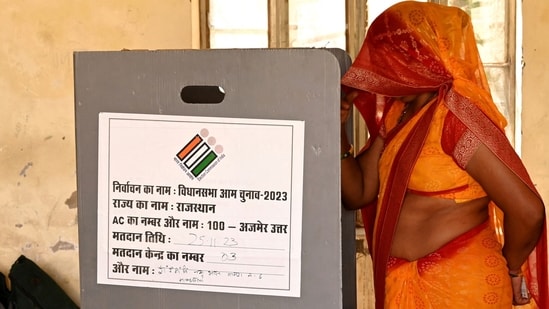
On Saturday, April 11, 2026, an international delegation of electoral observers lauded India’s massive voting exercise as a “true festival of democracy” following extensive multi-state visits. Invited by the Election Commission of India, global representatives traveled across Assam, Kerala, and Puducherry to witness the scale and transparency of the world’s largest democratic process. By observing mock polls, interacting with local officials, and visiting diverse polling stations, the delegates experienced firsthand how India manages its immense voter base using advanced electronic voting infrastructure and meticulous logistical planning, reinforcing global confidence in the subcontinent’s electoral integrity. [Source: Hindustan Times | Additional: Election Commission of India Public Briefings].
## The International Election Visitor Programme Context
India’s elections are universally recognized not just for their geopolitical significance, but for their sheer logistical magnitude. Managing an electorate that eclipses the combined populations of North America and Western Europe requires an administrative framework of unprecedented precision. The Election Commission of India (ECI) routinely opens its doors to the global community through its International Election Visitor Programme (IEVP), inviting members of foreign Election Management Bodies (EMBs), independent democratic institutions, and international diplomats to observe the machinery of Indian democracy at work.
During the April 2026 electoral phases, delegates from over a dozen nations participated in a meticulously curated tour designed to showcase the geographical and demographic diversity of the country. Rather than restricting the observers to the national capital, the itinerary prioritized regional variance, ensuring that the envoys experienced the complexities of conducting elections in remote valleys, dense urban centers, and coastal plains alike. The unanimous praise from these delegates underscores the success of an electoral system built on the foundational ethos of “no voter left behind.” **India operates over 1 million polling stations**, ensuring that no citizen has to travel more than two kilometers to cast their ballot.
## Observing Mock Polls: The Benchmark of Transparency
A focal point of the international delegates’ visit was the observation of “mock polls.” In the Indian electoral framework, transparency is engineered directly into the morning routine of election day. Before the official voting commences, election officials conduct a mandatory mock poll in the presence of authorized polling agents representing various political parties and candidates.
During this procedure, **a minimum of 50 mock votes are cast**, and the results on the Electronic Voting Machine (EVM) are physically matched against the paper slips generated by the Voter Verifiable Paper Audit Trail (VVPAT). Once the accuracy is verified and certified by all present political agents, the machines are cleared, officially sealed, and prepared for actual voting.
Delegates visiting polling booths in the early hours of the morning noted how this process serves as an absolute safeguard against tampering allegations. “Witnessing the mock poll was a revelation,” noted an independent European electoral analyst accompanying the delegation. “It is one thing to read about electronic safeguards, but to see local representatives from opposing political factions collectively verify the machine’s accuracy before a single public vote is cast is a masterclass in building grassroots trust.” [Source: Hindustan Times | Additional: General Electoral Protocols of India].
## Assam: Navigating Complex Geographical Terrain
The multi-state tour deliberately highlighted areas with distinct operational hurdles. In the northeastern state of Assam, delegates were exposed to the immense topographical challenges of Indian elections. Assam is characterized by the sprawling Brahmaputra river system, dense forests, and isolated tea gardens. Setting up polling stations here requires unparalleled logistical coordination.
The visiting officials witnessed how ECI personnel utilized specialized transport, including riverboats and trekking teams, to transport EVMs to remote “char” (riverine island) areas. Furthermore, the state possesses a highly diverse tribal demographic, necessitating multilingual voter education programs. Observers were particularly impressed by the deployment of central and state security forces working in tandem to secure the transit of polling materials without intimidating the local populace.
Key observations in Assam included:
* **Mobile Polling Stations:** Specialized booths set up to cater to marginalized communities in riverine regions.
* **Green Elections:** The use of eco-friendly materials at model polling booths, reducing the plastic footprint of the electoral exercise.
* **Inclusivity Initiatives:** Dedicated ramps and volunteer support to ensure accessibility for Persons with Disabilities (PwD) and elderly voters.
## Kerala and Puducherry: Showcasing Literacy and Civic Engagement
Transitioning from the rugged terrains of the northeast, the delegation moved to the southern state of Kerala and the Union Territory of Puducherry. These regions are historically noted for their exceptionally high literacy rates and robust civic engagement. Kerala, with its dense population and high political awareness, frequently records some of the highest voter turnouts in the country.
In Kerala, the delegates toured “pink polling booths”—stations managed entirely by female election officers and security personnel. This initiative, designed to empower women and encourage female voter participation, was described by the visiting envoys as a highly replicable model for global democratic systems.
Similarly, in Puducherry, the focus was on urban electoral management. The delegates evaluated the crowd management systems, the integration of technology for real-time queue tracking via mobile applications, and the seamless functioning of the electoral rolls. The contrast between Assam’s remote outreach and Kerala/Puducherry’s high-density management provided the international contingent with a comprehensive overview of India’s versatile democratic apparatus. [Source: Hindustan Times | Additional: Regional Demographic Data].
## The Technological Backbone: EVMs and VVPATs
No assessment of India’s elections is complete without scrutinizing the technology that powers it. The international envoys spent considerable time understanding the architecture of the EVMs and VVPATs. In an era where election interference and digital hacking are major global concerns, India’s approach relies on deliberate technological isolation.
The delegates were briefed on the foundational security features of the EVMs:
* **Standalone Architecture:** Indian EVMs are not connected to the internet, Bluetooth, or any external wireless network, rendering remote hacking impossible.
* **One-Time Programmable Chips:** The software is burned into a One-Time Programmable (OTP) chip, meaning the machine’s core logic cannot be rewritten or altered after manufacturing.
* **Dynamic Coding:** The order of candidates is arranged alphabetically based on specific categorizations, meaning the button position for candidates varies by constituency, further confounding any mass-tampering attempts.
The delegates expressed admiration for how the VVPAT system bridges the gap between digital efficiency and physical verification. “The integration of a paper audit trail with electronic voting resolves the primary friction point in modern elections: speed versus trust,” stated Dr. Elias Thorne, a visiting policy researcher specializing in electoral integrity. “The Indian model demonstrates that a nation can count hundreds of millions of votes in a matter of hours without sacrificing verifiable transparency.”
## Global Implications and Expert Perspectives
The successful demonstration of India’s election machinery has profound implications for other democracies. As nations around the world grapple with voter apathy, logistical bottlenecks, and institutional distrust, the Indian model offers actionable insights.
A central takeaway for the visiting delegation was the institutional independence of the Election Commission. Operating as a constitutional body with significant autonomy, the ECI holds the authority to requisition millions of civil servants and security personnel to execute the elections.
“What makes the Indian election a ‘festival of democracy’ is not just the sheer numbers, but the meticulous institutional design that guarantees every single vote is facilitated and protected,” noted Rajiv Menon, a political logistics analyst based in New Delhi. “When international delegates witness the mock polls in Kerala or the riverine logistics in Assam, they are looking at a blueprint for scalable democratic management. Developing nations, in particular, look to India to understand how to conduct cost-effective, secure, and rapid elections.” [Source: Independent Political Analysis | Knowledge Base].
The ECI’s continuous refinement of its processes—such as the cVIGIL app, which empowers citizens to report violations of the Model Code of Conduct in real time—further emphasizes a participatory approach to election management that the global envoys found particularly impressive.
## Conclusion: Takeaways and Future Outlook
The international delegation’s praise of India’s electoral process as a “true festival of democracy” is a testament to the monumental administrative effort undertaken by the Election Commission of India. By systematically exposing these global observers to the realities of polling in Assam, Kerala, and Puducherry, the ECI successfully showcased a system that balances scale with security, and technological advancement with human-centric inclusivity.
The key takeaway from the April 2026 multi-state visit is that electoral integrity is achieved not through technology alone, but through rigorous, verifiable procedures like the morning mock polls and the deep involvement of multi-party agents. As democratic systems worldwide face increasing scrutiny, India’s ability to enfranchise nearly a billion eligible voters peacefully and transparently stands as a critical global benchmark. Moving forward, the collaborative exchange of such logistical strategies will be vital in fortifying democratic institutions globally, ensuring that the right to vote remains accessible, secure, and undisputed for future generations.





