
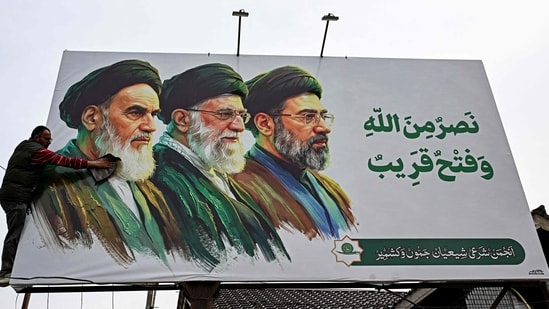
This village in UP's Barabanki has close links to Iran Revolution of 1979| India News
# UP Village’s Deep Ties to Iran Revolution
On April 11, 2026, amid escalating maritime tensions in the Persian Gulf, a small village in Uttar Pradesh emerged as an unlikely focal point of international diplomacy. Kintoor, a historic settlement in the Barabanki district, holds deep historical connections to the 1979 Iranian Revolution as the ancestral home of Ayatollah Ruhollah Khomeini. Following Iran’s recent strategic decision to allow Indian commercial vessels safe passage through the heavily contested Strait of Hormuz, residents of Kintoor claim this geopolitical exemption is directly rooted in centuries-old cultural bonds. This unique intersection of local heritage and global shipping security highlights how historical soft power continues to shape India-Iran bilateral relations in a volatile geopolitical landscape.
## The Historical Bridge: From Kintoor to Tehran
To understand the pride radiating through the narrow, dusty lanes of Kintoor today, one must look back to the 18th and 19th centuries during the era of the Nawabs of Awadh. Kintoor was a prominent center of Islamic scholarship and Shiite theology. It was here that Syed Ahmad Musavi Hindi, the grandfather of Ayatollah Ruhollah Khomeini, was born and raised.
Historical records indicate that Syed Ahmad left Kintoor in the 1830s for a pilgrimage to the holy city of Najaf in present-day Iraq, eventually settling in the town of Khomein in Iran. Despite the geographic distance, the family maintained a distinct Indian identity, with the surname “Hindi” remaining a part of their lineage for generations. When Ayatollah Khomeini led the Islamic Revolution in 1979, overthrowing the Pahlavi dynasty, few in the Western world realized that the architect of this geopolitical earthquake possessed deep ancestral roots in the heartland of Uttar Pradesh.
[Source: Hindustan Times | Additional: Historical archives of the Awadh Kingdom and biographical records of the Musavi lineage].
Today, **the village of Kintoor retains a strong cultural memory of this migration**. Local historians and descendants of the extended Musavi family continue to preserve manuscripts, oral histories, and architectural remnants that serve as a testament to the village’s outsized role in global history.
## The Strait of Hormuz Exemption: Soft Power in Action?
The recent geopolitical developments in the Middle East have brought Kintoor back into the spotlight. Over the past month, as regional conflicts escalated, commercial shipping routes through the Strait of Hormuz—a crucial maritime chokepoint handling nearly 20% of the world’s oil consumption—faced unprecedented disruptions. While vessels from several Western and allied nations encountered blockades, detentions, or severe delays, Indian-flagged commercial vessels were reportedly granted unhindered passage.
While international relations experts primarily attribute this to New Delhi’s pragmatic foreign policy and investments in Iranian infrastructure, the residents of Kintoor offer a different, more culturally grounded explanation.
According to reports, some residents of Kintoor firmly believe that the reason Iran allowed Indian vessels to pass through the critical chokepoint is deeply tied to India’s historic and cultural ties with Iran, specifically anchored by the shared heritage of the 1979 Revolution’s leader.
“Geopolitics is not just about money and military; it is about memory,” says Dr. Tariq Mansoor, an independent researcher of Indo-Persian history based in Lucknow. “For the people of Kintoor, the safe passage of Indian ships is a direct validation of their ancestral bond with Iran’s supreme leadership. While it may seem romanticized to a strategic analyst in Washington or New Delhi, in the Middle East, these civilizational and theological ties carry immense diplomatic weight.”
## Voices from the Ground: Pride in Barabanki
Walking through Kintoor, the confluence of Awadhi culture and Persian influence is palpable. The village, also famous for the mythical Parijaat tree and ancient shrines, hums with discussions about international maritime news—a rare phenomenon in rural Uttar Pradesh.
Syed Ali Raza, a 68-year-old village elder whose family claims distant kinship with the Musavi lineage, expressed his views on the recent maritime developments. “We have always known that the bond between India and Iran is written in blood and faith, not just treaties. When we heard that our country’s ships were respected and allowed to pass through Hormuz safely, every household in Kintoor felt a sense of pride. The leadership in Tehran knows their roots lie in Indian soil.”
This sentiment is echoed widely across the village square. Younger residents, equipped with smartphones and access to global news, have been actively sharing stories linking their hometown to the broader narrative of India’s strategic autonomy. For them, Kintoor is not merely a footnote in a history textbook; it is an active bridge facilitating modern diplomacy.
## Beyond Nostalgia: The Realpolitik of India-Iran Relations
While the cultural narrative originating from Kintoor provides a fascinating lens, foreign policy experts suggest that the reality of the Strait of Hormuz exemption is a blend of cultural soft power and hard economic pragmatism. India and Iran have carefully cultivated a relationship that transcends the immediate pressures of Western sanctions and regional polarization.
**Key factors driving India-Iran strategic cooperation include:**
* **The Chabahar Port Project:** India has heavily invested in the Shahid Beheshti terminal at Chabahar port in southeastern Iran. This provides New Delhi with a crucial transit route to Afghanistan and Central Asia, entirely bypassing Pakistan.
* **International North-South Transport Corridor (INSTC):** A multi-modal transportation established to promote transportation cooperation among Member States. India and Iran are foundational pillars of this network, designed to reduce freight costs and time between India and Europe/Russia.
* **Strategic Non-Alignment:** India has consistently maintained a stance of multi-alignment, refusing to completely sever diplomatic or back-channel ties with Tehran even at the height of international sanctions.
* **Energy Security:** Although India reduced its direct oil imports from Iran due to international sanctions in the late 2010s, ongoing back-channel energy dialogues and barter trade mechanisms have kept the economic corridor alive.
“The villagers of Kintoor are not entirely wrong,” notes Ambassador (Retd.) Rajiv Bhatia, a seasoned diplomat. “Cultural heritage creates a baseline of mutual trust. When Iranian diplomats sit across from their Indian counterparts, there is a shared civilizational vocabulary. The fact that the architect of their modern republic had roots in Uttar Pradesh is a frequently referenced diplomatic icebreaker. It provides a foundation of goodwill that makes transactional agreements—like safe shipping passage—much easier to negotiate.”
[Source: Hindustan Times | Additional: Open-source geopolitical analyses of India’s Middle East foreign policy in early 2026].
### Historical Milestones of Indo-Iranian Cultural Diplomacy
| Year/Era | Milestone Event | Strategic/Cultural Impact |
| :— | :— | :— |
| **1830s** | Syed Ahmad Musavi Hindi migrates from Kintoor to Najaf/Iran. | Establishes the genealogical link between UP and future Iranian leadership. |
| **1950** | India and Iran sign a Treaty of Friendship. | Formalizes diplomatic relations post-Indian Independence. |
| **1979** | Iranian Islamic Revolution led by Ayatollah Khomeini. | Shifts regional dynamics; India recognizes the new government quickly. |
| **2016** | Trilateral Transit Agreement (India, Iran, Afghanistan). | Formalizes the Chabahar port development, bypassing traditional chokepoints. |
| **2026** | Strait of Hormuz commercial exemptions for Indian vessels. | Demonstrates the synthesis of cultural goodwill and strategic necessity. |
## Preserving the Heritage of Kintoor
Despite its profound historical significance, Kintoor remains a relatively modest village with untapped tourism and cultural exchange potential. There have been sporadic calls from heritage conservationists to develop Kintoor as a site for “diplomatic tourism.”
Local activists have petitioned both the state government of Uttar Pradesh and the Ministry of External Affairs to fund the restoration of ancestral homes and historic Imambaras (congregation halls) in the region. They argue that elevating Kintoor’s infrastructure could serve as a tangible monument to Indo-Persian ties, drawing scholars, historians, and international tourists.
“If we can leverage Buddhist circuits to build ties with Southeast Asia, there is no reason we cannot develop an Indo-Persian heritage circuit in Awadh to solidify our Middle Eastern diplomacy,” suggests a local historian advocating for rural heritage preservation.
## Conclusion: The enduring power of local history
The narrative emerging from Kintoor in April 2026 is a powerful reminder that global geopolitics is not enacted exclusively in the corridors of the United Nations or fortified defense ministries. Often, the foundations of international trust are laid in the quiet, historic bylanes of remote villages.
Whether the safe passage of Indian vessels through the Strait of Hormuz was purely a calculated economic maneuver by Tehran, or heavily influenced by a deep-seated respect for shared cultural lineage, the reality likely lies in a synthesis of both. For India, maintaining its strategic autonomy in an increasingly fragmented world requires utilizing every tool at its disposal—from the hard steel of its naval destroyers to the soft, enduring legacy of a 19th-century scholar from Barabanki.
As maritime tensions continue to ebb and flow in the Persian Gulf, the residents of Kintoor will undoubtedly keep watching the news, secure in their belief that their small village has cast a long, protective shadow over India’s global ambitions.
***
By Special Correspondent, National Affairs Desk | April 11, 2026





