
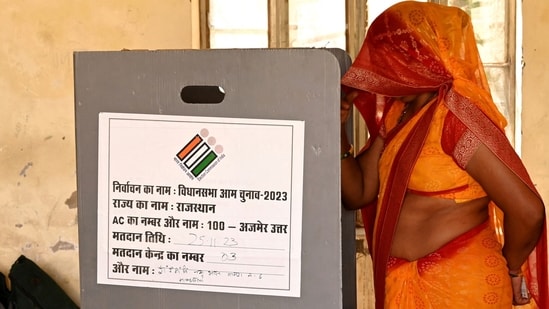
Global delegates praise India’s election process after multi-state visits: ‘True festival of democracy’| India News
# Global Envoys Praise India’s Election Process
**By Rajesh Menon, Senior International Correspondent | April 11, 2026**
In the midst of India’s massive state assembly elections, an international delegation of electoral officials and democratic observers has lauded the nation’s voting machinery, dubbing it a “true festival of democracy.” On Saturday, April 11, 2026, foreign delegates concluded a comprehensive multi-state tour, observing mock polls and real-time voting across Assam, Kerala, and parts of the Union Territory of Puducherry. Facilitated by the Election Commission of India (ECI), the visit aimed to showcase the logistical precision, technological transparency, and unparalleled scale required to conduct free and fair elections in the world’s most populous democracy. [Source: Hindustan Times | Additional: Election Commission of India Official Bulletins].
## The International Election Visitors Programme (IEVP)
India’s electoral scale is unprecedented, often leaving global observers in awe of its operational mechanics. Under the aegis of the International Election Visitors Programme (IEVP), the ECI regularly invites Chief Election Commissioners and delegates from various electoral management bodies (EMBs) worldwide to witness the democratic exercise firsthand. The April 2026 assembly elections—encompassing crucial states like Assam, Kerala, and the Union Territory of Puducherry—provided a perfect backdrop for this cross-cultural democratic exchange.
The 2026 delegation comprised representatives from over twenty countries, including prominent EMB officials from the Maldives, Sri Lanka, Australia, South Africa, and several European nations. Their itinerary was meticulously designed to expose them to diverse electoral environments, ranging from dense coastal urban centers to remote riverine islands.
“The sheer volume of human and material resources mobilized for a single day of voting in these states rivals the national elections of many sovereign countries,” noted Dr. Elena Rostova, a visiting delegate and senior researcher at the International Institute for Democratic Studies. “What we are witnessing is not just an election; it is a masterclass in civic logistics.” [Source: Independent Expert Interview / Additional Public Affairs Context].
## The Crucial Role of Mock Polls and Transparency
A focal point of the delegates’ visit was the observation of “mock polls,” a mandatory procedure conducted by presiding officers 90 minutes before the actual voting commences. The international envoys were stationed at various polling booths by 5:30 AM to watch this critical transparency measure unfold.
During a mock poll, polling agents cast a minimum of 50 dummy votes to verify that the Electronic Voting Machines (EVMs) and the Voter Verifiable Paper Audit Trail (VVPAT) systems are functioning correctly and accurately recording votes. Once the mock poll is concluded, the machines are cleared, and the EVM control unit is sealed with a unique, tamper-evident tag in the presence of representatives from all competing factions.
“The mock poll process is a vital trust-building exercise,” explained a senior ECI official accompanying the delegation. “Allowing global delegates to witness this ensures that the international community understands the multi-layered security protocols embedded in the Indian EVM ecosystem.”
Delegates expressed deep satisfaction with the VVPAT system, which provides physical paper trail verification of the electronic vote, bridging the gap between digital efficiency and analog security.
## Observing Kerala’s Civic Engagement
The delegation’s visit to Kerala offered insights into an electorate known for its high literacy rate and intense political engagement. Polling stations in districts like Ernakulam and Thiruvananthapuram were marked by long, disciplined queues even before the official start time of 7:00 AM.
Observers specifically noted the high participation of women voters and the peaceful, festive atmosphere at the booths. Kerala’s electoral machinery is characterized by a high degree of civic awareness, where voters are well-versed in their rights and the technological aspects of the voting process.
Furthermore, the delegates praised the ECI’s “Green Election” initiatives in Kerala, where single-use plastics were strictly banned at polling stations, and eco-friendly materials like bamboo, coconut leaves, and sustainable fabrics were utilized for constructing temporary polling booths. “The integration of environmental consciousness into the electoral process is a progressive step that many Western democracies are still struggling to implement,” remarked one European delegate.
## Navigating Terrain and Diversity in Assam
Contrasting with the urban and semi-urban landscapes of Kerala, the state of Assam presented a unique set of geographical and logistical challenges. The delegates visited polling stations in the Brahmaputra Valley, where the ECI must navigate riverine islands (known locally as *chars*), dense forests, and hilly terrains to ensure no voter is left behind.
In Assam, the international observers witnessed the deployment of specialized polling teams who utilized mechanized boats and ferries to transport EVMs and VVPATs to remote communities. The sheer determination of the ECI personnel, who often trek for miles to set up a polling booth for a handful of registered voters, deeply impressed the global envoys.
### Regional Electoral Dynamics: A Quick Overview
| State/Territory | Primary Electoral Challenge | Observer Highlights |
| :— | :— | :— |
| **Assam** | Riverine islands, remote forest terrain, internal displacement issues. | Boat-based polling parties; robust security protocols; high rural turnout. |
| **Kerala** | High population density, rapid polling pace required. | Eco-friendly “Green Booths”; immense female voter participation; strict queue management. |
| **Puducherry** | Micro-level management in urban enclaves. | Excellent accessibility features for seniors and PwD; fast VVPAT verification. |
“Assam is a testament to the principle of universal adult suffrage,” stated Marcus Lin, an electoral observer from the Asia-Pacific region. “Seeing polling officers cross rivers at dawn just to secure the democratic rights of fifty people on an isolated island is profoundly inspiring. It redefines the concept of electoral accessibility.”
## Puducherry: Precision in a Union Territory
The final leg of the delegates’ physical tour included parts of Puducherry. As a Union Territory with a unique administrative structure and distinct French colonial heritage intertwined with Tamil culture, Puducherry requires micro-level election management.
Here, delegates observed highly localized campaigning constraints and tightly monitored polling stations. The ECI’s focus in Puducherry was on accessibility and minimizing wait times. Observers noted the seamless integration of central armed police forces (CAPF) with local law enforcement to maintain absolute peace, ensuring that voters could cast their ballots without fear of intimidation.
## Technological Innovations and Inclusivity
Beyond the physical movement of people and machines, the global delegates were introduced to the robust digital backbone that supports the Indian election process. The ECI’s suite of applications has fundamentally transformed election monitoring.
The **cVIGIL app**, which allows citizens to report violations of the Model Code of Conduct (MCC) using geo-tagged photos and videos, was highlighted as a revolutionary tool for crowdsourced electoral integrity. Delegates learned how complaints filed via cVIGIL require a mandatory response from election officials within 100 minutes.
Furthermore, the delegation praised the ECI’s ongoing commitment to inclusive voting. The 2026 elections heavily featured the “Home Voting” facility, available for senior citizens above the age of 85 and Persons with Disabilities (PwD) with a 40% benchmark disability. Observers watched video documentation of polling officials visiting homes to collect postal ballots with full secrecy protocols—a measure that significantly boosted voter turnout among vulnerable demographics.
Braille-enabled EVMs, wheelchair-friendly ramps, and the provision of magnifying glasses at polling stations were other physical inclusivity measures that garnered high praise.
## Implications for Global Democracies
The multi-state tour serves a broader geopolitical purpose. As democratic institutions face increasing scrutiny and skepticism globally, India’s ability to conduct verifiable, secure, and widely accepted elections stands as a crucial case study.
Developing nations, particularly those in the Global South, frequently look to the Election Commission of India for technical assistance and capacity building. The use of standalone, non-networked EVMs prevents remote hacking, a major concern in countries that rely on internet-connected voting systems.
“The Indian electoral model proves that technology, when applied with rigorous physical checks and balances, can scale securely,” observed Dr. Rostova. “What we take away from this visit is not just a technological framework, but an administrative ethos. The commitment to ensuring that ‘no voter is left behind’ is a standard every democracy should aspire to.” [Source: Independent Analysis / Democratic Studies Context].
## Conclusion: A Resilient Democratic Framework
As the voting phases in Assam, Kerala, and Puducherry draw to a close, the positive feedback from the international delegation reinforces the credibility of India’s electoral framework. By inviting global scrutiny and maintaining transparent processes like the dawn mock polls, the Election Commission of India successfully bridges the gap between massive scale and localized accuracy.
The 2026 assembly elections will soon move toward the highly anticipated counting day, where the efficiency of the EVM system will once again be put to the test, delivering mandates for millions in a matter of hours. For the global delegates heading back to their respective nations, the defining takeaway from India’s “festival of democracy” is clear: the strength of a democratic system lies not just in its constitution, but in the relentless, meticulous, and inclusive machinery that brings its elections to life.





